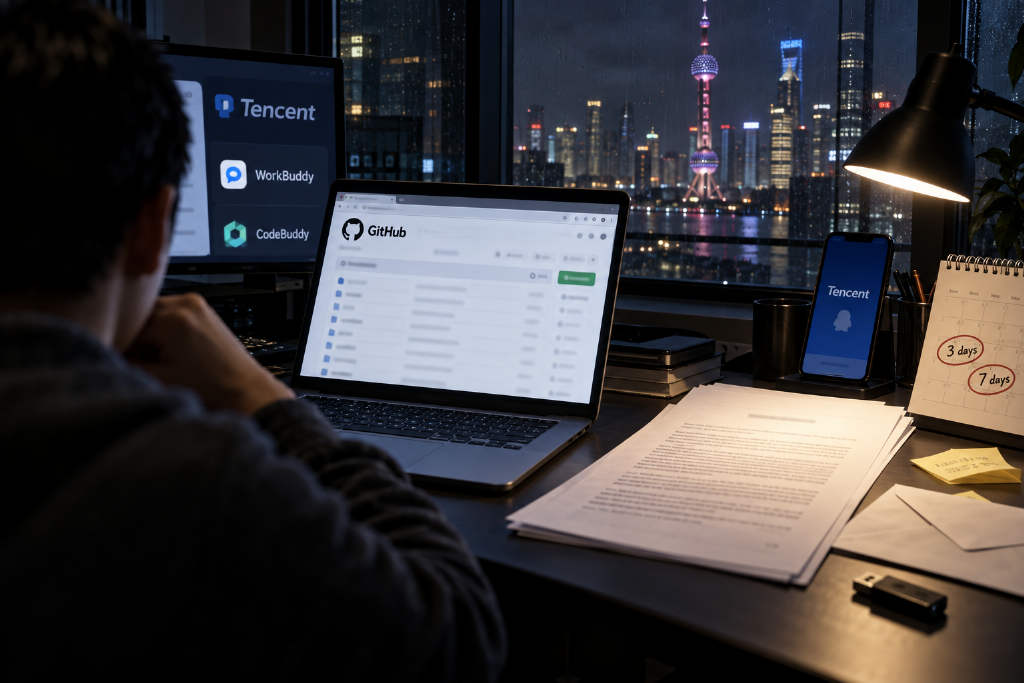
A GitHub project tied to DeepSeek, dsh-our-free-model, has come under scrutiny after receiving what was described as a 20,000-character legal notice. The repository, which has about 32,000 stars, was accused by the sender of reverse-engineering Tencent’s official client, bypassing interface checks, and using free credits to access AI models. The notice said it was sent on behalf of the rights holders of WorkBuddy and CodeBuddy, and demanded that the developers stop the alleged conduct within three days and delete the entire repository within seven days or face litigation and regulatory complaints.
Public GitHub records cited in the post tell a more complicated story. The project had already removed two Tencent-related channels at 10:29 a.m. that day. At 4:21 p.m., another contributor opened a pull request that attempted to restore model access by rewriting request content to get around Tencent’s client-side checks. Roughly 39 minutes later, the legal notice appeared. That contributor later withdrew the PR, and the code was never merged.
Developers have questioned whether the notice is genuine. The document reportedly left blank the law firm, handling lawyer, authorized rights holder, and contact details, and carried no official seal. The posting account was only registered on Oct. 16. Tencent has not confirmed issuing the notice.
dsh-our-free-model, a DeepSeek open-source plugin project with about 32,000 stars on GitHub, has received what was described as a 20,000-character legal notice, prompting debate over whether the document is real.
The sender said the notice was issued on behalf of the rights holders of WorkBuddy and CodeBuddy. It accused the project of reverse-engineering Tencent’s official client, bypassing interface verification, and using free credits to call AI models. The notice demanded that the developers stop the alleged conduct within three days and delete the entire repository within seven days, or face lawsuits and regulatory complaints.
GitHub timeline does not match the notice
Public GitHub records cited in the post show that the project had already removed two Tencent-related channels at 10:29 a.m. that day. Later, at 4:21 p.m., another contributor submitted a pull request that tried to restore model access by rewriting request content to get around Tencent’s client verification. About 39 minutes later, the legal notice appeared.
The contributor later withdrew the PR on their own, and the related code was never merged.
Missing legal details fuel doubts
Questions grew after readers noticed that the notice did not list a law firm, handling lawyer, authorized rights holder, or contact information. It also carried no seal. The account that posted it was only registered on Oct. 16.
The notice also claimed that developers tried to restore the Tencent channel just three minutes after removing it. GitHub’s public record, however, shows that the relevant PR was actually filed nearly six hours later.
As of now, Tencent has not confirmed sending the notice. Many developers in the community have challenged its authenticity and suspect that someone used the form of a legal letter to pressure the project.
This article was originally published by Bit.Fan. For more cryptocurrency news and market insights, visit www.bit.fan. Disclaimer:
The market information, project data, and third-party content displayed on this platform are for industry information sharing only and do not constitute any form of investment advice or return commitment.
Cryptocurrency trading carries high risks. Users should fully assess their risk tolerance and make independent decisions. All profits, losses, and legal responsibilities are borne by the users themselves.