
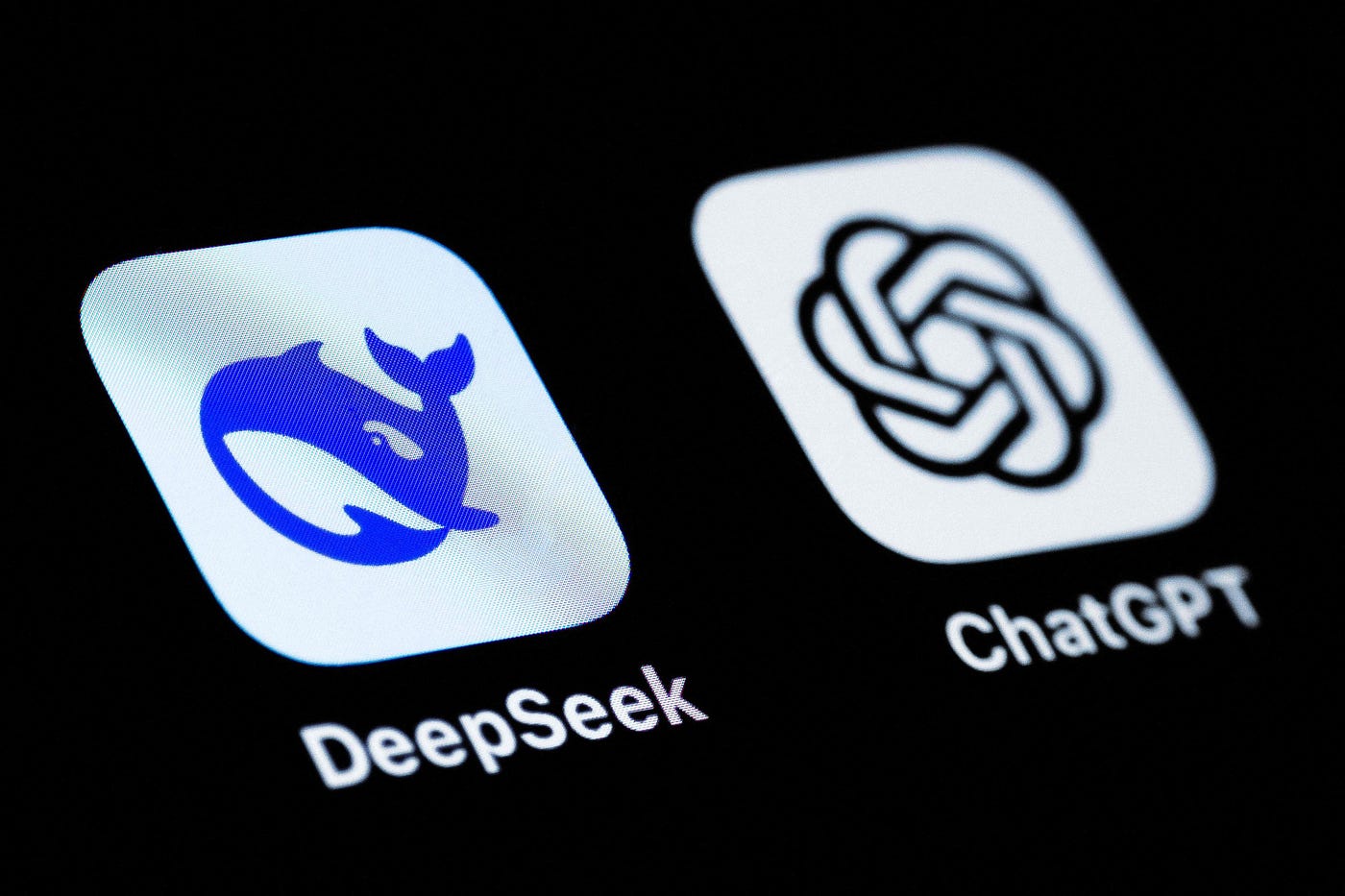
DeepSeek V4 preview debuted on April 24, 2026, featuring a 1.6-trillion-parameter Pro version and a 284-billion-parameter Flash version, with million-token context free across all services. Around the same time, OpenAI released GPT-5.5: standard tier charges $5 per million input tokens and $30 for output; the Pro version goes for $30 input and $180 output. In contrast, DeepSeek V4-Flash costs 0.2 yuan per million input tokens (cache hit) and 2 yuan output; V4-Pro cache miss input is 12 yuan, output 24 yuan. The pricing gap is stark, but the rivalry now spans business models beyond raw capability.
Ulanqab's Cold Wind
Shortly before V4's launch, DeepSeek posted job openings for a data center delivery manager and a senior O&M engineer in Ulanqab, Inner Mongolia, with salary 30,000 yuan/month plus 14-month pay. The once asset-light algorithm firm was forced to pivot to Huawei Ascend chips after US export controls cut off Nvidia H100, H800, and even the downgraded H20. V4's billion-parameter scale requires thousands of Ascend chips and full data center infrastructure—a shift from lightweight to heavy-asset operations.
The $44 Billion Compromise
In April, DeepSeek began its first external fundraising round, targeting a valuation of 300 billion yuan (about $44 billion), with a planned capital increase of 50 billion yuan, including 30 billion yuan from outside investors. Tencent and Alibaba are reportedly competing to join. The funding is driven not just by hardware costs but by talent retention: since H2 2025, at least five core R&D members have been poached by big tech—Wang Bingxuan left for Tencent, Luo Fuli joined Xiaomi at a ten-million-yuan salary, and Guo Daya moved to ByteDance's Seed team. Founder Liang Wenfeng must now play the capital game to keep his team, sacrificing the pristine independence he once prized.
Power Is Compute
Ulanqab's data center runs on abundant green electricity: installed capacity 19.4 GW, about 65.9% of the mix, with power prices roughly 50% cheaper than eastern China. Average annual temperature is just 4.3°C, allowing natural cooling for nearly 10 months and saving 20%-30% on energy. China's ultra-high-voltage transmission grid and cheap electricity give DeepSeek a physical advantage that Silicon Valley's aging grid cannot match.
Edge and Open Source as Dual Escape Routes
Another front is on-device AI. Chinese phone makers Xiaomi, OPPO, and vivo are embedding distilled models into handsets, compressing model size to 1.2-2.5 GB for offline operation. Meanwhile, open-source models are penetrating the Global South: Uganda's NGO Sunbird AI fine-tuned Qwen into Sunflower, expanding supported local languages from 6 to 31 for agricultural advice. Malaysian firms built Sharia-compliant AI models on open-source bases. OpenRouter data shows that for one week, the top 10 global models consumed 8.7 trillion tokens, with Chinese models taking about 61%—surpassing US competitors for the first time.
Liang Wenfeng frames the strategy as building water pipes instead of luxury condos: "No matter how high the compute walls are built, they cannot stop water from flowing downhill."