
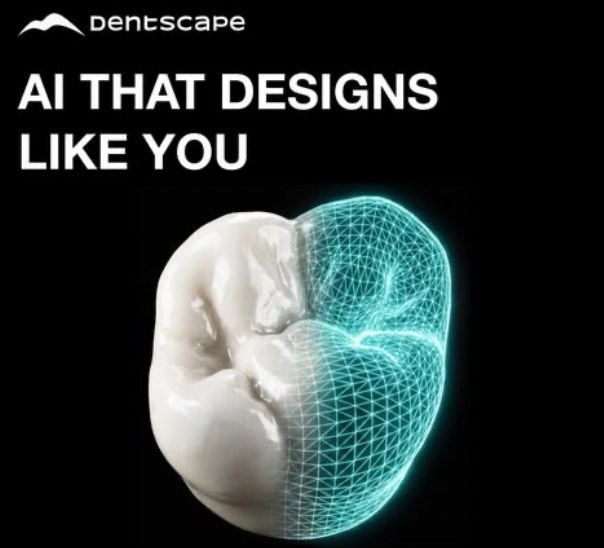
Dentscape said it is using artificial intelligence to tackle a global shortage of dental technicians, with co-founder and CEO Bill Chou Cheng-kang outlining how the company shifted its focus after an early setback.
According to Chou, the team initially presented a 2D dental product to Y Combinator in Silicon Valley. After receiving sharp criticism, it changed direction and focused on labor and technical bottlenecks in dentistry. The company then developed an algorithm that, it says, can finish modeling in three minutes, cutting a process that traditionally takes one to two weeks.
Dentscape said it is now working with Harvard School of Dental Medicine and aims to become a leading global digital dentistry brand.
Adaptive AI targets more natural-looking crowns
Chou said crowns designed with general-purpose AI models often come out looking identical and fail to capture the small features found in natural human teeth. That can make restorations look artificial and leave dentists and technicians spending extra time adjusting grooves and occlusal surfaces.
To address that, Dentscape developed what it calls Adaptive AI. The company said the system learns from past cases and tries to preserve the distinct style of real teeth during generation. It also claims the platform can batch-process 100 crowns in 10 minutes and support customized restorations.
Digital twins recreate the patient’s mouth
The workflow starts with a 3D scan of the mouth, which is used to reconstruct a digital twin of the patient’s oral structure. Dentscape said that helps the system read teeth, gums and bite patterns with high precision.
In crown work, accuracy around the crown margin and contact points with adjacent teeth is critical. If the fit is too loose, food debris can accumulate. If it is too tight, the crown may not seat properly. Chou said the team uses deep learning to translate the touch and experience of senior dental technicians into computer calculations.
Building a regional database for clinical preferences
Dentscape said 3D dental data remains scarce. Early on, the company received investment from three of Taiwan’s largest dental laboratories, which gave it access to complete historical data from before and after production. It said that created a data barrier that broad large models cannot easily replicate.
The company also worked with Taipei Medical University on professional data labeling and gathered feedback from dental technicians in Egypt, Japan, Australia and Taiwan. Dentscape said that has helped the system adapt to regional treatment preferences, including full-crown treatments in the U.S., partial restorations that preserve more natural tooth structure in Europe, and stricter esthetic standards in Japan.
Use cases extend into dental education
To reduce the gap between digital modeling and physical manufacturing, the team brings computers into partner dental laboratories and turns AI output into physical test pieces that can be fitted into molds. The algorithm is then adjusted repeatedly based on those fit tests.
Dentscape said its system can optimize designs for both subtractive milling using ceramic blocks and additive printing using light-cured ceramic-resin materials. The technology is being used not only to raise dental lab output, but also in academic settings including Harvard School of Dental Medicine, where AI acts as a virtual tutor by reviewing student submissions and returning real-time clinical feedback.