

Digital Chamber, a US blockchain and digital asset trade association, has filed an amicus brief in a New York lost-property lawsuit that seeks ownership of 39,069 dormant Bitcoin addresses. The group urged the court to dismiss the case, arguing that if long-inactive wallets are treated as abandoned property, the ruling would set a dangerous precedent for self-custodial crypto holdings and undermine how ownership is understood across the digital asset market.
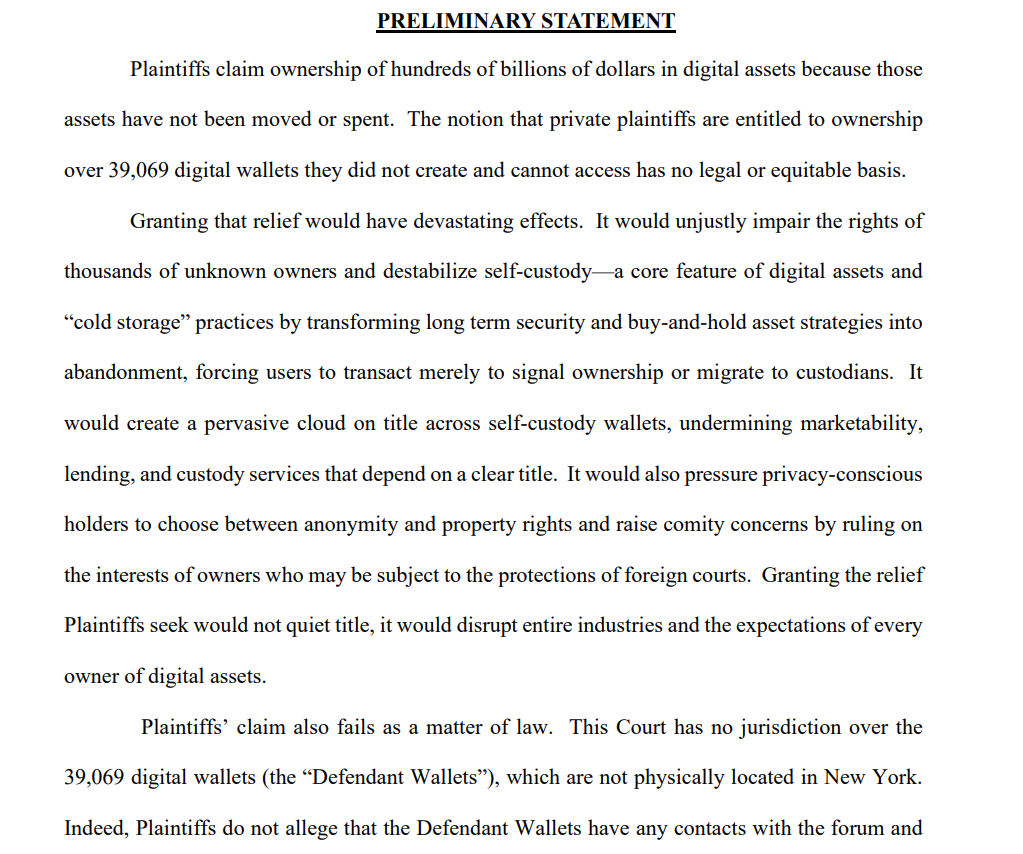
The filing, submitted on Monday, is the second amicus brief in the case. In its argument, Digital Chamber opposed the plaintiffs’ ownership theory and said that classifying dormant wallets as abandoned property would create a “pervasive cloud on title across self-custody wallets.” The organization also warned that a ruling based on that theory could weaken foundational principles of digital property rights and produce negative spillover effects beyond crypto, including into traditional finance.
Case may test how New York applies lost-property law to inactive crypto
The lawsuit was filed in late May by a plaintiff identified as “Noah Doe” and two Wyoming-based companies. At the center of the dispute is an effort to claim ownership of 39,069 long-dormant Bitcoin addresses. Because of its structure and legal framing, the case could become an important test of how New York’s lost-property law may be applied to crypto assets that have remained inactive onchain for extended periods.

According to Sani, founder of analytics platform Timechain Index, the addresses listed in the complaint collectively hold an estimated 3.7 million BTC, worth about $234 billion based on the figures cited in the report. The list also includes some wallet addresses believed to be associated with Bitcoin creator Satoshi Nakamoto. The scale of the assets involved has made the case especially notable, as it combines a novel legal theory with one of the largest pools of dormant Bitcoin ever discussed in a court context.
Digital Chamber describes itself as the oldest and largest digital asset trade association, representing more than 250 members, including crypto exchanges, banks, investment firms and other market participants. Its intervention shows that industry groups view the case as more than a narrow property dispute. For many in the sector, the broader concern is whether prolonged inactivity could become a basis for challenging ownership of self-custodied crypto.

Some wallets named in the complaint have resumed activity
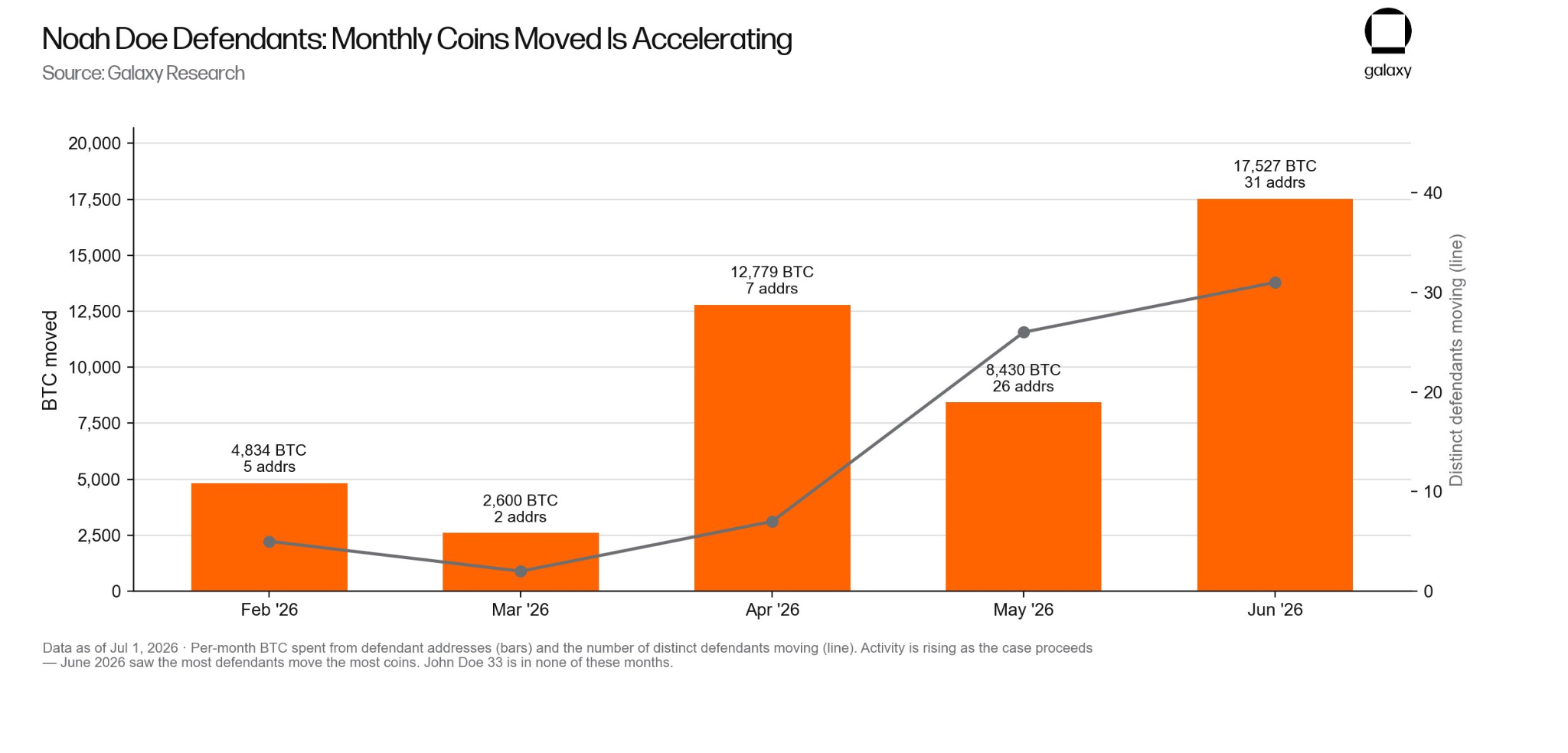
One of the most important developments in the case is that several of the supposedly dormant wallets have already shown signs of life. According to Galaxy Digital head of research Alex Thorn, at least 31 of the listed addresses moved 17,527 BTC in June. That compares with five addresses that transferred 4,834 BTC in February. The renewed activity suggests that at least some of the wallets cited in the complaint are still under active control, even if they had remained idle for years.

One example highlighted in the report is Bitcoin address “1KV47,” which transferred 30 BTC on Saturday, worth about $1.88 million based on the cited valuation. It was the wallet’s first movement in nearly 15 years, with no prior transfer since August 2011. Such transactions strengthen the argument that inactivity alone does not necessarily mean a wallet has been abandoned or that a third party can credibly claim ownership over the assets it holds.
Private keys remain the core obstacle to actual asset control
Whatever the outcome of the lawsuit, a practical problem remains unchanged: without the relevant private keys, the plaintiffs would not be able to control the Bitcoin in those wallets. In other words, even if a court were to entertain legal arguments around whether dormant wallets can be treated as lost or abandoned property, enforcement in crypto still depends on cryptographic control. A legal claim is not the same as the ability to move assets onchain.

That issue became more concrete last Thursday, when a pseudonymous defendant filed a notice of appearance and a motion to dismiss, claiming control over one of the dormant wallets named in the lawsuit. The filing suggests that at least some of the addresses in question are not ownerless in any practical sense. As more wallets become active or more claimants emerge, the court will likely face a sharper distinction between legal theories of abandonment and the technical realities of private-key-based custody.
The case is now being watched closely across the crypto industry because its implications could extend well beyond the addresses named in the complaint. If a court were to accept the idea that long-idle self-custody wallets can be treated as unclaimed property, that could reshape legal assumptions around title, control and custodianship in digital assets. For now, Digital Chamber’s brief makes clear that a major segment of the industry sees that possibility as a direct threat to the basic architecture of crypto ownership.