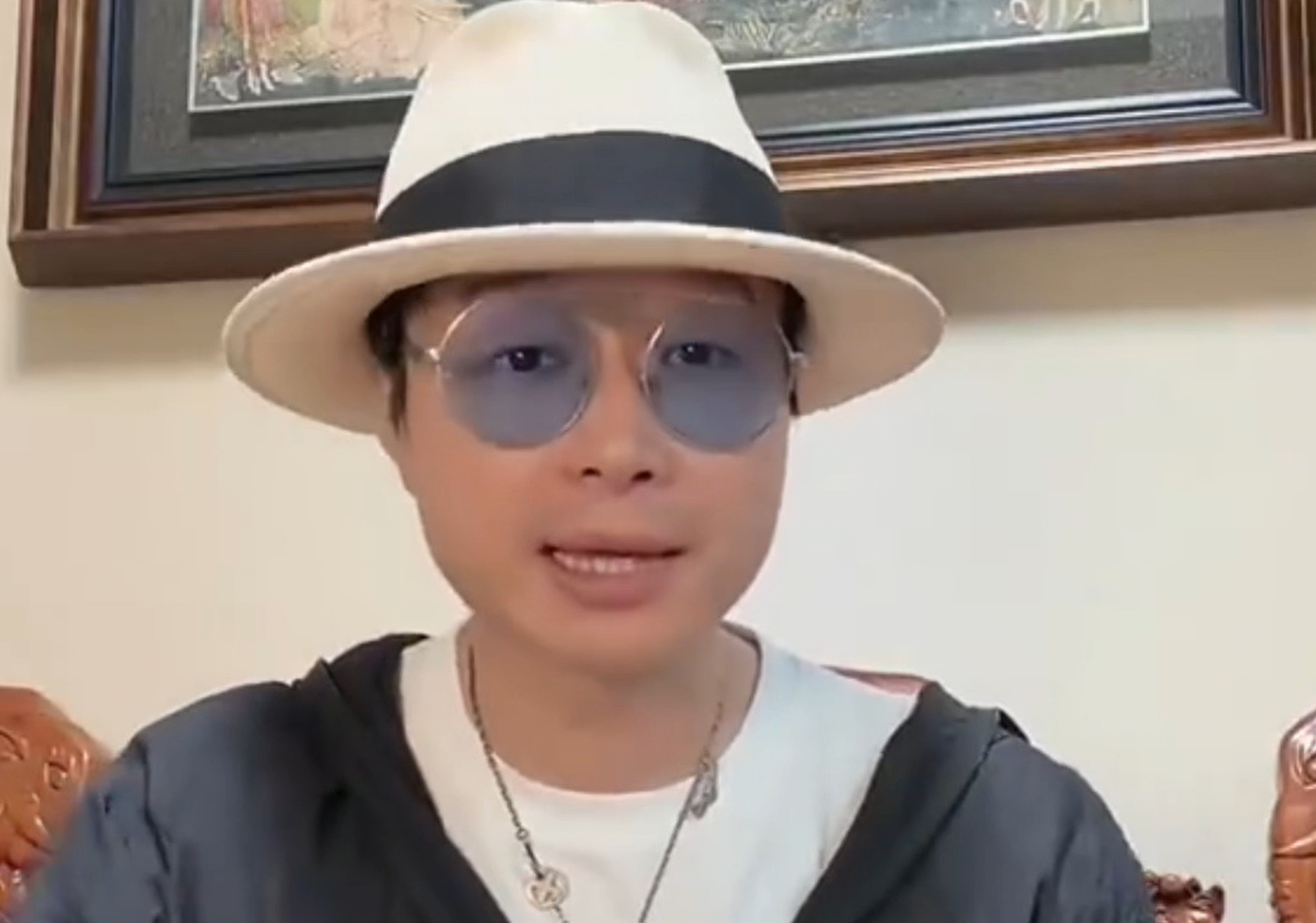
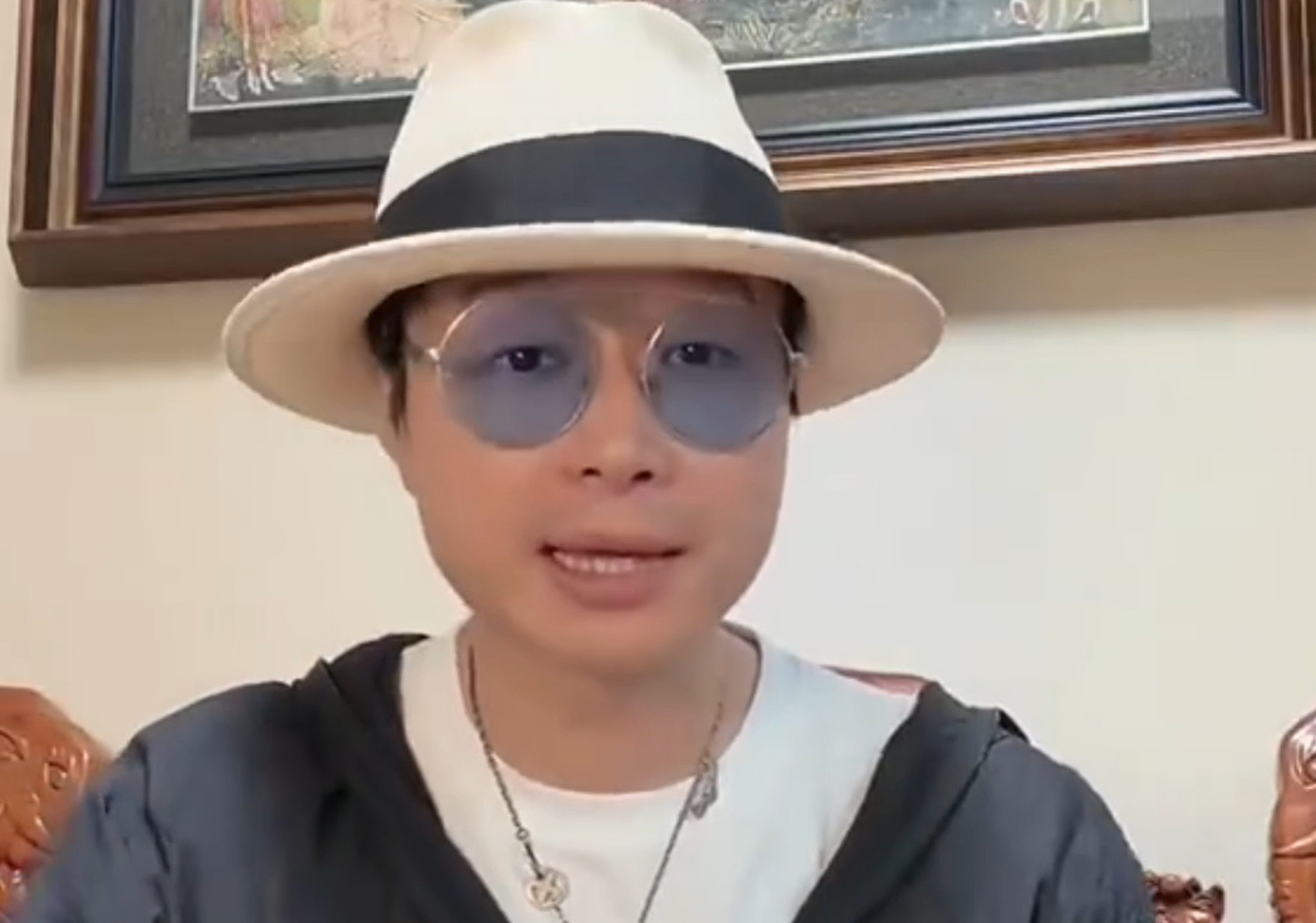
During an Aug. 26 livestream, influencer Dishi said blockchain investor Sun Zeyu had been running an eight-year setup against him, leaving him with total losses in the tens of millions of yuan. That’s Dishi’s version of it. He said the two were tied together for years, and he had viewed Sun as a friend he could trust, right up until a recent check made him wonder whether part of the ETH he had been given had ever existed on the actual Ethereum network.
Ma He, writing for Foresight News, built the piece around a messy mix: a controversial internet celebrity, a former crypto investment firm founder, an eight-year span, and one detail that jumps off the page — only seven on-chain addresses.
Dishi says the ETH bought on his behalf existed on a fake chain
Dishi, whose real name is Sun Zixuan, has taken a pretty unusual road. The report said he first studied feng shui, then in 2007 launched the "Zhuanyuntang" brand in Hong Kong, putting together his first pool of money through Buddhist amulets and feng shui services. In 2016, after being introduced by gaming streamer Xiao Zhi, he moved into livestreaming. He later signed with Quanmin TV and Penguin Esports, then picked up attention through outdoor streams, celebrity interviews, and flashy displays of wealth. One livestream from Dubai in 2021 reportedly pulled in 6.8 million viewers.
His public image has never been clean-cut. In 2018, a platform fined him 1 million yuan over a livestream incident from two years earlier in which he insulted police officers. Then came June 2022: Beijing tax authorities said he had evaded taxes in 2019 and 2020, and they ordered the repayment of taxes, late fees, and penalties totaling 11.7145 million yuan. In February 2025, amid a very public fight with other influencers, his Douyin account was permanently banned.
In this latest video, Dishi laid out what he believes was a fraud stretched over years and carefully hidden. He said he had known Sun Zeyu for eight years, trusted him as a dependable friend, and kept both a personal tie and an investment tie with him. It started with Sun buying major crypto assets like Bitcoin and Ethereum for him. Dishi also said he put money into an exchange Sun ran in South Korea.
The central problem, in Dishi’s telling, was Ethereum. He said a later investigation led him to find that some of the supposed ETH he had received was actually sitting on a fake chain created specifically by Sun. That chain, he said, had just seven addresses in all — six connected to Sun, and the last one belonging to Dishi.
Dishi said that was what made the arrangement so hard to catch. Over those eight years, Sun had still helped him cash out several million yuan. So it looked normal. Money seemed to go in and out. And because of that, he said, he never suspected anything was wrong.

On the livestream, Dishi said the scheme had lasted eight years. He also said that if he had failed to discover it now, and if crypto prices had climbed several times higher, the damage might have gone far beyond tens of millions of yuan and reached several hundred million yuan.
So far, Sun has not responded publicly. Dishi’s accusation is still a one-sided account, and there is no public record showing that either a third-party on-chain analytics company or law enforcement has stepped in.
Sun Zeyu’s past profile and previously reported capital disputes
The report said Sun started buying Bitcoin as early as 2013 and made his first million from it. He later became a founding partner at Genesis Capital and a co-founder of hardware wallet maker Kusun Wallet. In a 2020 interview cited by the report, Sun said Genesis Capital had invested in around 200 to 300 blockchain projects at that point.
One of the largest wins he has discussed publicly involved TRON. According to the report, after the 2017 "9/4" regulatory crackdown, many people asked Justin Sun to return their coins. Sun Zeyu said that because he was close with Justin Sun, he felt he could not push him and chose not to ask. In total, he had given Justin Sun 15 BTC, including 3 BTC that belonged to a friend. Later, after the TRON token on Binance rose from a few cents to 1 yuan and 1.5 yuan, he received 120 million TRON tokens. He said "most of them were sold at 1 yuan and 1.5 yuan," producing nearly 60 million yuan in profit.
But now Sun himself is facing claims from others. In April this year, Wu Blockchain reported on two interview subjects who said they had funding disputes with him.
- The first, identified as "Qingtian" (William Lu), said he joined a TIA (Celestia) allocation in 2022 through an intermediary. He put in about $300,000, but after the project launched he did not receive the matching tokens, and Sun later became unreachable.
- The second, identified as "Luzi," said he transferred about $1.5 million to Sun around 2021 under the label of a wealth management investment. He was later told the funds had been liquidated, but he said he received neither trading records nor any return of funds.
Dishi said in his video that Sun had already been liquidated and is now overseas.
The report also pointed to Jay Chou’s Bitcoin mandate dispute
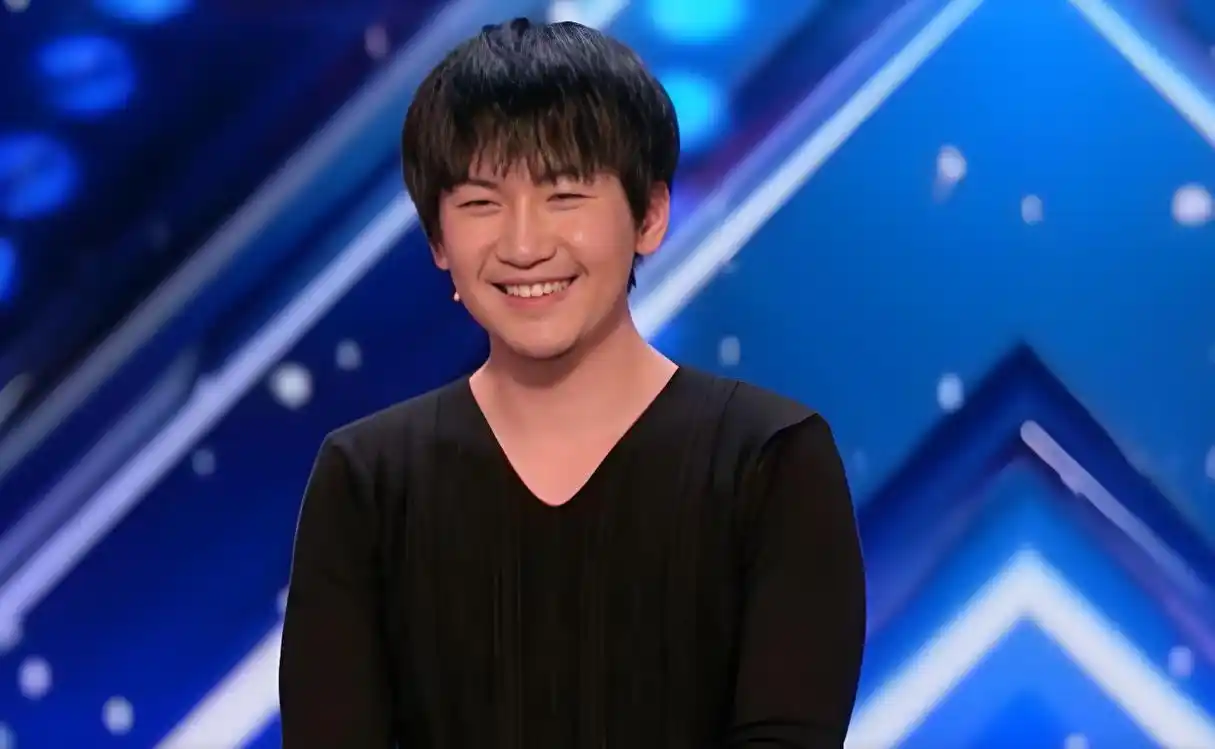
Foresight News also brought up another case involving a public figure and major crypto losses. The article said that in October 2025, Jay Chou posted two Instagram updates in a row looking for someone and named his longtime friend, magician Tsai Wei-tse. Chou wrote: "This friend has been missing for a while and gave me a pile of excuses, and I believed all of them. Please finish your performance properly. Do you think I’m not a magician too? If you still don’t show up, you’re finished." ("This friend has been missing for a while and gave me a pile of excuses, and I believed all of them. Please finish your performance properly. Do you think I’m not a magician too? If you still don’t show up, you’re finished.")
According to the report, the dispute centered on more than NT$100 million in Bitcoin trading entrusted to another person. During 2024, Chou handed about NT$100 million to NT$200 million — roughly 23 million yuan to 46 million yuan — to Tsai for Bitcoin trading on his behalf. The two had known each other for nearly a decade. Tsai had worked as a magic consultant on Chou’s world tour and had also appeared as a regular guest on the variety show J-Style Trip. Chou had publicly called him "the person in the magic world who understands me best."
The report said that after late 2024, Tsai began saying the Bitcoin account could not be withdrawn because of "technical issues" or because it had been "locked." Chou, taking their friendship into account, gave him a one-year grace period. But as that deadline got close, Tsai reportedly moved from dodging the issue to going completely silent. A promissory note he had issued for repayment also turned out to be worthless because of insufficient funds. The report added that JVR Music, Chou’s company, received debt-collection documents from a third party, hinting that Tsai may have used the company’s name in other financing or trading arrangements and left the company exposed to the consequences.
Entrusted crypto investing risk comes back into focus
The article’s argument was blunt: both cases show the same tough reality. Even wealthy public figures can have serious blind spots when it comes to custody and verification of crypto assets. In Dishi’s case, the worry is that he may have been holding tokens on a chain that did not meaningfully exist at all. In Chou’s case, the danger came from handing huge sums to someone he knew for discretionary Bitcoin trading.
The report ended by saying that under current Chinese regulatory policy, business tied to virtual currencies is treated as illegal financial activity, and losses caused by entrusting others to invest in virtual currencies are hard to protect at the legal level.