

DogeOS said Wednesday that it has opened the public testnet for its Dogecoin application layer, according to its press release. A testnet is a trial network where developers can test applications before real money is involved.
Dogecoin was created in 2013 by Jackson Palmer and Billy Markus as a joke, and it functions as a peer-to-peer digital currency. Since then, it has grown into a multi-billion dollar network, a social symbol, and, for some deep-pocketed investors, a serious investment vehicle.
DogeOS is aiming to add apps to Dogecoin
At a technical level, DogeOS is trying to give Dogecoin something Ethereum is widely known for: applications. In simple terms, Dogecoin remains the ledger, while DogeOS is an effort to build software on top of it. The project was founded by the team behind the MyDoge wallet, and it runs as a separate layer instead of changing the coin itself.
Its documentation describes the network as an 「Application Layer rollup network on Dogecoin」 running on a zkVM, software that generates cryptographic proofs to verify that transactions are valid. It is also EVM-compatible, which means smart contracts, along with wallets and tools built for Ethereum, can work there as well.
Fees on the testnet are paid in DOGE, the native asset of the Dogecoin network. The DogeOS faucet distributes 42.069 test DOGE per day.
Early teams include lending, derivatives, stablecoins, prediction markets, and games
The release names several teams that are already building on the network.
- Superposition Finance is a lending protocol where users borrow against crypto they have deposited.
- Derps is a perpetual exchange, a venue for price bets that do not expire.
- USDoge is a CDP stablecoin, minted against locked collateral and intended to maintain a stable price.
- Snag is bringing a prediction market aggregator focused on markets tied to real-world outcomes.
- PlaysOut, a mini-game publisher, is also on the list. By the end of 2025, it planned about 15 Doge-themed casual games.
How DogeOS and the Dogecoin Foundation described the launch
DogeOS founder and CEO Jordan Jefferson framed the release as a change in what Dogecoin can become, saying, 「Today marks the beginning of Dogecoin's evolution from asset to ecosystem.」
Timothy Stebbing, director of the Dogecoin Foundation, said in a statement, 「L1 ledger purity must stay intact while we introduce utility one layer above, and that is what DogeOS represents to me.」 In this context, L1 refers to the base blockchain, meaning Dogecoin itself.
That positioning makes the goal clear: add utility one layer above Dogecoin without altering the base ledger directly.
Why the project is avoiding changes to the base chain for now
There is a practical reason for that caution. Changing Dogecoin itself is a slow process. The DogeOS team submitted a proposal in July 2025 to bring zero-knowledge proofs to the base layer.
Dogecoin does not have formal on-chain governance, so a change of that kind requires contributor review, community discussion, security audits, and signals of support from miners.
The broader backdrop for the push
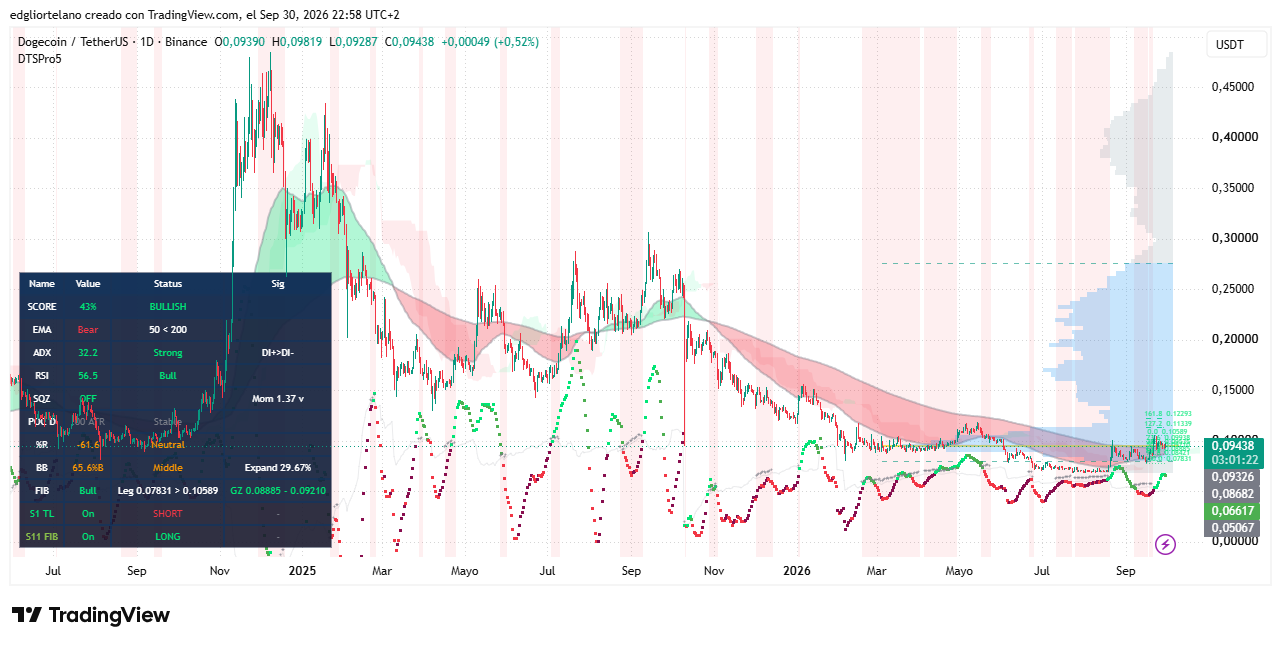
The effort to give Dogecoin more functionality comes with market context. Dogecoin is down about 75% from its all-time high and remains one of the few major coins still in a confirmed bearish trend, the report said. That has happened even as multiple Dogecoin ETFs, which investors can buy through brokerage accounts, have launched.
No mainnet date yet
The release did not provide a date for a mainnet launch, meaning the live version of the network that would handle real money.