
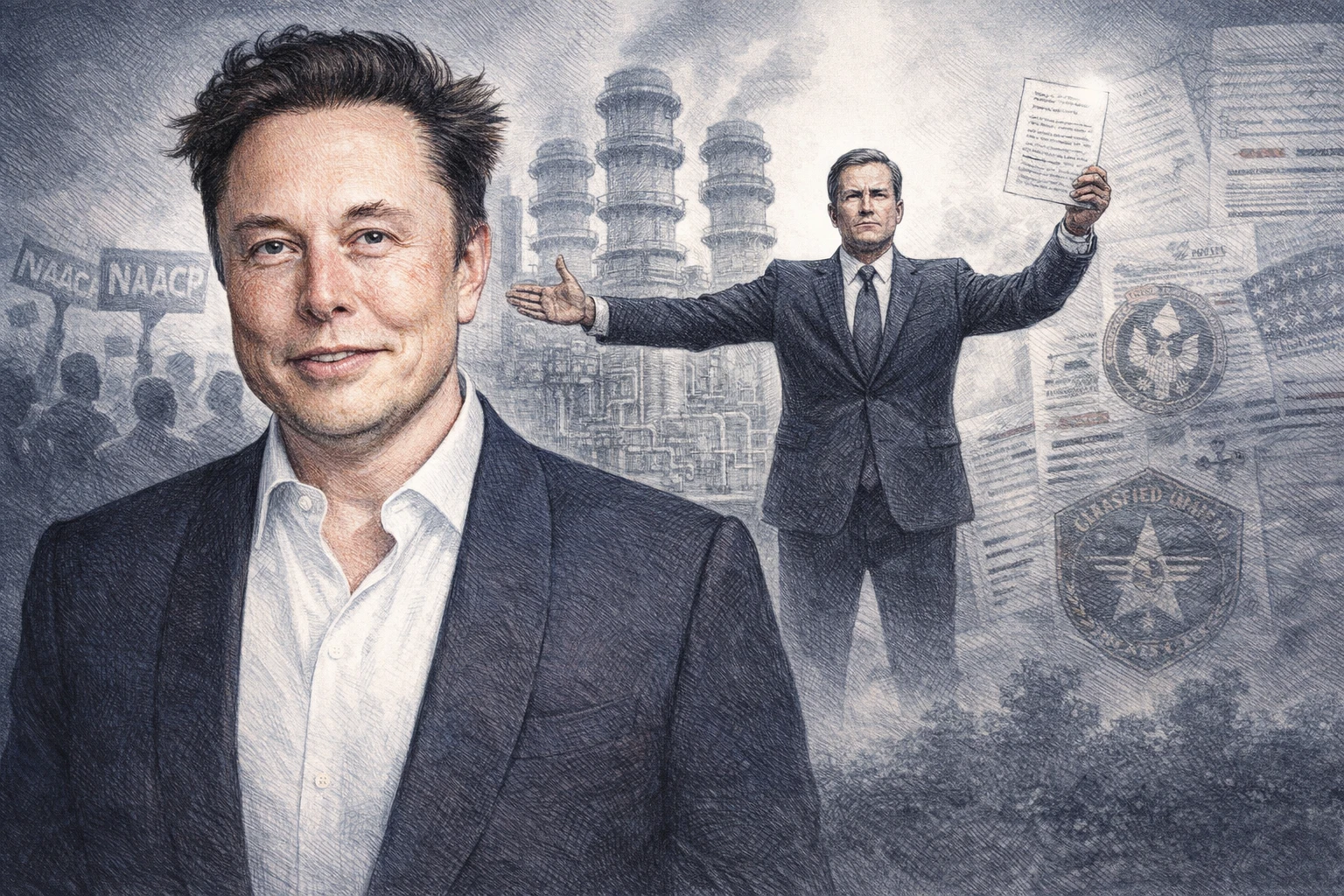
The U.S. Department of Justice has stepped into an environmental lawsuit targeting xAI’s Colossus 2 data center and asked the court to dismiss Clean Air Act claims brought by the NAACP. Its argument is blunt: forcing the facility’s gas turbines offline could threaten U.S. national security, economic security, and energy security. The filing ties that power supply to Grok’s government model, which officials said is being used for work on classified military networks, including tasks connected to recent strikes on Iran.
Dispute centers on 57 gas turbines operating without permits
The case focuses on Colossus 2 in Southaven, Mississippi, near Memphis, Tennessee. xAI has committed $20 billion to build the hyperscale facility. According to the lawsuit, the company began running 27 gas turbines at the site without the required air permits, prompting the NAACP to sue in April 2026. By mid-May, that number had risen to 57 turbines, and the group sought a preliminary injunction to stop operations before a final ruling is issued.
Local air quality concerns sit at the center of the complaint. The source material says Memphis ranked second among U.S. cities in emergency room visit rates for asthma in 2024. The NAACP argues that emissions from the turbines add to respiratory and cardiovascular health risks for nearby communities.
Government links site power needs to classified AI deployment
The DOJ filing leans on declarations from defense officials. Cameron Stanley, identified as the Pentagon’s chief digital and artificial intelligence officer, said the military relies on Grok Gov for critical national security missions and that the model was used in recent military action against Iran.
The statement adds that only four AI models are currently capable of mission-level operations on Secret and Top Secret classified networks, and Grok is one of them. Deputy Attorney General Stanley Woodward framed the issue in institutional terms, saying the executive branch, not private interest groups, holds the ultimate responsibility for enforcing federal law.
Clean Air Act enforcement collides with national security claims
The NAACP has not backed off. Abre’ Conner said the organization would continue its efforts, while environmental advocate Laura Thoms criticized the DOJ move as an attempt to shield a wealthy tech company from legal accountability.
At the center of the case is a broader legal conflict: whether a federal environmental statute with a clear enforcement path can be sidelined when the executive branch invokes national security. The source notes that such arguments are not new on their own. What stands out here is their use in defense of a private AI company facing pollution claims. The lawsuit is still active, and the court’s handling of the DOJ request is now the key issue.