
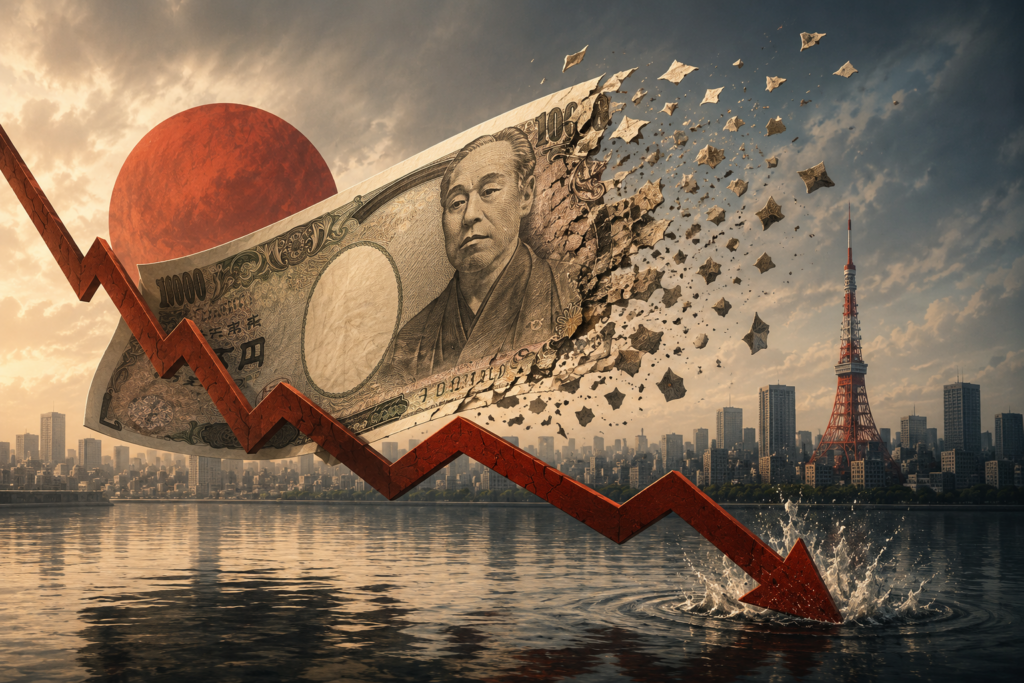
The U.S. dollar rose past 163 yen on Tuesday, sending the Japanese currency to its weakest level since 1986 despite earlier intervention by Japanese authorities worth about $71.9 billion. The move has shifted market focus to 165, with traders watching whether the Bank of Japan and the Ministry of Finance will step in again.
Japan already spent 11.73 trillion yen in support operations
Japan’s Ministry of Finance had already entered the market between April 28 and May 27, deploying 11.73 trillion yen, or roughly $71.9 billion, to support the currency. Even so, the yen later broke below the previous line of defense, showing that direct intervention alone has not been enough to reverse the broader trend.
Japanese Finance Minister Katayama Satsuki last week issued what the report described as her strongest warning in weeks, signaling that another round of intervention remained possible. But verbal warnings have had limited deterrent power in the foreign-exchange market.
Exchange rate hits 163.24 as the dollar index also rises
Market data in the report showed the yen at 163.24 per U.S. dollar. At the same time, renewed U.S.-Iran tensions pushed oil prices higher, while rising U.S. Treasury yields added momentum to the dollar. The U.S. Dollar Index, which tracks the greenback against six major currencies, rose 0.2% to 101.173.
That leaves Japanese policymakers in a difficult position. Letting the yen weaken further could feed into everyday prices, while another intervention campaign may bring only limited results.
Analysts say Japan has fewer policy tools left
Yujiro Goto, chief FX strategist at Nomura Securities, said in a report that as long as oil prices remain elevated and authorities stay out of the market, the slow climb in dollar-yen may continue. The immediate question for the market, he said, is still whether officials will act.
Brendan Fagan, a macro strategist at Bloomberg Markets Live, took a broader view of the selloff. He said the yen has now fallen to levels rarely seen since December 1986, while rising global bond yields and persistently high energy prices are tying policymakers’ hands and leaving fewer effective tools available.
After 162 gave way, the market is watching 165
The 162 level had long been seen as an unofficial line of defense, but that threshold has now been broken. In response, the market is increasingly treating 165 as the next potential intervention trigger, reflecting expectations that Japanese authorities may be tolerating more yen weakness than before.
BofA Securities also warned that if authorities continue to hold back, the yen could slide further to 170.