
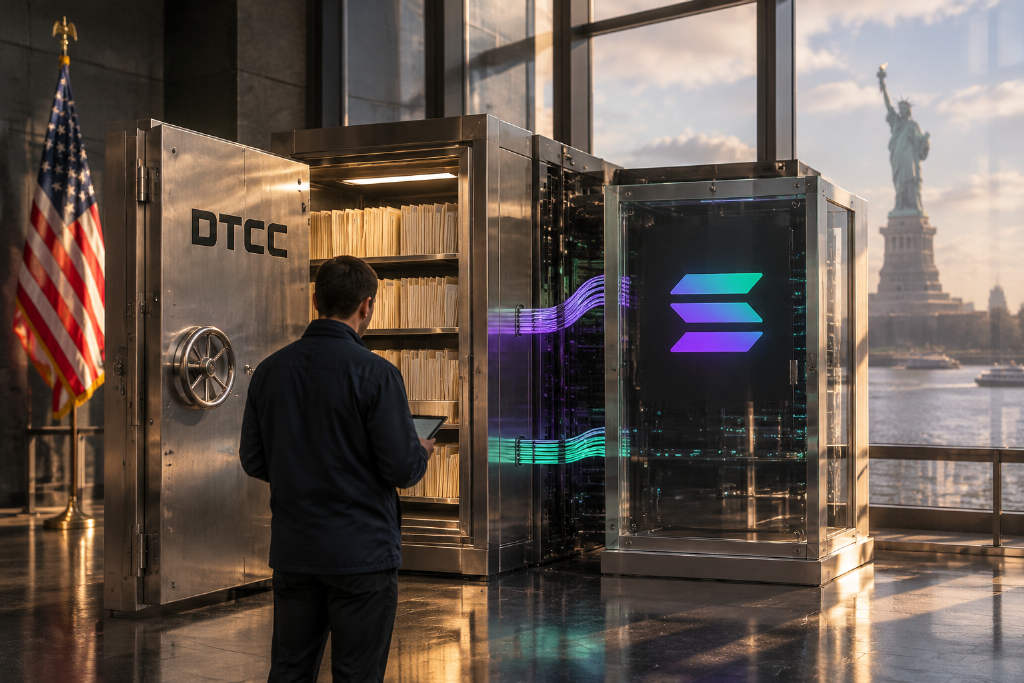
DTCC plans Solana integration for its tokenization service
The Depository Trust & Clearing Corporation (DTCC) plans to connect its Digital Securities Management service, or DTS, to Solana. The integration is expected to launch in the second half of 2027, according to a Nov. 12 press release from the Solana Foundation.
Once available, eligible traditional securities held in custody by the Depository Trust Company (DTC), DTCC’s subsidiary, will be able to be converted into tokenized assets on Solana. DTS is designed to support conversions between traditional and tokenized forms of eligible assets, along with token issuance, conversion and subsequent administration.
Solana joins DTCC’s multichain setup
DTCC’s planned Solana connection forms part of a multichain and interoperability strategy. Frank La Salla, DTCC’s chief executive officer, said the integration would give market participants more choice over which blockchain ecosystem they use for DTC tokenized securities.
La Salla said the arrangement would preserve protections associated with traditional markets while expanding opportunities related to liquidity, collateral mobility and capital efficiency.
Brian Steele, DTCC’s president of clearing and securities services, said DTC tokenized assets made available on Solana and other connected networks would retain the same investor protections, ownership rights and regulatory safeguards as the traditional holding form.
The service launched with 34 securities
DTCC’s official product page states that DTS launched with 34 securities available for tokenization. Each token corresponds on a one-to-one basis to the related security held at DTC.
In an Oct. 28 launch announcement, DTCC said DTS had connected to Canton Network and DTCC’s private Besu blockchain. The company also said it planned to add other networks in 2027. Solana is the additional network identified in the latest announcement.
DTCC said DTC had previously received a no-action letter from staff at the U.S. Securities and Exchange Commission (SEC). The eligible asset categories covered by the service include Russell 1000 constituent stocks, exchange-traded funds tracking major indexes and U.S. Treasuries.
Those categories describe the assets that may qualify for the service. They do not mean that every security in those categories has already been included among the initial 34 securities.
Twenty DTC participants had signed agreements to use DTS when the service launched, with additional participants expected to complete integration over time. The service is intended for eligible DTC participants and is not offered directly to every retail wallet.
Tokenized assets retain the linked securities’ rights
DTCC’s product materials state that the tokens retain the legal rights, economic benefits and protections associated with the underlying securities. They also use the same CUSIP identifier, keeping the traditional and tokenized positions connected.
Eligible wallets registered with DTC can transfer the tokens on a peer-to-peer basis around the clock. The tokens include compliance controls designed to allow ownership changes to be tracked on a near-real-time basis. Smart contracts can help automate parts of the compliance and distribution arrangements.
For institutions using DTS, adding Solana creates another network option for holding and moving tokenized securities. The traditional securities and their on-chain tokenized forms will still be converted through DTC’s service. The use of collateral and securities positions must also remain within the networks and eligibility framework supported by DTS.



