
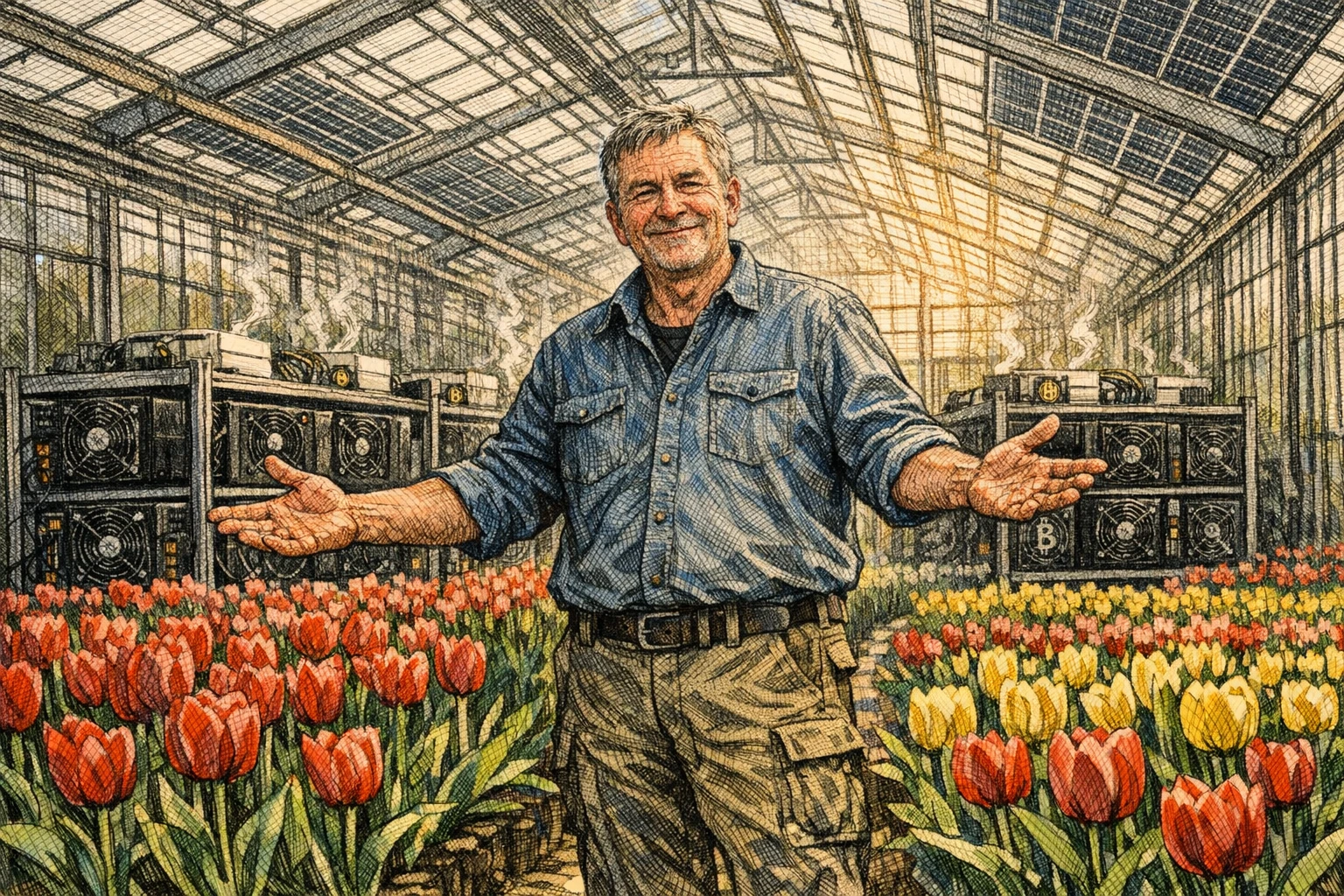
A Dutch tulip farm turned to bitcoin mining waste heat to replace natural gas heating during the 2022 energy crisis. The story resurfaced after crypto account Bitcoin Teddy shared it, racking up over 19,000 interactions. But beneath the “tulip farmer mines bitcoin” narrative lies an energy sharing agreement.
The Numbers
The farm installed 6 ASIC servers, each worth about €15,000. The farmer, Koning, co-owns them with mining firm Bitcoin Bloem. Bitcoin rewards are split proportionally. Bitcoin Bloem covers electricity costs, sourced from the greenhouse roof's solar panels. The waste heat is 20°C warmer than ambient, sufficient for tulip cultivation. Koning said: “The most important thing is saving on natural gas. Earning bitcoin is secondary.”
What 52.4% Clean Energy Really Means
Cambridge data shows 52.4% of global bitcoin mining uses clean energy. That doesn't mean mining is green—it means miners flock to cheap power, which sometimes happens to be renewable. The Dutch greenhouse is clean by design: solar power, waste heat reuse, zero extra carbon. But replicability is limited: it requires a stable heat load, enough roof space, and a partner willing to co-own gear.
Why the Story Sticks
19,000 interactions reflect narrative appeal, not business viability. “Tulip farmer mines bitcoin” is catchier than “an energy sharing contract between a miner and a farm.” The model works only as long as bitcoin price and energy costs align. Rising network hashrate is squeezing individual ASIC returns. The equation changes at different bitcoin prices. Markets are always right—until energy prices shift again.