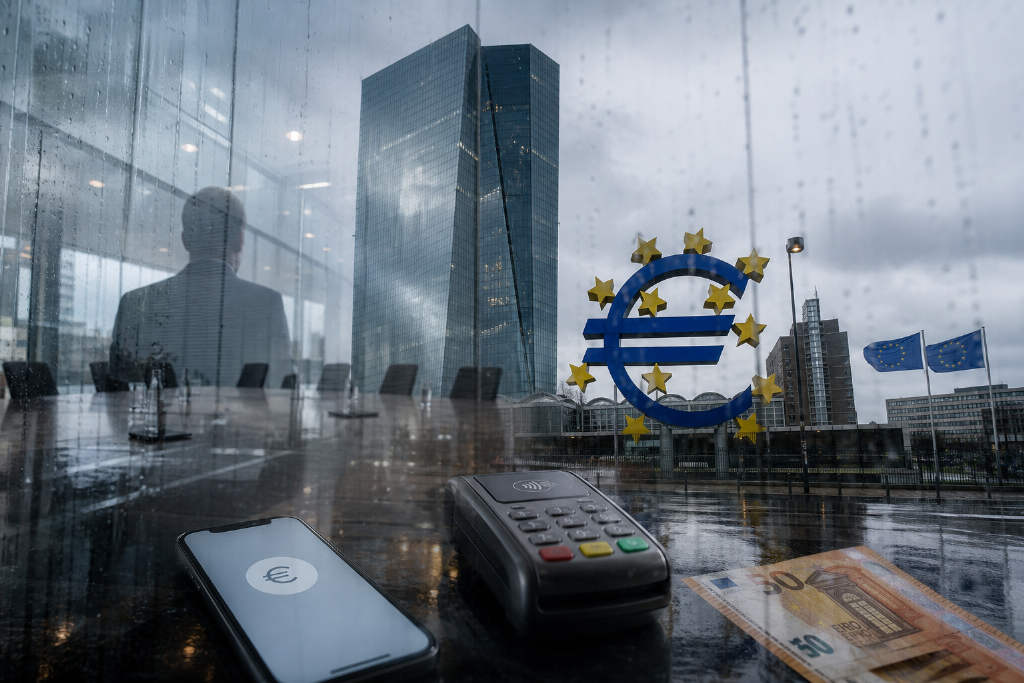
ECB board member says digital euro will offer stronger privacy than standard bank transfers

ECB board member says digital euro will offer stronger privacy than standard bank transfers

N
News Editor
2026-08-26 11:21:44
European Central Bank Executive Board member Piero Cipollone said in a recent interview that the digital euro is intended to provide stronger privacy protections than ordinary bank transfers. He said the Eurosystem is structurally unable to link a specific person to a digital euro transaction, whether the payment takes place online or offline. For offline use, he described payments as occurring directly between individuals, with transaction details visible only to the payer and the payee, which he said would make the experience comparable to cash. For online payments, Cipollone said only the banks involved in the transaction would be able to identify users, and only for anti-money laundering purposes. He also rejected concerns that the digital euro is designed to replace physical cash, pointing to the ECB’s recent public consultation on redesigned euro banknotes. His remarks come as criticism of the digital euro has intensified. Earlier this month, Austrian digital rights group Epicenter.works and other civil society organizations argued that the project’s privacy safeguards rely too heavily on institutional promises rather than technical enforcement. The digital euro regulation was approved by the European Parliament last month, and the launch is planned for 2029.

European Central Bank (ECB) Executive Board member Piero Cipollone said in a recent interview that the digital euro will provide stronger privacy protections than ordinary bank transfers.

According to Cipollone, the Eurosystem is structurally unable to connect a specific individual with that person’s digital euro transactions, regardless of whether the payment is made online or offline.

Offline payments compared with cash

Cipollone said offline payments would take place entirely on a direct person-to-person basis. Transaction details would be visible only to the payer and the payee, which he said makes the setup equivalent to cash transactions.

For online transactions, he said only the banks participating in the payment would be able to identify the user, and only for anti-money laundering purposes.

Pushback against concerns over cash replacement

Cipollone also rejected concerns that the digital euro would replace physical cash. He pointed to the ECB’s recent public consultation on the design of new euro banknotes and said, 「if institutions intended to eliminate cash, this would make no sense」.

His comments came as public opposition to the digital euro has been rising.

Civil society groups question privacy model

Earlier this month, Austrian digital rights organization Epicenter.works and other civil society groups said in a joint statement that the digital euro’s privacy safeguards 「rely too heavily on institutional commitments rather than technical enforcement」. They warned that legislative promises could be weakened during implementation, reinterpreted in court, or even broken.

The digital euro regulation was approved by the European Parliament last month, with a launch planned for 2029. ECB President Christine Lagarde previously said the digital euro would coexist with physical cash.

This article was originally published by Bit.Fan. For more cryptocurrency news and market insights, visit www.bit.fan.
140

Disclaimer:

The market information, project data, and third-party content displayed on this platform are for industry information sharing only and do not constitute any form of investment advice or return commitment.

Cryptocurrency trading carries high risks. Users should fully assess their risk tolerance and make independent decisions. All profits, losses, and legal responsibilities are borne by the users themselves.