
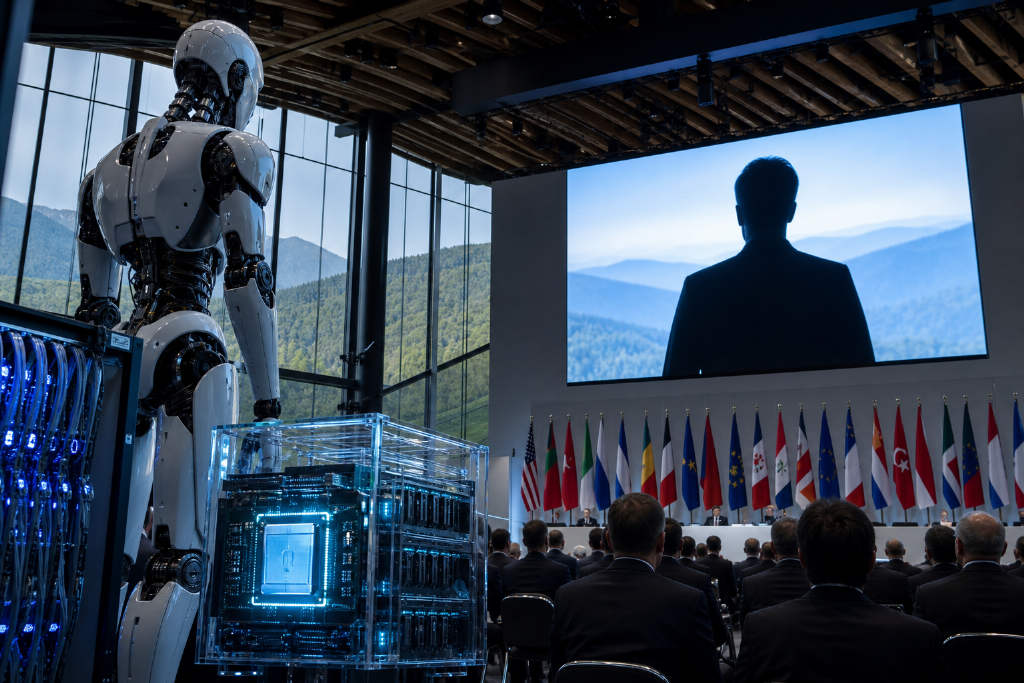
Elon Musk made a series of forecasts on artificial intelligence, humanoid robots, power supply and regulation during a video address at the G20 central bank governors and finance ministers summit in Asheville, North Carolina, on September 2, according to BlockBeats.
AI could cover digital work by next year
Musk said AI software would become extremely capable within 12 to 18 months. At some point next year, he expects it to reach Stockfish-level performance, leaving humans unable to compete with AI in software writing.
He predicted that AI would be able to perform all digital work by the end of next year. That includes work that does not require a person to physically shape an object. Musk gave a rough estimate that AI could expand the global economy by 20% to 30%, equivalent to an additional $20 trillion to $30 trillion per year.
A 1 billion humanoid robot forecast
Musk offered an aggressive forecast for humanoid robots. He said there could be at least 1 billion humanoid robots worldwide within 10 years, with each robot producing at least five times as much as a human. Their combined productivity, he predicted, would exceed that of all humans.
According to Musk, the usefulness of humanoid robots depends on the product of AI software capability, AI chip capability and electromechanical dexterity. He said all three are currently improving at an exponential rate. Robots will also begin manufacturing robots, he added, creating recursive explosive growth.
Power supply remains a constraint
Musk warned that AI development faces a serious power bottleneck. He expects AI chips to face a power shortfall of at least 15 gigawatts by 2027. AI chip production is growing by 40% to 50% per year, while available power outside China is growing by only 10% to 20% annually. The growth rates are badly out of balance.
Google, Anthropic and several other companies have begun renting computing capacity from SpaceX, Musk said. He attributed that demand to SpaceX having addressed power supply through the construction of its own power plants.
Call for legal-by-default regulation
Musk urged regulators to treat AI and other new technologies as legal by default rather than illegal by default. He said regulators should encourage and embrace the development of new technologies.