


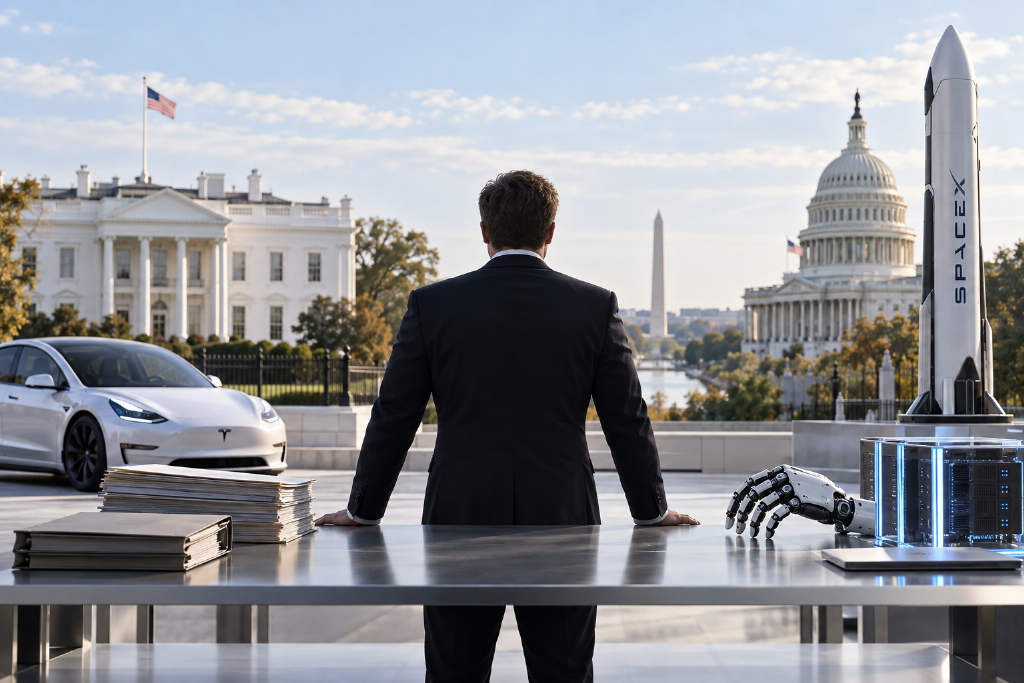
Elon Musk, chief executive of Tesla and SpaceX, reflected on his experience leading the Department of Government Efficiency in a preview for biographer Walter Isaacson’s new podcast, The Builder, according to Cailian Press as cited by ChainCatcher.
Musk said efforts to cut government spending did not solve the US fiscal deficit from inside the system. He said the only way to address the US debt problem is through AI and robotics, and that spending cuts by themselves would not be enough.
He also said Donald Trump, both chambers of Congress and the judicial system lacked the real willingness to reduce government spending. Musk added that Trump wanted to be liked and did not want to be blamed for funding cuts.
Musk said he had been 「a little too drawn in」 and had stayed away from his companies for too long. If he were to do it again, he said, the formal role should have lasted only one or two months instead of four, and he should have gone back earlier to focus his energy on AI.
Asked whether working in the White House West Wing was intoxicating, Musk said it was, at least to some extent, because it was “pretty cool” to witness major decisions in the Oval Office.
The report, citing campaign finance disclosures and a spokesperson for Musk’s political action committee, said his political spending in the current election cycle totaled about $366 million. Of that amount, at least $276 million has gone to Republican-linked groups and their super PACs since July this year.
The article also mentioned comments from US Treasury Secretary Bessent, who said 3% economic growth could offer a path to grow out of debt. Anthropic co-founder Jack Clark said at the IMF-World Bank annual meetings that in an extreme scenario where AI capabilities improve rapidly and become widely adopted, US GDP could reach $44.4 trillion by 2030, though he said that figure was not a baseline forecast.
The Congressional Budget Office expects the federal deficit to reach $1.9 trillion in fiscal 2026 and widen to $3.1 trillion by 2036.