
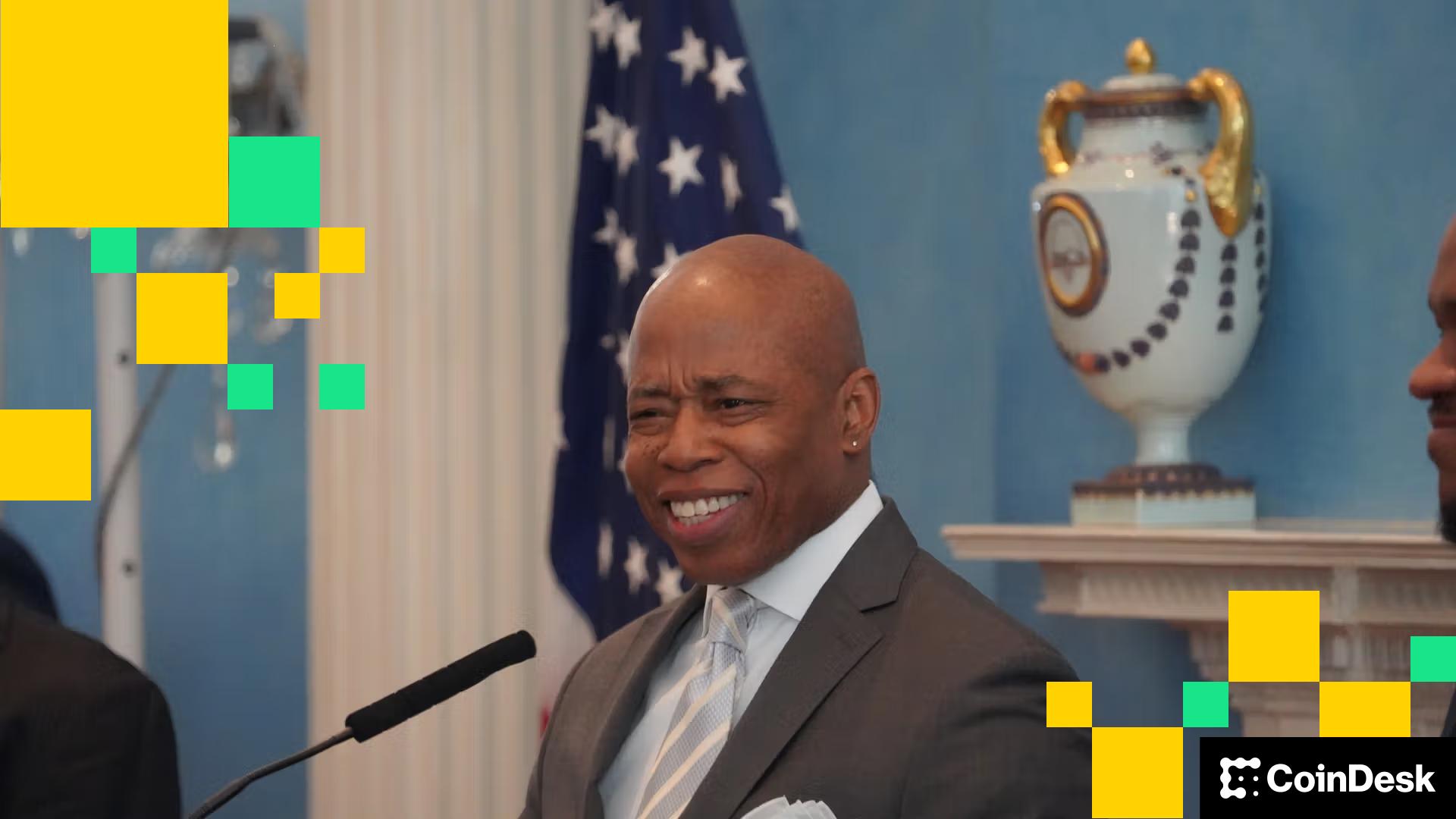
Eric Adams’ team has denied that the former New York City mayor profited from NYC Token or moved investor funds linked to the project. The response came after on-chain data showed a major liquidity withdrawal soon after the token launched, followed by a sharp market sell-off.
In a statement emailed to CoinDesk late Wednesday, Adams’ team said: “To be absolutely clear: Eric Adams did not move investor funds. Eric Adams did not profit from the launch of the NYC Token. No funds were removed from the NYC Token.” The statement was issued after reporting earlier in the week raised questions about wallet activity tied to the token’s deployer.
On-chain data points to a $3 million liquidity removal
According to CoinDesk’s earlier report, a wallet linked to the deployer of the Solana-based token removed roughly $3 million in USDC liquidity near the top of the market. Around that time, NYC Token briefly reached a market capitalization of about $580 million, before the price quickly dropped by nearly 80%.
On-chain records reviewed by CoinDesk also showed that about $1.5 million was later added back after the token had already fallen more than 60%. Roughly $900,000 was not returned. Those movements triggered accusations of a possible rug pull, a term used when liquidity is withdrawn in a way that leaves traders unable to exit without taking steep losses.
Project account said liquidity was rebalanced
Earlier posts from NYC Token’s social media account said the team had “rebalanced the liquidity” in response to heavy launch demand and later restored part of the funds to the pool. Price action, though, has shown little sign of a meaningful recovery.
As of Thursday morning in Asia, DEXScreener data showed NYC Token trading around $0.13, down sharply from highs near $0.47 shortly after launch. From its peak, the token has erased more than $400 million in market value.
Civic-use claims remain, but fund details are still unclear
Adams has promoted NYC Token as a project connected to civic causes. In interviews, he said proceeds would go to education programs, scholarships for students in underserved communities, and initiatives aimed at combating antisemitism and anti-Americanism. Details on how the funds would be managed or distributed have not been disclosed.
The episode has renewed attention on politically branded tokens, which often draw strong early demand and then face abrupt reversals tied to thin liquidity and concentrated control. Adams’ team continues to deny wrongdoing, while questions around the token’s structure and on-chain fund flows remain unresolved.