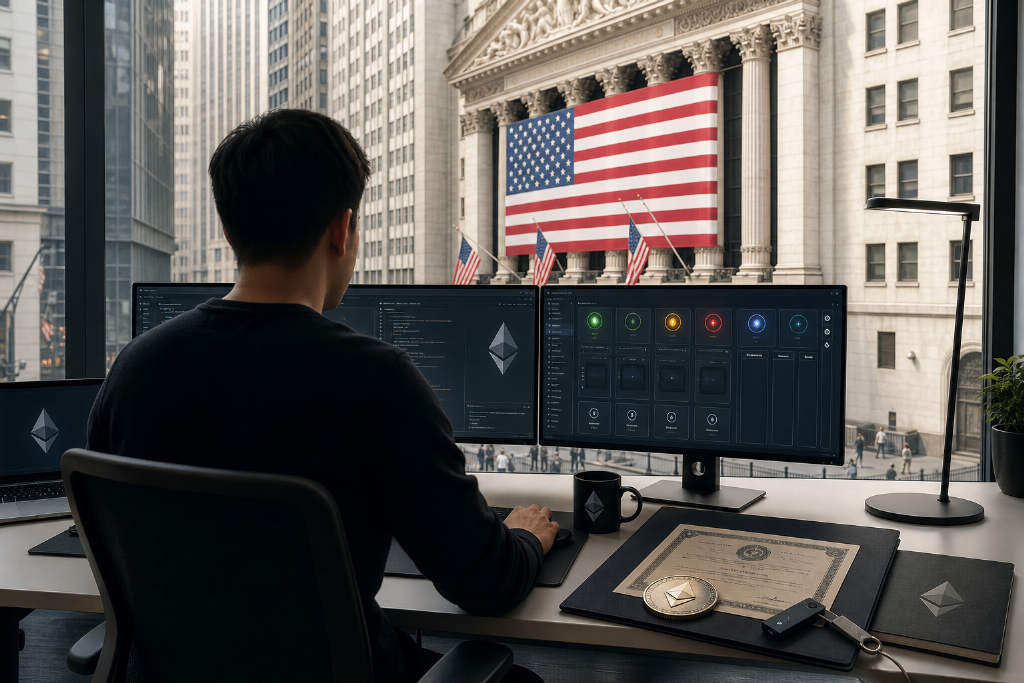
EthHub founder Eric Conner said he has written a new Ethereum Request for Comments proposal, ERC-8391, aimed at giving tokenized stocks and real-world assets an onchain asset-status interface. The proposal addresses a practical gap in current smart-contract design: tokenized equities can trade around the clock onchain, while the New York Stock Exchange is open only 32.5 hours per week. In that setup, contracts may struggle to tell whether a stale price reflects a normal market closure, a broken oracle feed, or a corporate event such as an acquisition during off-hours. Those situations can look identical at the byte level onchain, even though the correct contract response would differ. Conner also pointed to other pieces of information that prices alone do not convey, including trading halts, limit-up or limit-down locks, and redemption windows. Under ERC-8391, the standard would define what questions a contract can query about an asset’s status, covering market phase, halts, valuation activity, and redemption windows. Oracles would be able to feed that data into the interface, with the token responding to those queries.
EthHub founder Eric Conner said he has drafted a new ERC proposal, ERC-8391, designed to provide an asset-status interface for tokenized stocks and real-world assets, or RWA.
Conner said tokenized equities can trade onchain 24/7, while the New York Stock Exchange is open only 32.5 hours a week. That gap creates a problem for smart contracts: they may not be able to tell whether a stale price is the result of a weekend market closure, an oracle feed failure, or an event such as a company being acquired while the market is closed. Onchain, those cases can produce the same bytes, even though the right response from a contract would be very different.
He added that information such as trading halts, limit locks, and redemption windows cannot be expressed through price alone.
Under the proposal, the standard would define the set of questions contracts can query, including market phase, trading halts, valuation activity, and redemption windows. Oracles could feed the relevant data into the interface, and the token would answer those queries.
This article was originally published by Bit.Fan. For more cryptocurrency news and market insights, visit www.bit.fan. Disclaimer:
The market information, project data, and third-party content displayed on this platform are for industry information sharing only and do not constitute any form of investment advice or return commitment.
Cryptocurrency trading carries high risks. Users should fully assess their risk tolerance and make independent decisions. All profits, losses, and legal responsibilities are borne by the users themselves.