
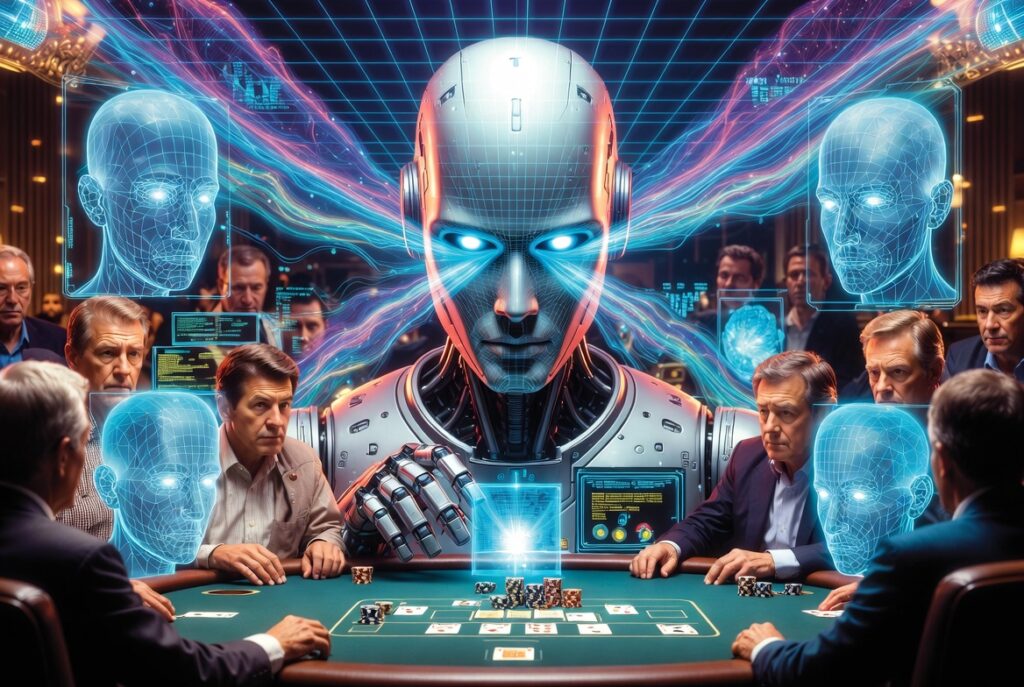
ESPN has intermittently used an “AI tells detection” system during broadcasts of the 2026 World Series of Poker (WSOP) Main Event, according to a WIRED report published on Aug. 4. The tool is designed to infer hand strength from visible body-language cues, but several top professional players questioned whether it has much value beyond television presentation.
AI model tracks visible behavior during televised hands
In no-limit Texas Hold’em, players often look for “tells” — unconscious reactions that may reveal something about an opponent’s holding. WIRED reported that ESPN introduced a system called “AI tells detection” during coverage of the 2026 WSOP Main Event.
The system was developed by U.S. Air Force AI engineer Luke Geel. It analyzes what tournament cameras capture and builds a player-specific tells database. The model tracks eye movement, blinking frequency, posture, chip-handling habits and small indicators such as hand fidgeting. It then combines those observations with the result of each hand and shows a live estimate of likely hand strength on screen, including categories such as a strong made hand, a draw or a bluff.
Players say screen time is too limited to train a strong model
Professional players interviewed for the report said the idea may be interesting for viewers, but they do not see it as a serious threat to high-level poker. One reason is scale: the 2026 WSOP Main Event drew more than 9,000 entrants, and most of those players receive very little television exposure.
Without enough screen time, they argued, the AI cannot build a reliable and robust data model for most of the field.
Michael Gagliano, a professional player with 17 years of experience who reached this year’s Main Event final table, said he tried to review ESPN footage during a break after the final table was set in hopes of spotting useful information about opponents. He said there still was not enough usable footage to make practical decisions from what he saw.
“I don't know how much action I can actually take from what I saw,” Gagliano said.
Shaun Deeb says real tells go well beyond what cameras see
Shaun Deeb, a two-time WSOP Player of the Year, said the blind spots are much larger than many viewers may assume. He said real-world physical tells include leg shaking, the way someone looks at their cards, verbal exchanges, breathing rhythm and even pulse changes — and that “most of that stuff the camera just doesn't capture.”
Deeb added that even if an AI system could perfectly judge whether a player appears confident or weak in the moment, that still would not mean it could accurately infer actual hand strength. Different players project confidence very differently with the same holding, and tournament pressure adds another variable that is not easy to quantify in a model.
Developer cites mixed blind-test results; final table excluded
Geel himself acknowledged that the system needs a larger sample size. He also said blind-test results from other poker events have been mixed.
An Omaha Productions representative said the AI tool will not be used at the final table. Deeb was also unconvinced by its entertainment value, comparing it to an attempt to make poker look more like other sports that ended up missing the mark.
Strict anti-cheating rules limit any path to live use
Looking ahead, the report said AI could improve more quickly in high-stakes games that receive frequent broadcast coverage and generate larger data sets. Deeb said he is not worried about that translating into a live competitive edge at the table.
He noted that live poker events already strictly ban electronic devices on the table to prevent cheating, and said devices such as Meta smart glasses would likely be prohibited as well. As long as in-person observation remains essential, he said he is comfortable taking humans over AI.
“I’d take my team against AI and bet on it,” Deeb said.