
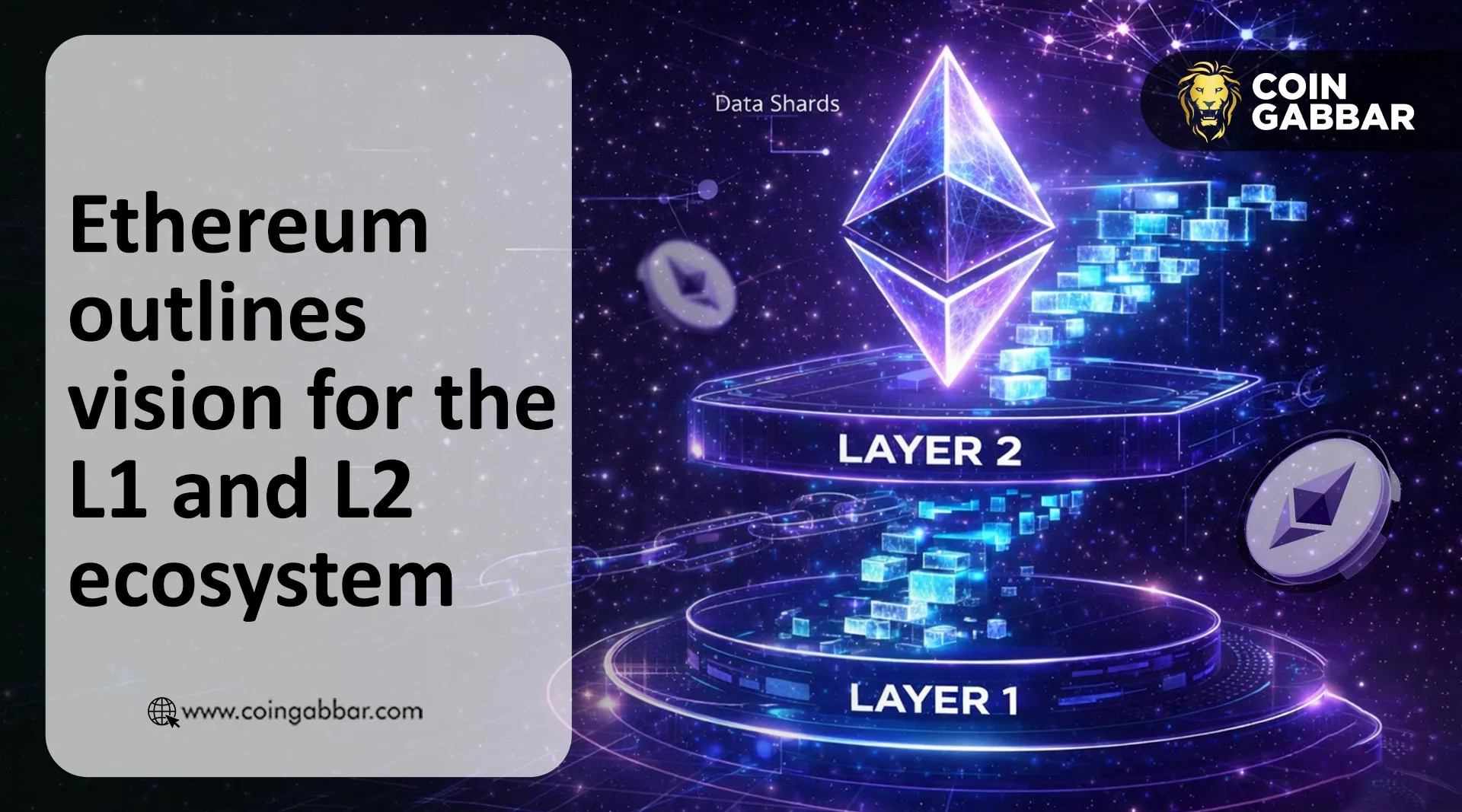
The Ethereum Foundation published its "Ethereum Vision 2026" on July 22, outlining a major role shift within the network. Layer 1 will keep its status as the global settlement layer and DeFi hub, while Layer 2 networks are now tasked with offering specialized, customized services instead of merely scaling transactions.
L1's Unchanged Core, L2's New Mission
The document underscores that Ethereum's mainnet remains the final settlement layer for high-value transfers and critical DeFi protocols. Meanwhile, L2s are evolving into application-specific environments—tailored for finance, gaming, or data services—providing optimized execution and better user experiences.
Security Stages: From Stage 1 to Full Decentralization
The Foundation set a clear security ladder for L2 projects. A minimum of Stage 1 is required, meaning strong security with partial decentralization. The encouraged next step is Stage 2, achieving trust-minimized, fully decentralized systems. This phased approach balances safety with room for innovation.
Solving Cross-Chain Fragmentation: Sync Composability & Native Rollups
User experience across multiple chains remains a pain point. The vision paper prioritizes synchronous composability, allowing apps on different L2s to interact instantly, and native rollups—rollups deeply integrated with Ethereum L1—to eliminate bridge risks and friction.
Blobs at 30% Capacity, Further L1 Scaling Promised
Blob space on Ethereum is currently only about 30% full. The Foundation committed to further scaling both L1 and Blob capacity to accommodate future L2 growth. The update cycle will align with biannual network upgrades.
Justin Drake's "Strawman Roadmap": 5-Year Plan, Bi-Annual Upgrades
Researcher Justin Drake shared a non-binding but significant "strawman roadmap" covering five years. It proposes system upgrades every six months, covering both L1 and L2. The first six-month move has already been signaled, marking a shift to regular, predictable development cadence.