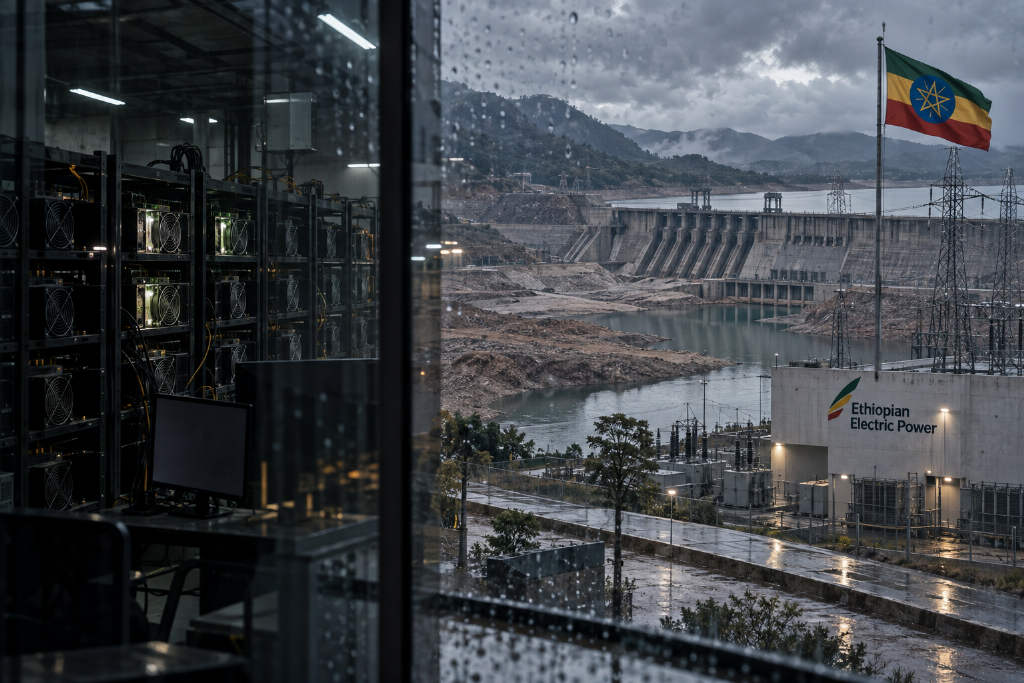
Bloomberg reported that Ethiopia has cut electricity supplied to the Bitcoin mining industry by three-quarters after inflows into the country’s hydropower dams fell sharply due to the El Niño weather pattern. The move puts pressure on a sector that had become a meaningful source of income for the state utility.
Data cited in the report showed that Bitcoin mining companies contributed 35% of Ethiopian Electric Power Corp’s revenue in the last fiscal year. At the same time, their power consumption accounted for nearly one-third of the country’s total generation capacity of 9,730 megawatts. That combination highlights how large the mining sector had become within Ethiopia’s electricity system.
The large-scale power curbs could deal a heavy blow to local mining operations, according to the report. The development points to the vulnerability of energy-intensive mining businesses in markets where hydropower output can shift with weather conditions.
According to Bloomberg, Ethiopia has reduced electricity supplied to the Bitcoin mining industry by three-quarters after inflows into the country’s hydropower dams dropped sharply due to El Niño.
Data showed that in the last fiscal year, Bitcoin mining companies contributed 35% of Ethiopian Electric Power Corp’s revenue. Their electricity use accounted for nearly one-third of the country’s total power generation of 9,730 megawatts.
The broad power restrictions could severely disrupt local mining operations.
This article was originally published by Bit.Fan. For more cryptocurrency news and market insights, visit www.bit.fan. Disclaimer:
The market information, project data, and third-party content displayed on this platform are for industry information sharing only and do not constitute any form of investment advice or return commitment.
Cryptocurrency trading carries high risks. Users should fully assess their risk tolerance and make independent decisions. All profits, losses, and legal responsibilities are borne by the users themselves.