
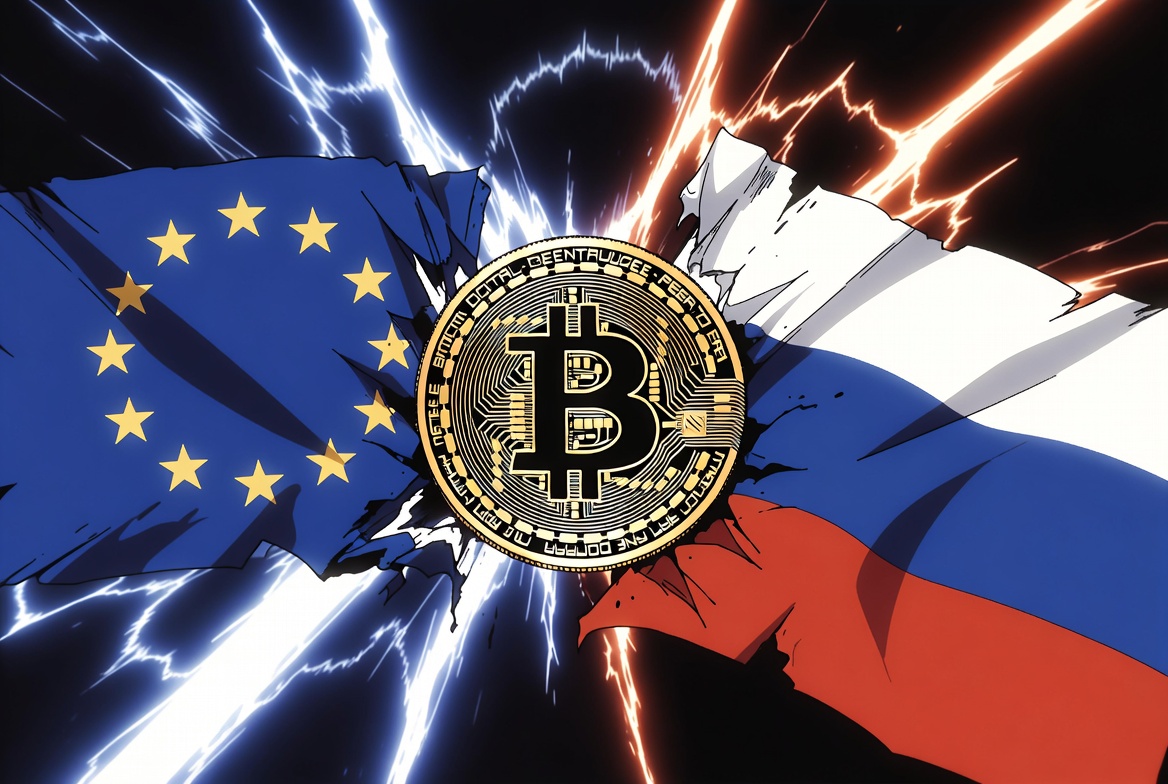
The European Council officially adopted its 20th sanctions package against Russia on April 23, 2026, adding 120 individuals and entities in the largest single round in two years. For the first time, the package includes a comprehensive sectoral ban on the crypto industry, severing Russia's key channel to bypass financial restrictions using digital assets.
From Targeted Wallets to Full Industry Ban
Previous sanctions focused on specific wallets or platforms; this time the EU opted for a sweeping approach. The new regulation prohibits EU entities from providing services to all crypto-asset service providers registered or established in Russia, covering both centralized exchanges and decentralized finance platforms. Any direct or indirect transaction, transfer, or exchange with these entities is forbidden. The ban comes with a roughly one-month grace period and is expected to take effect around May 24, 2026, with existing commercial contracts only executable until that date.
Targeted Hits: RUBX Stablecoin and Third-Country Loopholes
Beyond banning CASPs, the EU directly prohibited trading of certain Russia-linked crypto assets, such as the ruble-backed stablecoin RUBX, and strictly limited any activity supporting the development or use of the Digital Ruble. The sanctions list also includes a platform based in Kyrgyzstan, which was blacklisted for facilitating trading of the Russia-backed stablecoin A7A5, signaling the EU's intent to pursue facilitators in third countries.
Escalated Economic War and Ripple Effects
The 20th sanctions package also covers transaction bans on 20 Russian banks, energy restrictions targeting Russia's shadow fleet and ports, and broad military-industrial trade bans. Notably, some Chinese companies were listed, prompting China's Ministry of Commerce to strongly oppose the move and vow to protect Chinese firms' interests, setting the stage for further geopolitical tensions. For the global crypto industry, this sanctions package marks a massive compliance upgrade: exchanges and Web3 entities with EU ties must immediately implement the highest level of KYC/AML due diligence. Any crypto asset even tangentially linked to Russia is now effectively labeled dirty asset by mainstream markets, exponentially raising compliance costs.