
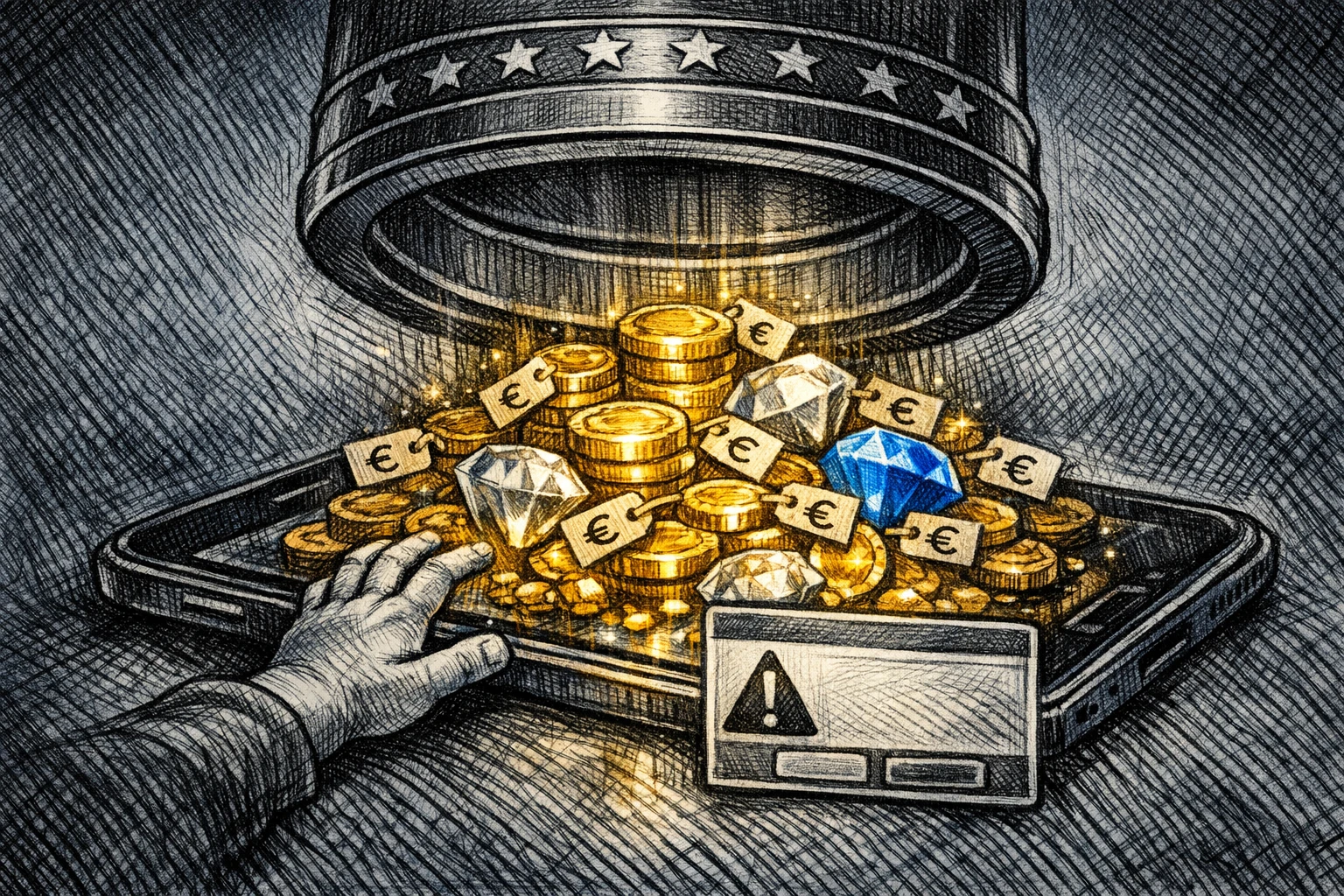
The European Union is moving to tighten oversight of virtual currencies used in mobile games, and the target is not crypto. The proposals focus on in-game units such as gems, coins, and diamonds, with possible rules that would require developers to show their value in euros or other real-world currencies and add extra confirmation steps before each purchase.
The effort is tied to the proposed Digital Fairness Act and guidance under the CPC consumer protection cooperation framework. Regulators are looking at a common monetization structure in free-to-play games: players first buy a virtual currency with real money, then spend that currency on characters, items, or speed-ups. In the EU’s view, that extra conversion layer can make spending less transparent, especially for children and players with weaker self-control.
Proposed measures would reshape the purchase flow
Based on the material released so far, the rules under discussion could require developers to clearly display the real-money price behind virtual currencies, show an additional prompt before each transaction, and seek renewed parental authorization for purchases made by minors. The practical effect would be simple: each payment step would come with a direct reminder of how much money is actually being spent.
The CPC framework has set out seven new principles. Their focus is consumer protection in mobile gaming, not digital assets or token markets. That distinction matters, because the term “virtual currency” in this case refers only to internal game pricing systems rather than cryptocurrencies such as Bitcoin.
Supercell and King say the model for free-to-play games is at risk
Game publishers have responded sharply. Supercell, the Finnish studio behind Clash of Clans, has warned that the current direction of the proposal could hurt the business model that helped free-to-play games become one of Europe’s successful technology exports. Chief executive Ilkka Paananen said in a public letter to EU officials that players might end up facing dozens of pop-up windows in a single play session.
His criticism centers on game flow. If every purchase step is interrupted, the experience changes in a very visible way. For studios built around frequent, low-friction in-app spending, that is a material shift.
Todd Green, chief executive of King, the company behind Candy Crush Saga, also argued that heavily restricting virtual currency systems would force major changes to the design logic of globally popular mobile titles. SYBO Games chief executive Mathias Gredal Nørvig, whose company made Subway Surfers, took a more measured line and said regulation should balance player protection with room for innovation.
Consultation is still underway
The proposal has not been finalized and remains in the consultation stage. What is already clear is that the EU debate is about mobile game monetization, not crypto regulation. The dispute has narrowed to two questions: how far consumer safeguards should go, and how much friction the free-to-play economy can absorb before its structure starts to change.