

The European Parliament on Tuesday adopted a policy paper on digital assets, laying out its view on how the European Union should approach crypto regulation after the full rollout of the Markets in Crypto-Assets framework, known as MiCA. The document calls on the European Commission to further assess whether decentralized finance, crypto lending and borrowing, staking, and non-fungible tokens should be brought more clearly within the EU’s regulatory scope.
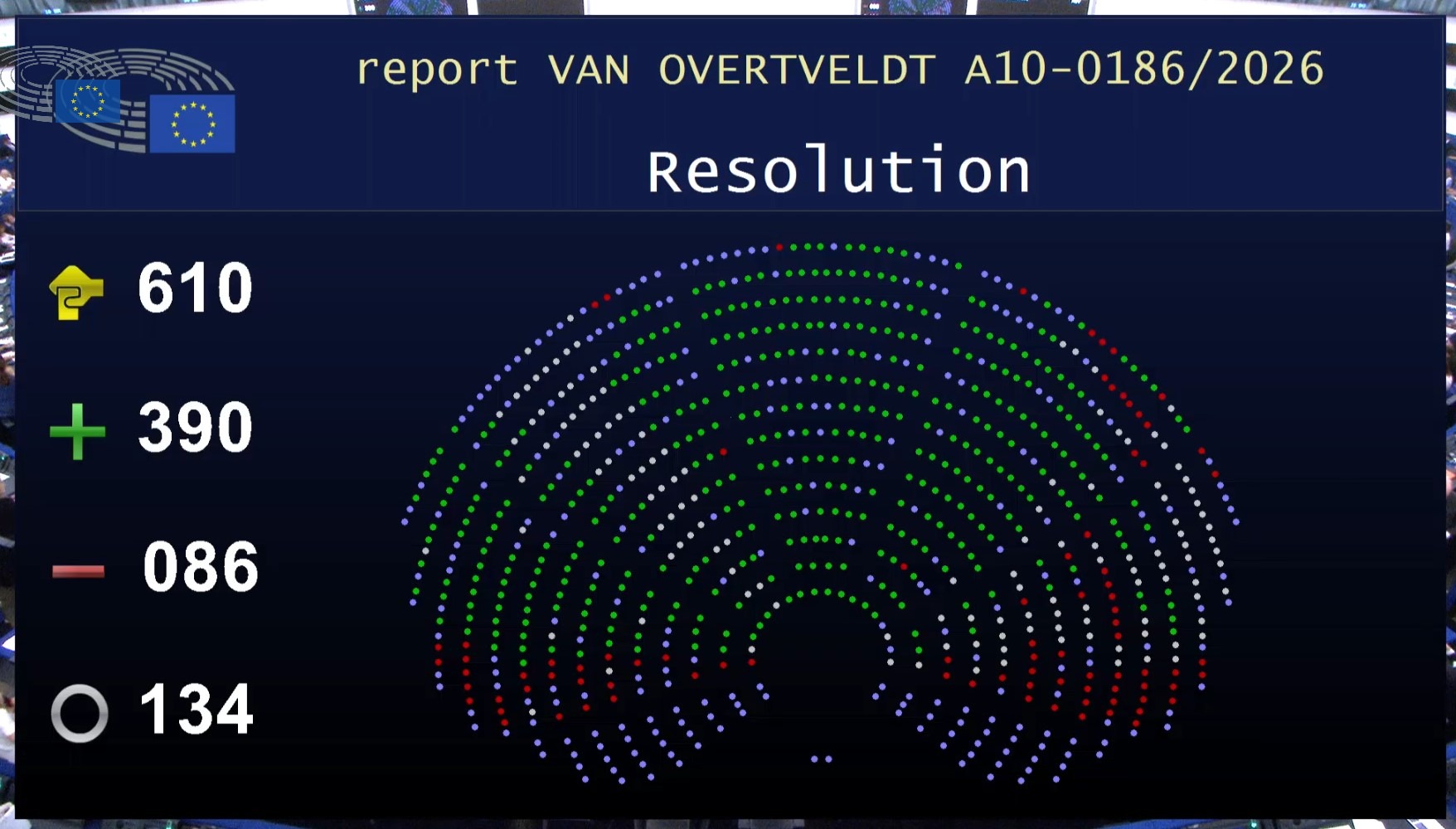
The report, titled “Digital assets – challenges for the competitiveness and integrity of the European Union’s financial system,” now represents Parliament’s formal policy position on digital assets following the vote. However, the measure does not directly amend MiCA and does not immediately create new legal obligations for crypto companies operating in the bloc.

Post-transition focus shifts to areas outside MiCA’s current scope
MiCA’s transition period ended on July 1. Under the current framework, crypto-asset service providers that fall within MiCA’s remit must obtain either EU-wide or national authorization in order to continue operating across the European Union. With that transition now over, attention in Brussels is increasingly turning to digital asset activities that remain outside MiCA’s existing perimeter.

The Parliament’s report stresses that MiCA should be applied consistently across member states. It also warns against country-specific rules that could fragment the EU’s digital asset market. In practical terms, lawmakers are signaling that they want to preserve the bloc’s single-market approach rather than allow divergent national regimes to create uneven compliance standards for similar crypto activities.

DeFi, lending, NFTs and staking move to the center of the next review cycle
Although MiCA introduced licensing and conduct requirements for crypto-asset service providers and issuers of certain tokens, major questions remain over how the EU should regulate DeFi, staking, crypto lending, NFTs, and tokenized financial assets. The report adopted by Parliament reflects growing pressure within EU institutions to address those unresolved segments more directly.

The European Commission has already started examining whether MiCA should be expanded. In May, it opened a public consultation seeking feedback on possible adjustments to the framework. That consultation included questions on whether additional crypto activities should be covered and whether MiCA’s restrictions on interest-bearing stablecoins should be revisited.
Parliament signals support for tokenization and euro stablecoins
Beyond the call for broader regulatory assessment, the report also adopts a more constructive tone on certain parts of the digital asset market. Lawmakers argue that, if regulated consistently across the bloc, digital assets could enhance the competitiveness of EU financial markets. In particular, the paper points to potential upside in tokenization and euro-denominated stablecoins.

From a policy perspective, the vote serves more as a roadmap for the EU’s next phase of crypto rulemaking than as an immediate change to the law. For firms operating in Europe, there is no direct rule change yet. Still, the political message is clear: DeFi, lending, staking, NFTs, and related onchain activities are increasingly likely to face more explicit regulatory scrutiny as the post-MiCA agenda takes shape.