
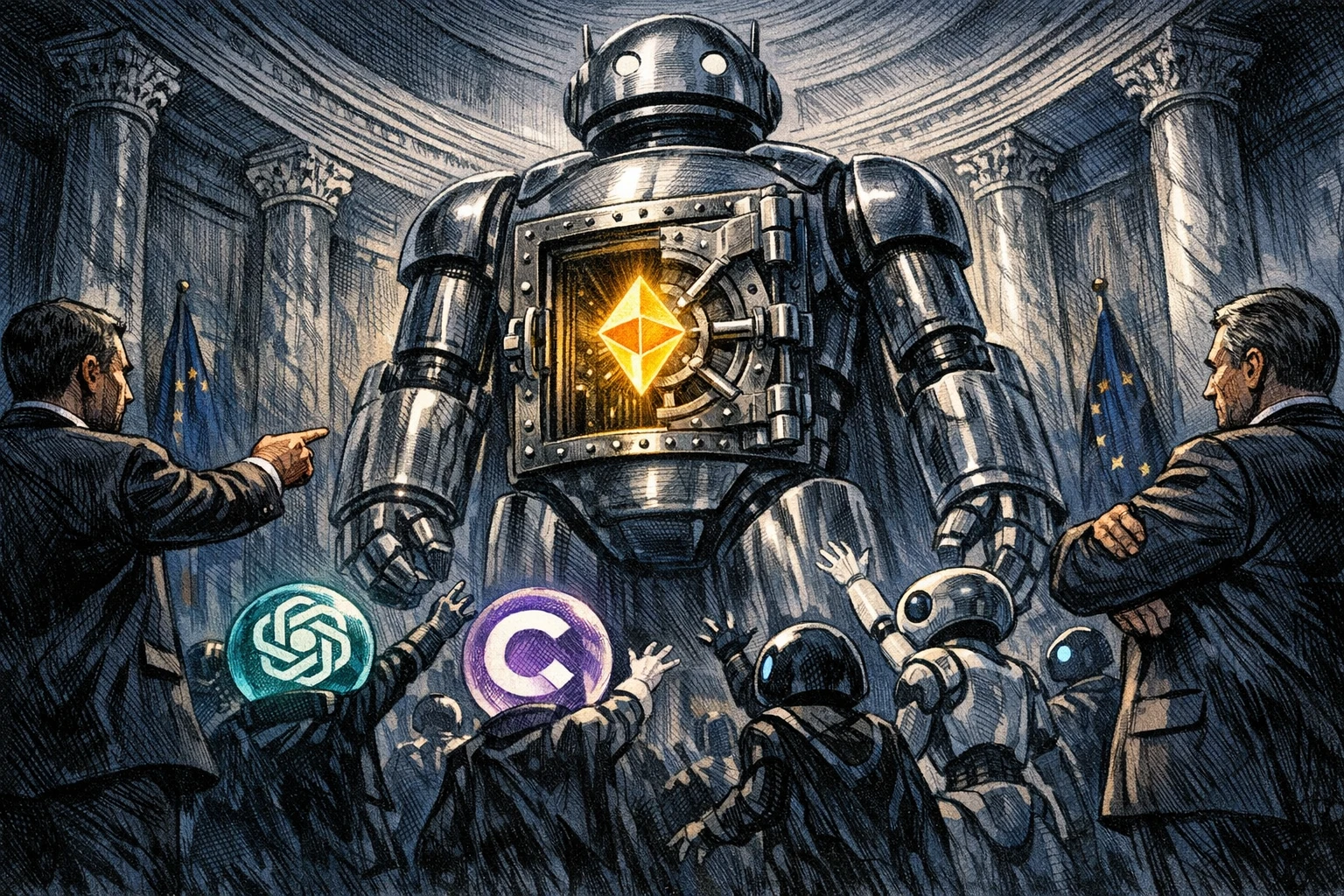
EU regulators are preparing to force Google to open Android's core functionalities to rival AI services, according to a Bloomberg report. The European Commission is expected to release preliminary findings specifying how Alphabet's Google must grant OpenAI's ChatGPT and Anthropic's Claude the same system permissions as Gemini.
The current imbalance is stark: Gemini enjoys deep integration with Android's voice activation, system search, and cross-app communication features, while external AI services are locked out. Sources close to the matter say the document is still a draft and the timeline remains fluid.
Mandated Open Access Under DMA
The action is rooted in the Digital Markets Act (DMA), a regulatory framework that took full effect in 2024. It imposes obligations on "gatekeeper" platforms, with a core principle: a platform's own services must not enjoy structural advantages unavailable to third parties.
On January 27, the Commission launched two DMA proceedings: one under Article 6(7) requiring Google to provide "free and effective" interoperability with Android hardware and software for third-party AI services; another under Article 6(11) demanding fair, reasonable, and non-discriminatory access to anonymized search data.
Bloomberg notes the upcoming preliminary findings are the next step but still distant from a formal investigation. They outline expected technical specifications, including voice activation integration, access to specific search tools, and the ability for competing AI apps to interoperate with other Android software.
Under DMA timelines, proceedings must conclude within six months, with preliminary findings issued within three for Google's response and public comment. On April 16, the Commission sent a preliminary finding on search data sharing, accompanied by a 29-page technical specification document.
Google's Defense and Potential Costs
Google has pushed back. Earlier this year, it warned that the demands "could jeopardize user privacy, security, and innovation." The argument rests on technical grounds: Android's underlying APIs and voice recognition channels have long restricted third-party access for security reasons, and forced openness would require architectural redesign.
The report also notes Google has long argued the DMA unfairly targets U.S. companies, aligning with the White House in pressuring the EU. U.S. President Donald Trump has publicly criticized the DMA. Yet enforcement records show the EU has imposed cumulative fines on Google nearing €9.5 billion, with no sign of backing down under political pressure.
If Google fails to comply within the deadline, the EU can launch a formal investigation, risking fines up to 10% of its global annual revenue. Based on Alphabet's 2025 revenue exceeding $350 billion, that could reach $35 billion.
Reshaping the AI Assistant Market
The case reveals a broader battleground: Gemini, ChatGPT, and Claude are competing for the mobile AI assistant gateway, and Android's system-level integration is a key determinant of user stickiness.
Android commands over 70% global market share, running on more than 3 billion active devices. If ChatGPT and Claude gain the same voice wake-up and app integration levels as Gemini, OpenAI and Anthropic would simultaneously acquire keys to the world's largest mobile platform's底层.
This is not merely an antitrust case, but the starting line of the next AI gateway war.