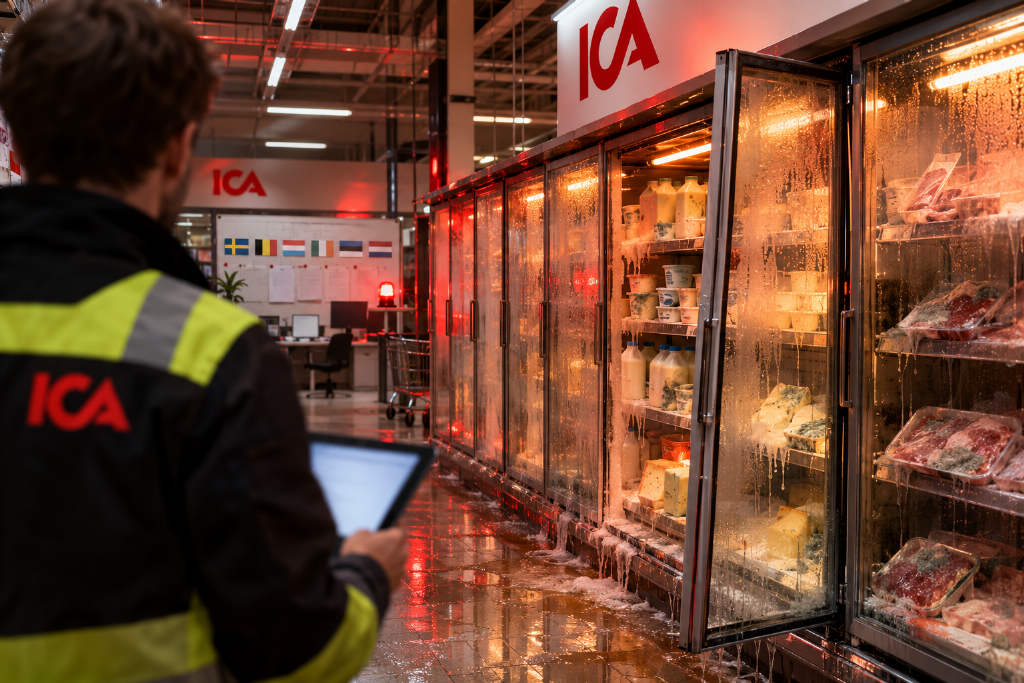
Supermarket fridges across several European countries were hacked overnight and remotely set to defrost, marking the second such incident this year and likely causing millions of euros in damage, according to Protos.
BNO News reported that refrigeration units in Belgium, Luxembourg, Sweden, Ireland, Estonia, and the Netherlands were affected. The compromised systems were programmed to defrost and reach temperatures of up to 158°F, or 70°C, causing chilled food to spoil.
ICA says several Swedish stores were affected
A post cited in the report said Swedish grocery giant ICA, one of the country’s largest supermarket chains, confirmed that several of its stores were hit in the overnight attack. Refrigerators and freezers were remotely set to 50°C, and the incident likely damaged large quantities of food.
Protos said food supplies were largely disrupted as a result of the cyberattack.
No crypto ransom demand reported
Unlike many cybercriminal operations, the attackers in this case were not described as seeking a cryptocurrency ransom or siphoning funds. Protos said the people behind the intrusions appeared to be trying to create chaos and damage physical infrastructure in Europe.
France saw a similar attack last month
Hundreds of supermarket fridges in France were also hacked last month. At the time, Intermarché CEO Thierry Cotillard told publishers that he expected losses to amount to “tens of millions of euros nationwide in a single day.”
Another cyberattack in August also disrupted freezers across at least six US military bases. The Pentagon is now coordinating with French authorities in their investigation, according to the report.
Expert points to youngsters, activists, or state-backed actors
Gérôme Billois, a partner in the Cybersecurity Business Unit at Wavestone, told The Guardian that the culprits behind these attacks are likely to be youngsters and activists, or state-sponsored actors.
He said the supermarket fridge incident was most likely a destabilization attack “designed to convey the message to populations that they are not safe, to convey the impression that the government is falling apart, and ultimately to instil fear.”
Billois added: “Currently there are two international actors known for doing this sort of thing: Iran and Russia.”