
A new NFT “draw card” protocol on Ethereum has posted one of the sharpest early runs in the sector. Fake World Assets generated about $1.3 million in revenue within a little more than a week of launch, placing it No. 15 on the crypto application revenue rankings for the past seven days, according to the source article. Its token, FWA, rose from an opening market capitalization of about $47,550 to a peak of roughly $38.8 million.
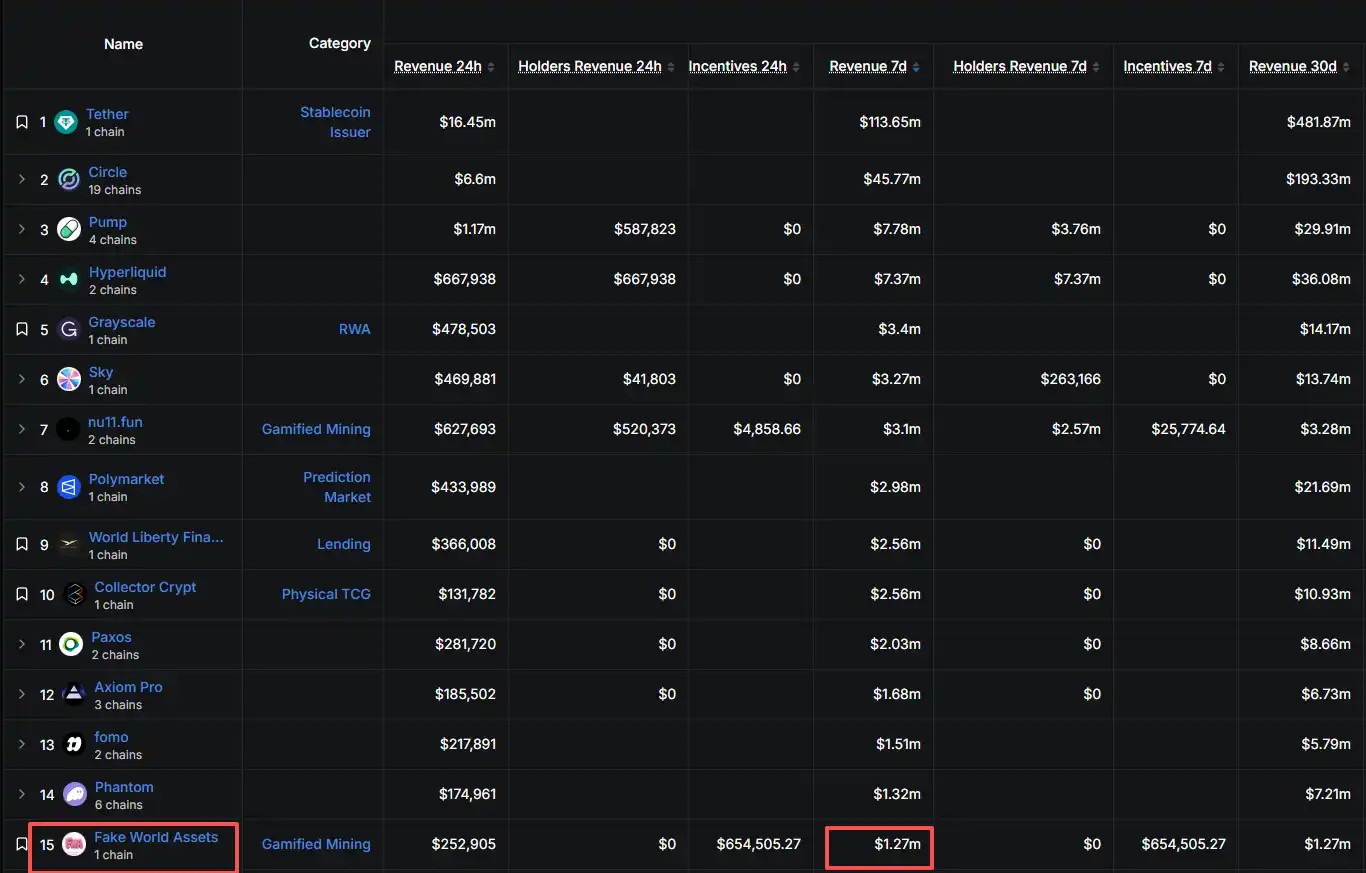
That came as Collector Cards, another project tied to the same draw-card theme, kept producing strong revenue but saw its token, CARDS, fall from a peak near $90 million in market capitalization a month ago to about $28.87 million.
TokenWorks returned with another high-heat product
Fake World Assets was built by TokenWorks, the team behind PunkStrategy, which the article says reached a peak market capitalization of $300 million within a month.
The team’s previous launches did not all perform the same way. One earlier project, TTT, or Ten Thousand Tokens, arrived around the middle to later stage of the Uniswap v4 hook craze. Its model required users to hold an NFT before launching a token on the platform. The NFT supply was capped at 10,000, matching a limit of 10,000 tokens that could be launched through the platform, while fees were split among token issuers, all NFT holders and the protocol itself.
Because the platform failed to produce standout assets, the NFT price dropped sharply soon after launch, the article said.
The author wrote that FWA initially looked like a basic NFT draw product. What changed the picture was the token flywheel built around FWA.
How the pool works
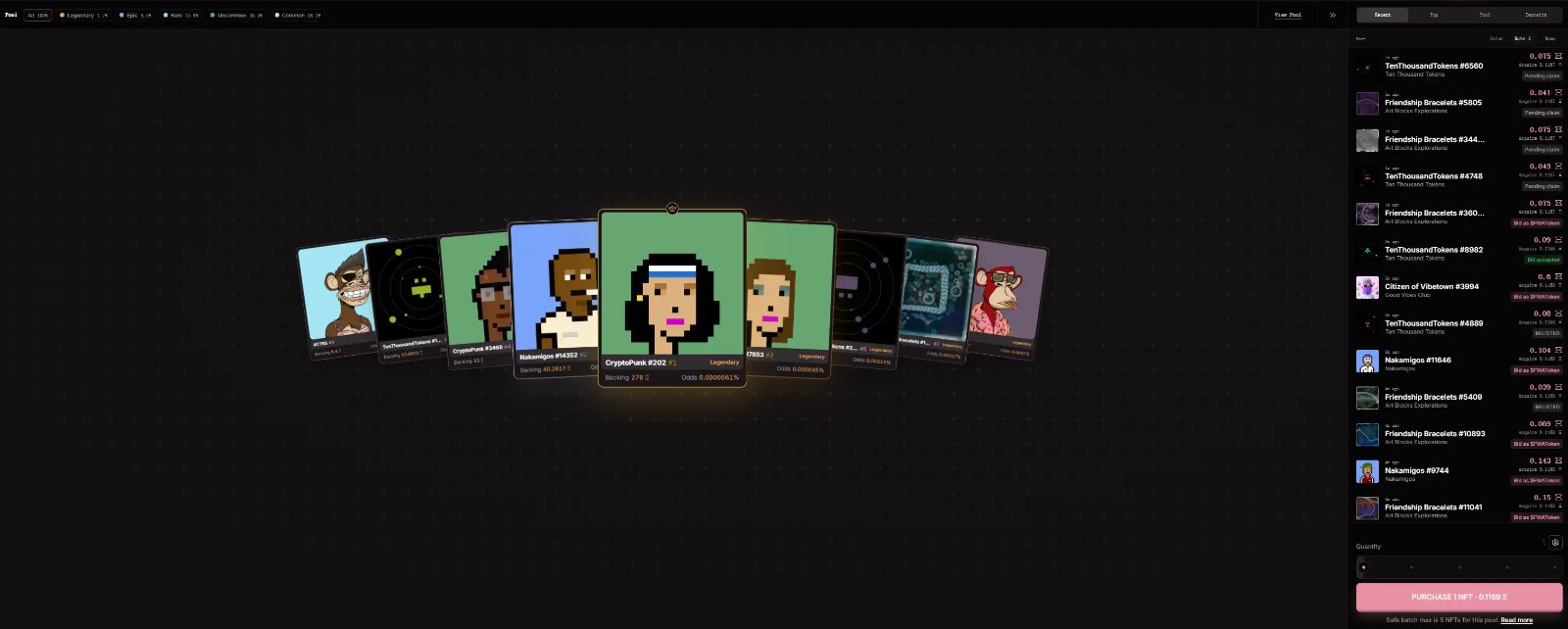
FWA cannot be purchased directly outside the protocol. Users who want the token have to participate in the draw mechanic.
NFTs in the pool are deposited by players themselves. When depositing an NFT, a player must also deposit ETH, creating two-sided liquidity. In effect, each depositor opens a personal pool.
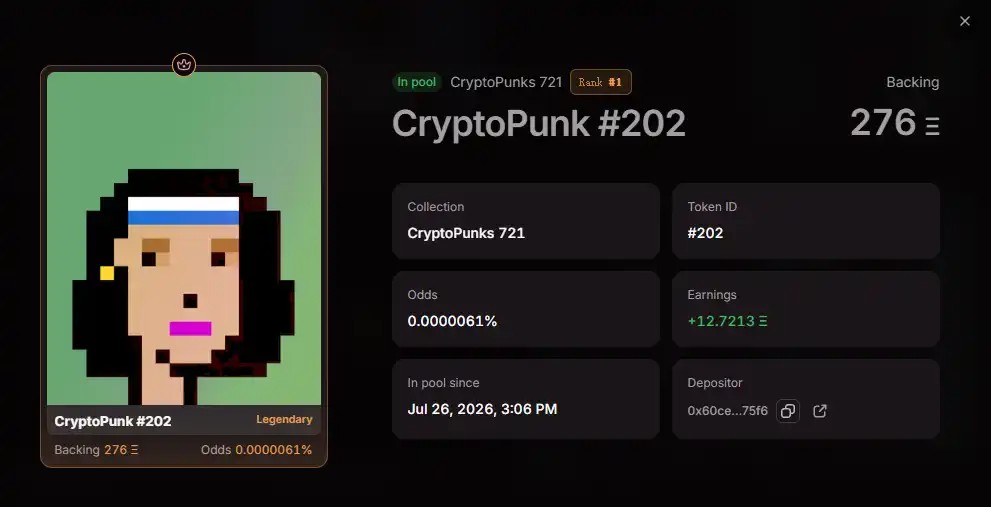
The larger the attached ETH position, the lower the chance that the paired NFT will be drawn. The article gives one example involving a CryptoPunks NFT paired with 276 ETH. Its draw probability was listed at just 0.0000061%, implying it would take more than 10 million draws on average to remove it from the pool. Since the protocol began operating on July 3, it had recorded 73,884 draws in total, or more than 3,000 per day on average.
The same CryptoPunks depositor had already earned 12.7213 ETH in a little over one day, the article said. It broke that income into three streams:
- a fixed 1% fee charged on each draw,
- an additional 1% taken from income generated by an NFT depositor if a user draws a desirable NFT and keeps it,
- the spread created because most users draw ordinary NFTs and immediately sell them back to the original depositor at an 85% discount.
The amount earned by users who deposit NFTs and ETH does not depend on the size of their deposit alone. It depends on how long the NFT stays alive in the pool. If an NFT is not drawn, it can keep generating distributions. Once it is drawn, the income stream stops and the depositor has to add a new NFT.
That structure gives depositors an incentive to pair their NFTs with more ETH so they remain in the pool longer. The article’s summary was blunt: the product looks a lot like an NFT AMM with a draw-card layer on top.
The FWA flywheel
The most notable part of the design is that FWA cannot be directly bought from outside markets. Users must earn it through protocol activity.
According to the article, 50% of total supply was used to add initial liquidity, 30% was reserved for emissions during the first half month after launch, with 1% per day distributed to asset depositors and draw participants respectively, and 20% went to an early snapshot airdrop.
The broadest path to obtaining FWA is to take part in a draw and then sell an unwanted NFT back to the original depositor at an 85% discount. At that point, the user can choose either ETH or FWA. If FWA is selected, the protocol automatically uses the returned ETH to buy FWA.
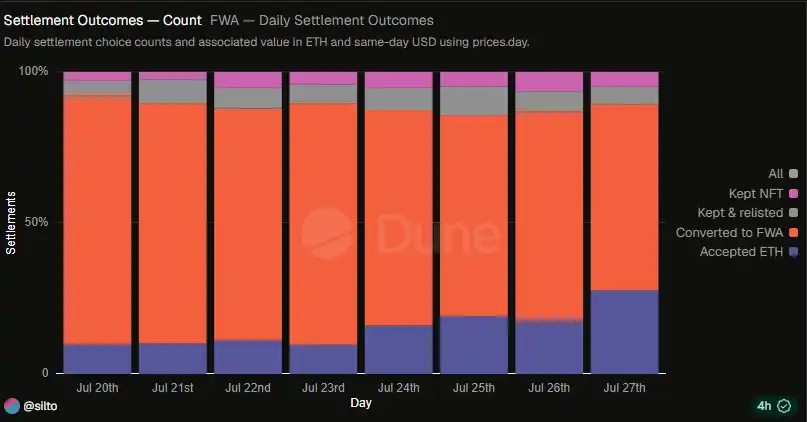
Most users have chosen the token route. The article cited data showing that, over the past seven days, as much as 82.3% of actions at one point involved selling back immediately after a draw in order to receive FWA, especially in the earliest stage before the token price had started moving. More recently, after FWA rose to higher levels and entered a pullback, the share of users choosing ETH after an immediate sell-back began to rise. Even so, the share choosing FWA still accounted for more than 60% on a single-day basis.
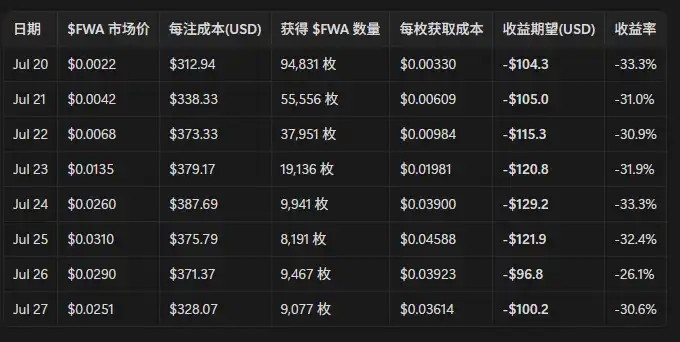
The article said a direct cost conversion shows that each attempt to acquire FWA through the draw process carried a negative expected value. In other words, the cost of obtaining FWA this way was higher than the token’s market price on the day, making it a premium purchase.
Still, users who held onto the tokens instead of selling immediately saw a different outcome during July 20 to July 23. In that window, the report said, each draw-for-FWA action effectively became a money-printing trade. The author compared it with the period when users accepted wear and tear from Offer mechanics to farm Blur airdrops: both relied on the bet that the token would keep climbing later, exchanging time for upside.
The difference, the article argued, is that FWA’s game cycle is much shorter and largely driven by attention. If the mechanism is discovered quickly and becomes a focal point for the market, new users entering the draw flow create sustained buy pressure for FWA. Later participants then push up the value of positions already held by earlier buyers.
Why it moved past Collector Cards
The article says this helps explain why FWA overtook Collector Cards in token market capitalization so quickly.
Both projects are built around draw-card mechanics. Both generate core revenue from the spread created when drawn items are sold back immediately at a discount. On theme alone, the author noted, Collector Cards may even have had the broader appeal because Pokémon cards can attract a wider audience than NFTs, and its profit performance was stronger.
But token utility became the dividing line. The article said Collector Cards has faced broad criticism from its community over token utility. Aside from project buybacks, and with details still undisclosed because the Clarity bill had not passed, the token was described as offering almost no utility.
The author added that even pump.fun’s previously large daily buybacks were not enough to win full market approval. Against that backdrop, Collector Cards, with weaker buyback support, had even less room to rely on that mechanism alone.
The article’s conclusion
The piece ended on a cautious note. It said the FWA flywheel will likely be difficult to sustain over a long period.
As long as the token price rises, users may keep entering the draw system and praise it as an innovation that “saved NFTs.” Once the price falls, however, the losses built into the draw process can no longer be offset by continued FWA appreciation, let alone create excess returns. If that happens, the protocol may gradually fade from attention, and the claimed NFT revival would end just as quickly.
The broader lesson, in the author’s view, is that profitability is a narrative the crypto market often forgets. Looking at projects through the relationship between attention and the conversion of that attention into buy pressure may help traders avoid getting trapped at the top.