
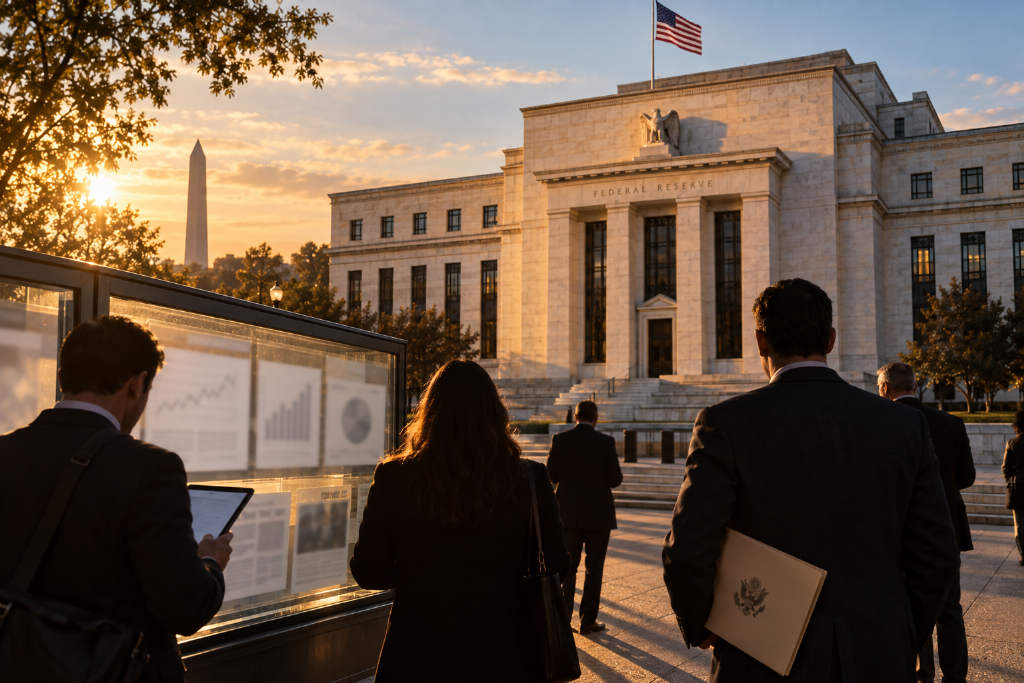
This week’s PPI and CPI reports matter for one reason: they feed straight into how the Federal Reserve reads the path of PCE inflation.
Quoting Jin10, the report says next week’s Fed rate decision could swing on the inflation numbers due this week, and the gap that decides it may be only a few hundredths of a percentage point.
Markets still can’t quite decide between one more hike and no move at all. Investors are locked in on Thursday’s August Producer Price Index and Friday’s Consumer Price Index. If inflation runs hotter than expected, the case for a rate increase gets stronger. But if monthly inflation starts to cool, Fed officials may tilt toward leaving rates where they are.
PPI and CPI may become the policy dividing line
Krishna Guha, head of global policy and central bank strategy at Evercore ISI, said: "The rate decision will mainly depend on inflation data at that point, and to some extent on the expectations markets settle on after the releases. The threshold for a Fed rate hike has not been rigidly defined."
Wall Street economists expect August PPI to rise 0.4% month over month and 5.3% year over year. For CPI, the consensus calls for headline CPI to rise 0.4% on the month and 3.4% on the year, while core CPI is expected to increase 0.2% month over month and 2.4% year over year.
But the inflation measure the Fed actually uses for policy is neither CPI nor PPI. It is the Personal Consumption Expenditures price index. This week’s numbers will help shape estimates for the PCE report due later this month, giving policymakers one more look at the inflation trend.
Guha said that if core PCE ends up showing a monthly increase of about 0.21% or 0.22%, the Federal Open Market Committee may decide to keep rates unchanged. If it lands at 0.23% or 0.24%, it would "likely turn toward a hike."
He called a policy call based on a gap as tiny as 0.01 percentage point "ridiculous." Fair point. Guha and other Wall Street forecasters expect the CPI and PPI figures to imply monthly PCE inflation somewhere in a 0.2% to 0.25% range, which means even a tiny miss could flip the policy choice.
Warsh faces a key call as officials split
That razor-thin setup has also put Fed Chair Kevin Warsh right at the center of the September meeting.
At Jackson Hole, Warsh publicly emphasized that the Fed has failed to reach its 2% inflation target for more than five years. Markets read that as a sign he may press the FOMC to raise rates by 25 basis points on Sept. 16.
Still, there is no firm consensus. As of Tuesday, market pricing put the odds of a hike at about 60%, around the rough line traders often use when judging whether a central bank is likely to move.
Guha said the odds still lean slightly toward a hold, though nothing is settled. He tied that view to the chance that inflation data may come in below expectations, and said that after Warsh’s Jackson Hole comments, the bar for staying put is higher than it was before, but "not so high that it cannot be met."
Fed officials have also been sounding pretty different from one another in recent weeks. Cleveland Fed President Beth Hammack and other hawkish officials are still arguing for a rate increase. Fed Governor Christopher Waller, Michael Barr, and New York Fed President John Williams have leaned more toward emphasizing a data-dependent approach.
Loretta Mester, Hammack’s predecessor, also said Tuesday that the Fed needs to raise rates to show it is serious about fighting inflation.
Speaking with CNBC, Mester said: "I would argue for a rate hike. I do not think the Fed will necessarily raise rates. Chair Warsh will need to explain at the post-meeting press conference why officials made their final decision, whatever that decision is."
PCE revisions and Trump add another layer of uncertainty
And even after this week’s inflation data arrive, there is still another source of uncertainty. Economists expect upcoming revisions to several key PCE components, and those changes could push previously reported inflation readings lower by several percentage points on a retrospective basis.
So the September decision may still come down to a tiny data gap. Guha said that if markets are clearly set up for a hike before the meeting and Warsh is under pressure to defend his credibility, it becomes harder to leave rates unchanged.
Donald Trump is adding another complication. Last Friday, Trump threatened that if the Fed does not cut rates, he may cut off trade with countries that run trade surpluses with the United States. The report said some view that as another blow against Fed independence, and that could push policymakers to take a harder line.
Guha said: "If markets price in a hike as the clearly dominant outcome before the meeting, it will be difficult for Warsh to choose to stand pat. In this gray zone, market reaction itself may feed back into the final decision."
For now, the main issue for the September meeting is no longer simply whether inflation is high or low. It is where CPI and PPI leave the implied PCE reading, and whether Warsh can bring divided officials behind the final policy choice.