
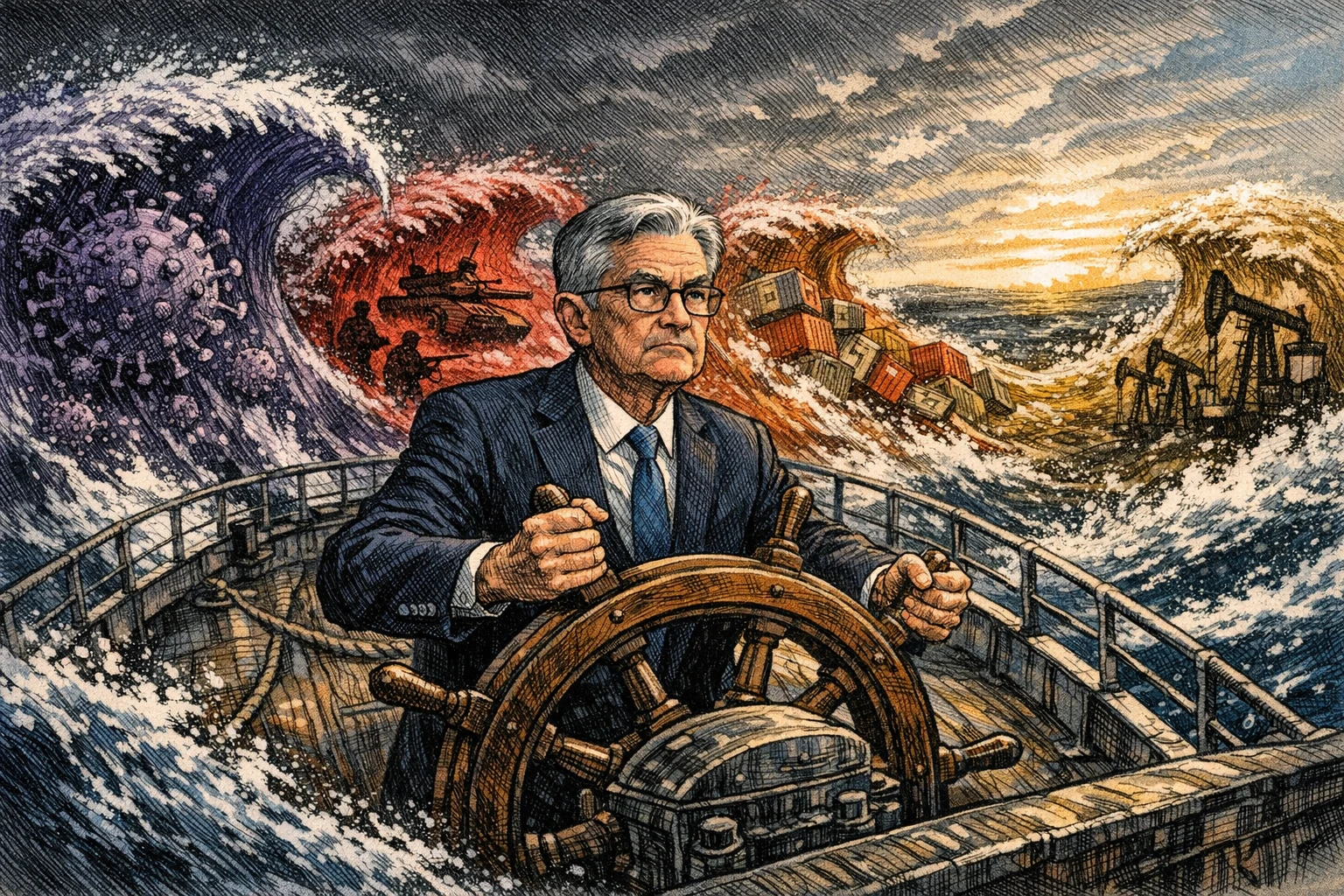
Federal Reserve policymakers are once again confronting a familiar predicament: for the fifth straight year, disinflation has been derailed by an external shock. After the pandemic aftermath, the Russia-Ukraine war, and last year's sweeping tariffs, the latest blow comes from renewed conflict in the Middle East, threatening the Strait of Hormuz—the world's most critical energy chokepoint. Data show the core PCE inflation rate has bounced back to 3.1% from its low last year, with progress toward the 2% target stalling.
Agenda Shift: From 'When to Cut' to 'Whether to Keep Signaling Cuts'
The central question at this week's meeting is no longer the timing of an interest-rate cut but whether the committee can credibly maintain guidance that a cut remains in the pipeline. The escalation in the Middle East has fortified the case for holding steady. Markets are watching three signals: first, the policy statement—some officials tried to remove the "next move is a cut" language in January but failed; a successful edit this time would explicitly mark the end of the current easing cycle. Second, the Summary of Economic Projections (SEP) and the resulting "dot plot" of individual rate forecasts. Third, Chair Jerome Powell's press conference, which can amplify or blunt the impact of the other signals.
Credibility Eroded: No One Dares a 'Transitory 2.0'
Textbook central banking suggests "looking through" an oil-price shock as transitory, but that advice assumes the public still trusts inflation will eventually fall. After five years of overshooting, that trust is thin. Minneapolis Fed President Neel Kashkari told the Wall Street Journal: "Are we really going to do 'transitory 2.0' again?" He penciled in one cut for this year in December's dot plot. Former Boston Fed President Eric Rosengren described the simultaneous hits—tariffs, surging oil, tighter immigration curbing labor supply—as making "it extremely difficult for the Fed to take clear action." UBS chief U.S. economist Jonathan Pingle noted that hawks are now more worried about inflation, while doves focused on employment should also be more nervous rather than relieved.
Dot Plot Reset: Median Rate-Cut Forecast May Drop to Zero
In December, 12 of 19 officials projected at least one cut this year. If just three shift their views, the median forecast would fall to zero. Markets have already repriced sharply: before the Middle East conflict, traders saw a 74% probability of at least one cut by year-end; that has dropped to 47%. The implied probability of a rate hike has jumped from 8% to 35%. Former St. Louis Fed President Jim Bullard said he would retract his one forecast cut: "Now is not the time to promise a cut." Rosengren argued the committee's current stance—suggesting the next move is a cut—is becoming untenable. Yet a dovish camp persists: three Fed governors may favor cutting, citing a sharp slowdown in job growth—just 10,000 average monthly additions last year versus 377,000 in 2022—along with rising consumer delinquencies and depleted savings for the bottom 80% of households.
History Rhymes: Echoes of 1990 Recession
Pingle draws parallels to 1990, when a Gulf War oil shock tipped the U.S. into recession. The Fed then faced the same dilemma: inflation not yet tamed and the economy clearly weakening. Vincent Reinhart, a former Fed senior advisor and now chief economist at BNY Investments, offered a big-picture view: "The direction of policy is still toward easing. But they won't cut before they are confident inflation is sustainably returning to target." One more pressure: Powell's term as chair expires in May, making this week's dot plot a policy baseline for his successor.