
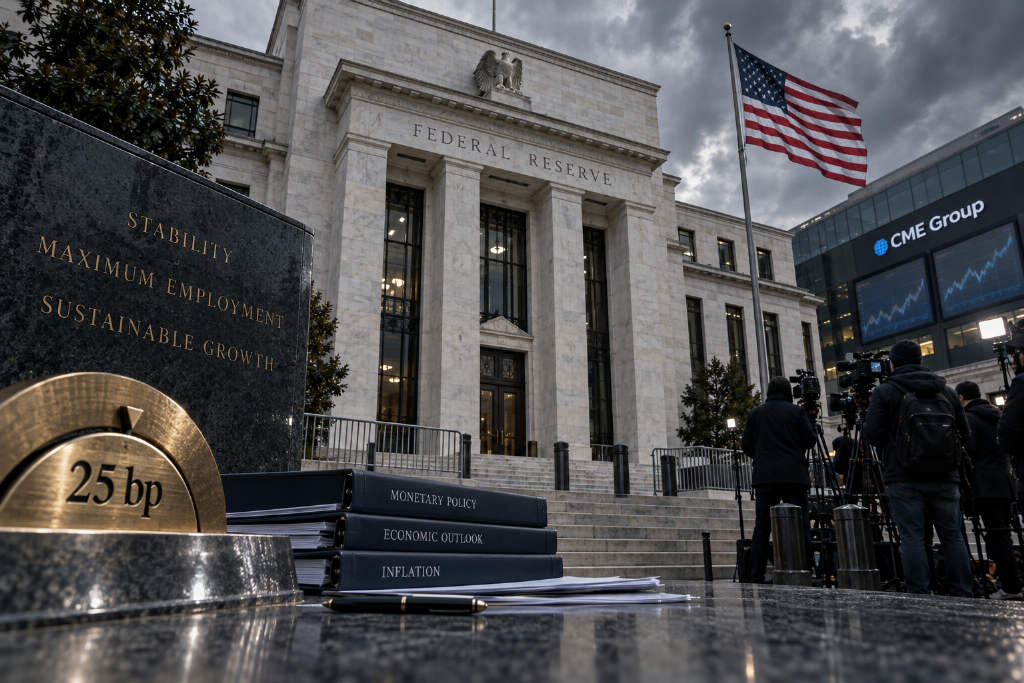
BlockBeats reported on Sept. 16 that the Federal Open Market Committee will release its interest rate decision and Summary of Economic Projections at 2:00 a.m. Beijing time on Thursday. Fed Chair Walsh is scheduled to hold a monetary policy press conference afterward.
According to CME FedWatch data, markets are now pricing in a 95% probability of a 25-basis-point rate hike this week. The implied probability of a December hike has also risen to 70%. Data from prediction market predict.fun shows traders currently assign an 88% chance to a 25-basis-point increase tomorrow, while the probability of no change stands at 12%. A hike has once again become the market’s base-case expectation.
U.S. job growth in August came in stronger than expected, while headline CPI rose to 3.4% year over year. Energy prices have added fresh uncertainty to the inflation outlook. At the same time, the yield on the 10-year U.S. Treasury is approaching 5%, and questions around dollar credibility and Federal Reserve independence have returned to the trading narrative.
The focus has shifted to the Fed’s policy logic
This meeting is not only about whether the Fed hikes. The bigger question is whether its policy reaction function has changed. Markets previously assumed the Fed would keep rates unchanged unless incoming data forced it to tighten. ING now says that base case has flipped: the Fed is inclined to hike unless the data is weak enough to justify a pause.
Institutions differ on what comes next
In their latest preview, ING Chief International Economist James Knightley, Head of U.S. Research Padhraic Garvey, and Global Head of Markets Chris Turner said they expect the Fed to raise rates by 25 basis points on Sept. 16. In their view, though, the move would be more of a policy recalibration than the start of a fresh run of consecutive hikes.
Strategists at TD Securities gave a different path. They expect the Fed to begin the first of three hikes in the current cycle in September, with the next two increases coming in October and January next year. The Fed may avoid offering forward guidance, but the dot plot is expected to lean hawkish.