
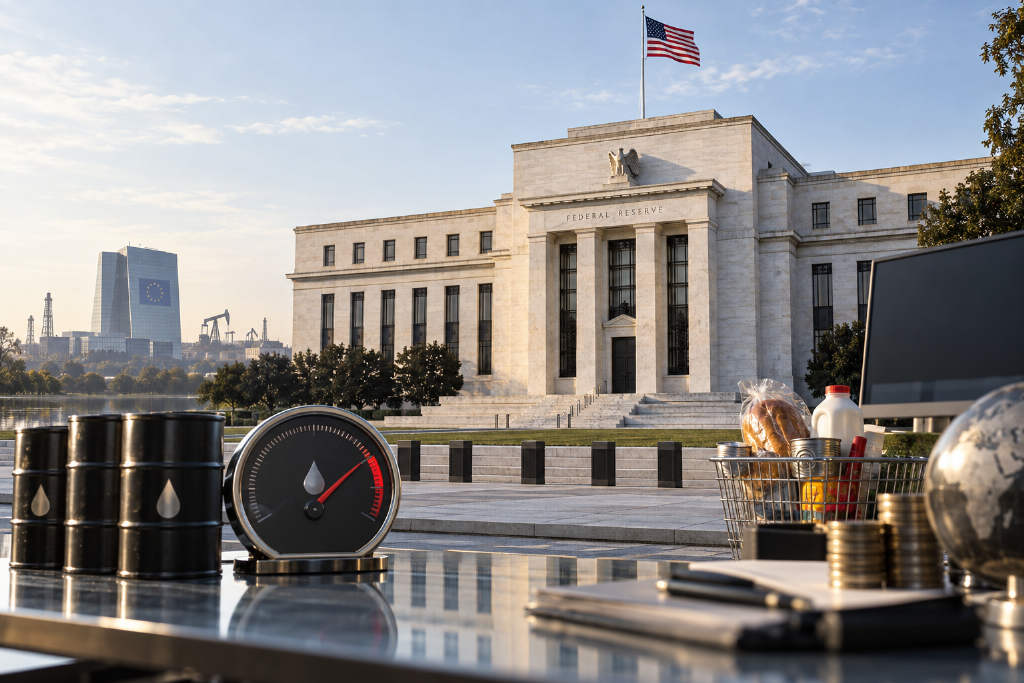
Global markets were driven over the past week by three main themes: inflation, war and rate hikes, according to BlockBeats on Sept. 12. Reaccelerating U.S. inflation, escalating tensions in the Middle East and renewed pressure on major central banks to respond to inflation all shaped trading across asset classes.
U.S. inflation data lifted expectations for a September Fed hike
U.S. August CPI rose 0.4% month over month and 3.4% year over year, while core CPI increased 0.3% from the previous month. Together with previously firm producer price and employment data, those figures pushed market expectations higher for a 25-basis-point rate increase at the Federal Reserve’s Sept. 15-16 meeting.
Rate markets reflected that shift quickly. The yield on the 10-year U.S. Treasury moved close to 5%, while the dollar fell earlier in the week before rebounding.
Oil surged as Middle East tensions widened
Oil was one of the strongest-performing assets of the week. As conflict spread across the Strait of Hormuz, the Red Sea and the Bab el-Mandeb Strait, and Saudi energy facilities came under attack, Brent crude briefly moved above $100.
BlockBeats said Saudi Arabia’s east-west pipeline was temporarily shut after an attack, amplifying supply concerns. If shipping through the Strait of Hormuz or the Red Sea continues to face disruption, institutions including Goldman Sachs believe oil prices could move higher.
ECB raised rates and markets are already looking to December
The European Central Bank raised its deposit facility rate by 25 basis points to 2.5% this week. It also warned that the conflict in the Middle East could leave inflation above its 2% target for an extended period. Markets are currently pricing in the possibility of another rate increase in December.
Politics and geopolitics remained key market variables
Politics added another layer of uncertainty. At a Republican midterm election event, Donald Trump said that if Republicans continue to control Congress, every American adult would receive a $5,000 “Trump dividend.” The potential cost would exceed $1 trillion, but the source of funding and the implementation plan remain unclear.
On Russia and Ukraine, contacts between senior U.S. and Russian officials increased, raising market expectations for renewed talks, though military operations on both sides showed no clear sign of easing. At the same time, trade friction between the U.S. and Canada continued to intensify, and possible measures including auto tariffs could deliver another blow to North American supply chains.
AI expansion came with rising concern over risks and returns
Technology markets had a separate theme of their own: AI. The sector is still expanding, but concern over safety risks and a possible capital bubble is rising at the same time. Internal researchers at OpenAI and Anthropic publicly discussed the risks of AI systems going out of control and improving themselves, while investors are increasingly focused on whether AI spending can continue to generate returns.
Market pricing shifted toward a high-oil, high-inflation, high-rate mix
BlockBeats said the market’s core logic has moved away from a straightforward bet on economic growth. In its place is a repricing around a mix of high oil prices, high inflation and high interest rates. From here, the path of risk assets will depend more heavily on energy prices and on the Federal Reserve’s policy trajectory.