
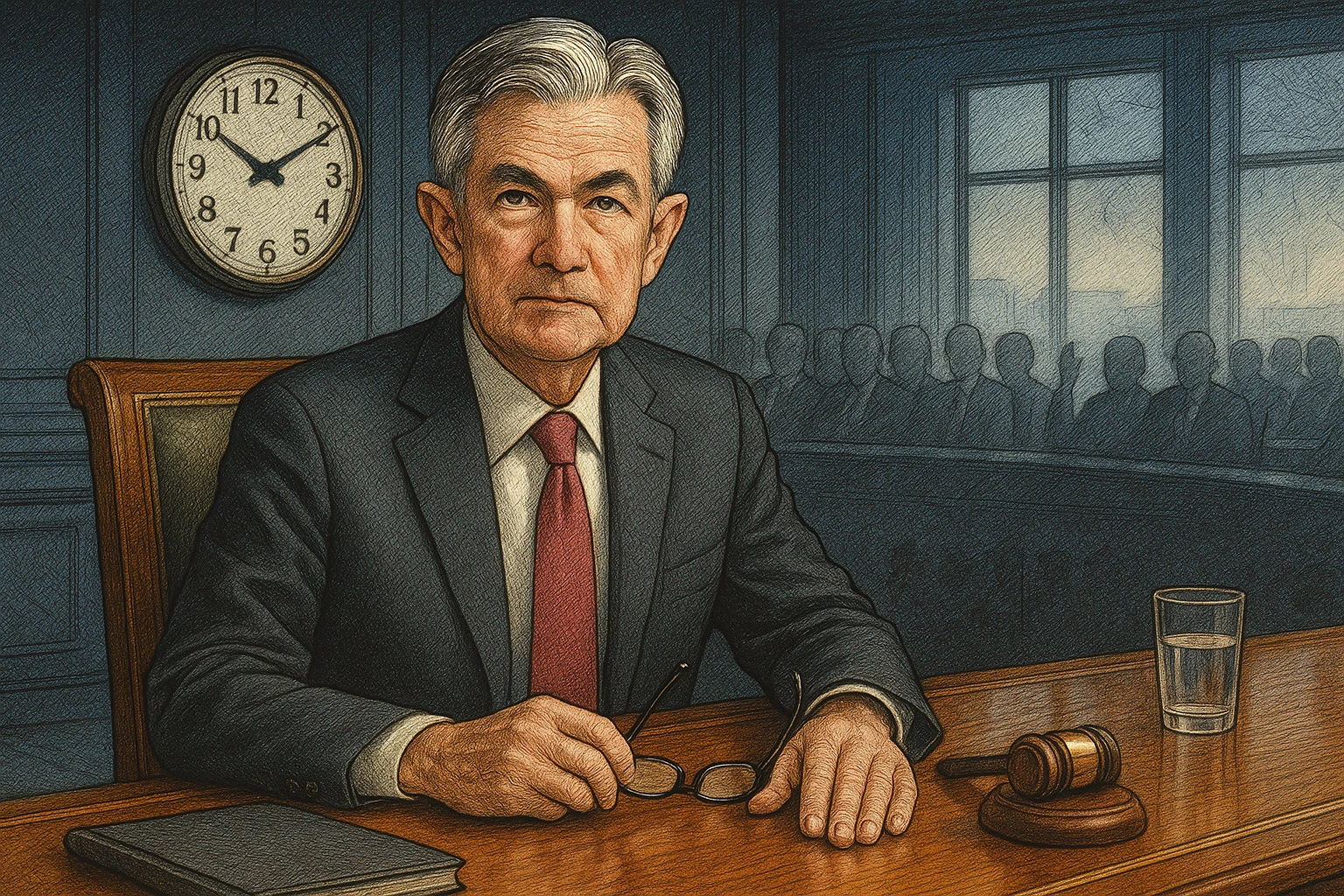
The Federal Reserve held its benchmark interest rate steady at 3.5%–3.75% for the second consecutive meeting in March, with an 11-to-1 vote. The sole dissenter, Governor Stephen Miran, called for an immediate rate cut. The dot plot maintained the forecast for one quarter-point cut by year-end but raised inflation and GDP projections for 2026–2028, signaling a "higher for longer" rate path.
Powell Warms of Oil Surge, AI Investment
In the press conference, Powell flagged the rapid surge in oil prices triggered by Middle East tensions. U.S. crude has jumped more than 50% over the past month to about $97 per barrel, pushing the national average gasoline price to $3.84 per gallon (AAA data). "Energy price increases will boost overall inflation, and the oil shock will also be reflected in core inflation," Powell said. The Fed raised its median core PCE inflation forecasts for 2026–2028, acknowledging that near-term inflation expectations have risen, though long-term expectations remain anchored near the 2% target. Powell also cited two new variables: the boom in data center construction could fuel inflation, and AI investment might temporarily lift the neutral rate. However, he emphasized that AI has yet to show a material impact on overall productivity.
Consumer Spending, Employment Soften
On the other hand, Powell acknowledged downside risks to consumer spending and employment. "Uncertainty remains high," he said, noting that the impact of the Middle East conflict is still difficult to assess. The Fed's statement reflected a dual risk: upward pressure on inflation alongside downward pressure on growth. Powell set a clear condition for rate cuts: "We are not going to cut rates unless we see progress on inflation." He also noted that a rate hike has not been ruled out entirely, though it is not the baseline scenario.
Fitch Sees June Cut Possible If Oil Shock Is Transitory
Fitch Chief Economist Brian Coulton offered a more optimistic take. He argued that the Fed's upward revision to inflation forecasts partly reflects the recent oil spike and sticky core PCE data. If the oil price surge proves temporary, a June rate cut remains a "real possibility" after April's hold, provided that the labor market continues to weaken and no persistent inflation emerges.
Powell Stays Mum on Future, Crypto Markets Eye Rate Path
Powell addressed his own tenure, saying he would serve as "interim chair" until a successor is confirmed once his term ends in May 2026. He reiterated he has no intention of leaving before the Justice Department probe concludes but hasn't decided how long to stay at the Fed. For crypto markets, the Fed's "hold and warn" stance is not a clear risk-off signal. If the oil shock compresses the room for rate cuts this year, liquidity tightening would extend, pressuring risk assets like Bitcoin. Conversely, if a June cut materializes, markets may front-run the easing cycle. All eyes now turn to the upcoming CPI and core PCE prints.