

The Federal Reserve raised rates on Sept. 16, and U.S. stocks still went on to hit another record.
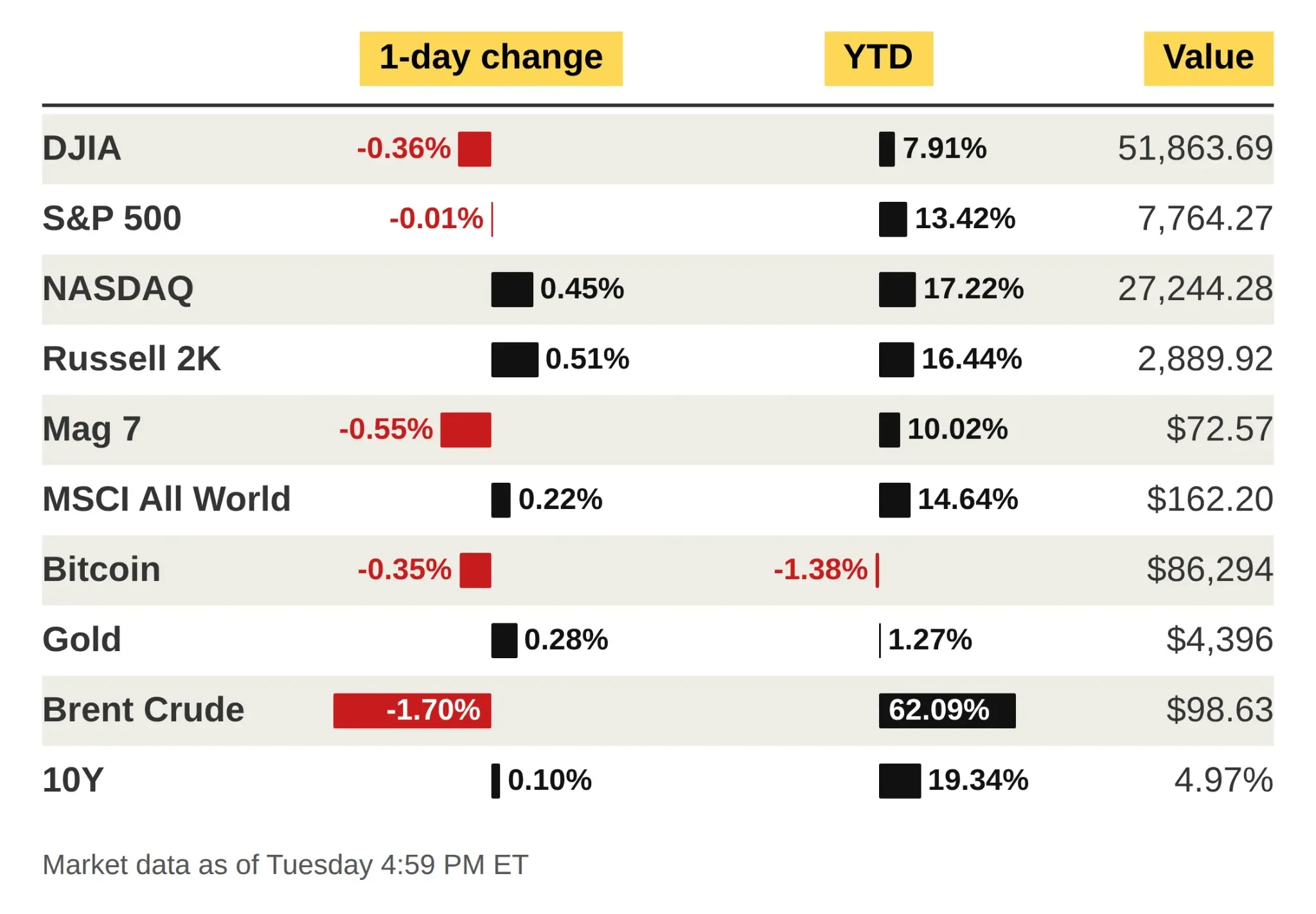
On that date, the Fed lifted its target range for the federal funds rate by 25 basis points to 3.75%-4.00%. In its statement, the Federal Open Market Committee said U.S. economic activity was still expanding at a "solid pace," domestic spending remained resilient, capital investment was strong, and inflation was still elevated.
Less than a week later, technology shares regained momentum. On Sept. 22, the Nasdaq Composite set a fresh record high. Reuters linked that rebound to strength in tech stocks, renewed enthusiasm around AI trades, and lower oil prices.
At face value, the mix of a rate hike and a record high looks like a pair of warning signs. Higher rates can pressure equity valuations, while an index at an all-time high can feed the view that the market has already run too far.
Phil Rosen, writing in Opening Bell Daily, argued for a different reading. Rate hikes and record highs, he said, cannot be interpreted on their own without the broader economic setting.
Historical returns after hikes have been stronger than after cuts
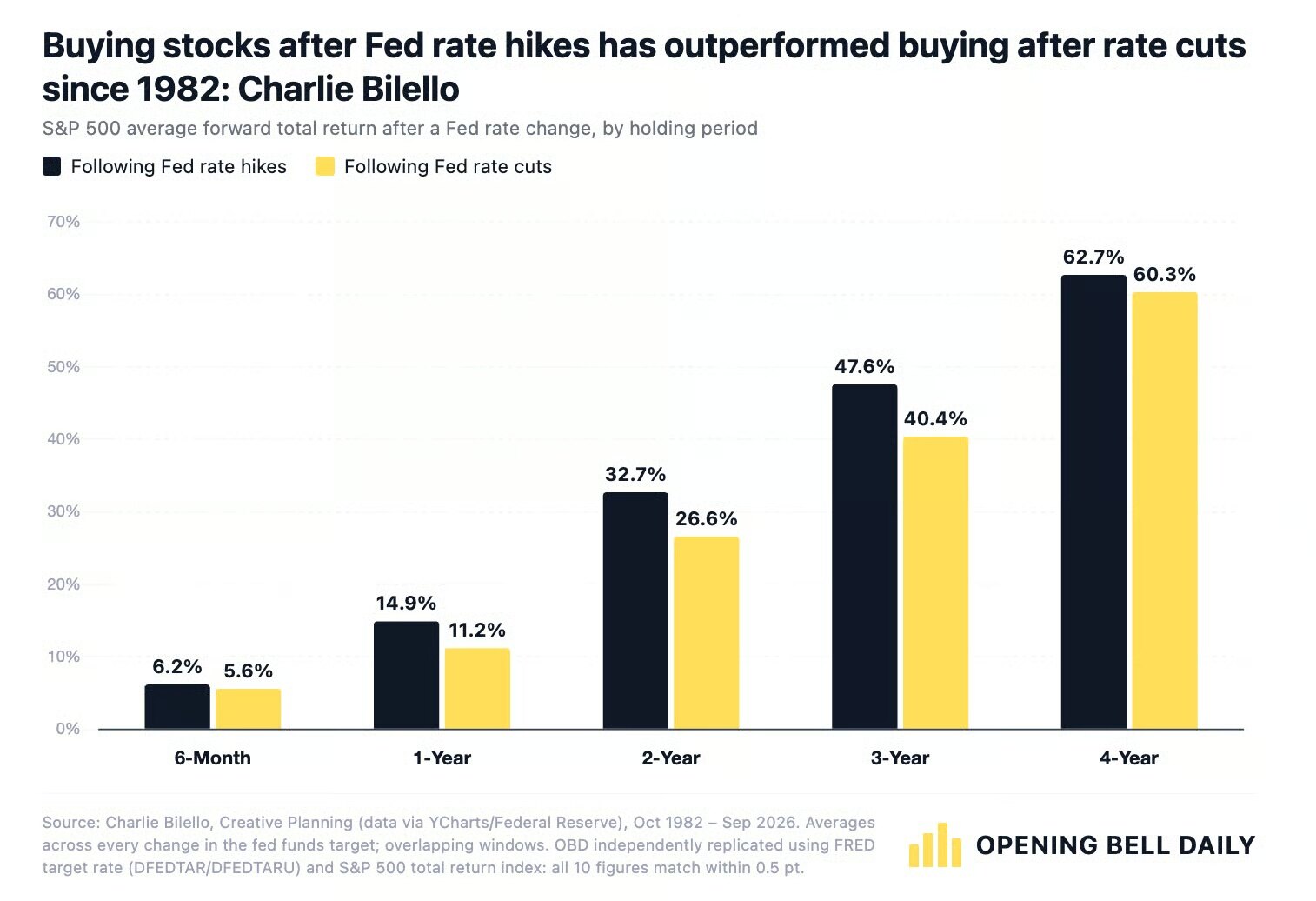
Opening Bell cited data compiled by Charlie Bilello, chief market strategist at Creative Planning, showing that since 1982, the S&P 500 has gained an average of 14.9% in the 12 months after Fed rate hikes. In the 12 months after rate cuts, the average gain was 11.2%.
That runs against a common market instinct. In a simple valuation framework, lower rates reduce financing costs and lower discount rates applied to future cash flows, which should support equities. Higher rates would suggest the opposite.
Rosen’s point was that looking only at the policy move misses the more important question: why is the Fed hiking or cutting at that moment?
When the Fed is able to raise rates, the economy often still has some capacity to absorb tighter policy. Corporate earnings, employment and consumer spending may still be holding up, giving policymakers room to push rates higher in response to inflation.
Rate cuts, by contrast, often arrive in a different macro setting: slower growth, a weaker labor market, stress in the financial system, or rising recession risk.
So the core argument is not that rate hikes cause stocks to rise. It is that monetary policy is endogenous. Rate decisions shape the economy ahead, but they also reflect the condition the economy is already in.
If investors ignore the business cycle and treat every hike as automatically bearish for stocks, they risk reversing cause and effect.
The key issue is the economic backdrop behind the hike
That logic matters even more in the current setting.
The Fed’s own description of the economy was not weak. Its statement said the U.S. economy was still expanding at a solid pace, domestic spending remained resilient, productivity growth was strong, capital investment was steady, and job growth was broadly in line with labor supply. At the same time, inflation remained above target.
In other words, at least by the Fed’s own assessment, this was not a case of tightening into an economy already in clear recession. It was a move made while growth still showed resilience and inflation was still a policy problem.
That is why the words "Fed hike" alone do not offer a direct answer on where stocks go next.
The more important question is whether corporate earnings, household spending and employment can continue to absorb tighter financial conditions as rates stay elevated.
If they can, a hike by itself may not be enough to end the rally. If high rates start to weigh clearly on demand and profits, the explanatory power of those historical average returns becomes weaker.
Record highs have not been a reliable sell signal either
The same framework applies to another familiar concern: if the market is already at an all-time high, is it too late to buy?
Opening Bell cited FactSet data showing that since 1950, buying the S&P 500 at a record high has produced an average 12-month return of about 9.5%. Buying on other trading days produced an average one-year return of about 9.3%.
Separate data pointed in the same direction. Vanguard, using FactSet and Morningstar Direct data through September 2025, found that buying the S&P 500 at an all-time high also led to an average one-year return of 9.5%, versus about 9.2% on other trading days. Over three-year and five-year periods, cumulative average returns after buying at record highs also did not materially lag.
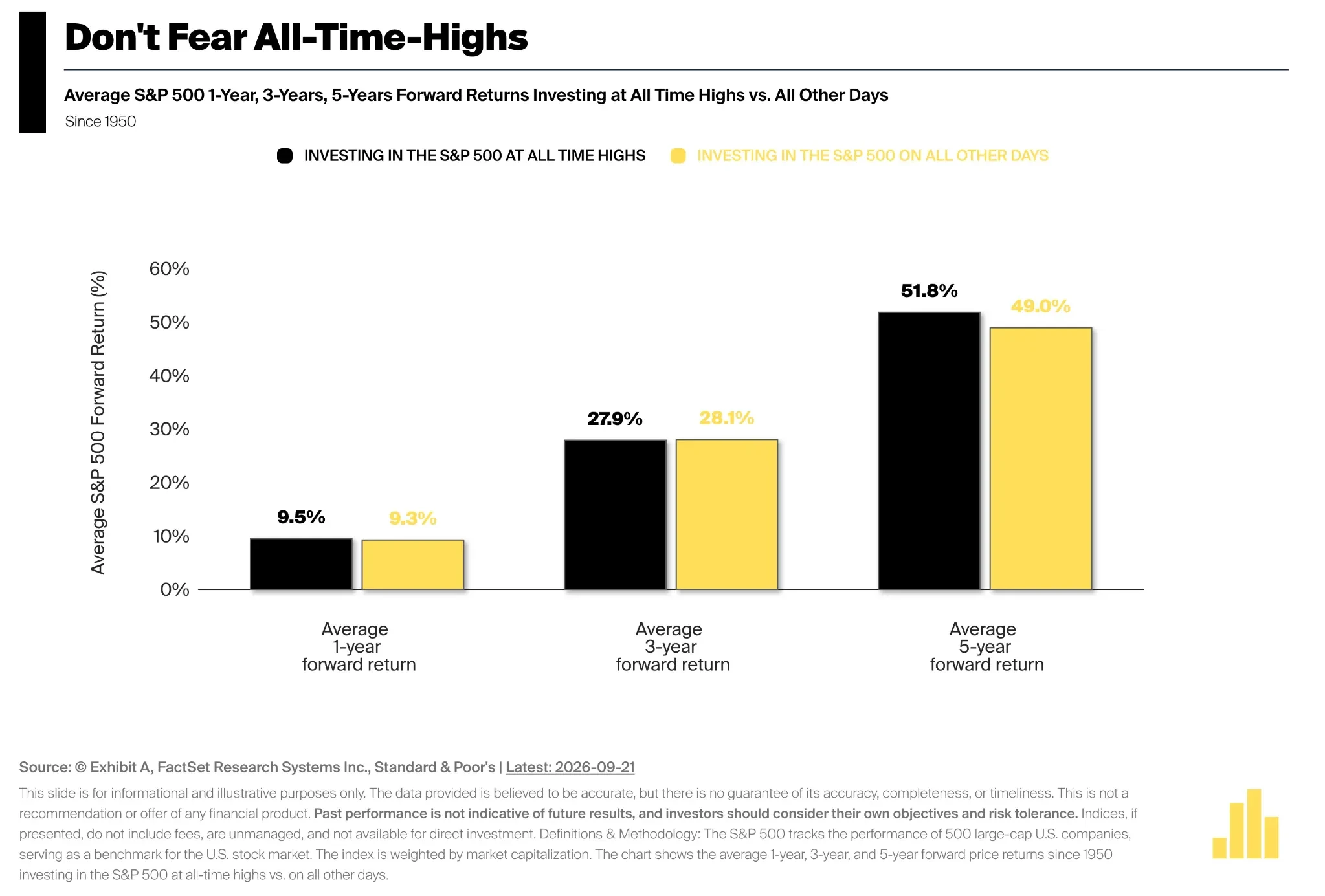
The two datasets differed by 0.1 percentage point in the figures for "other trading days." The article said that may reflect differences in sample end dates and data handling, but the overall message was the same.
The more important takeaway is not that buying at a record high beats other days by a fraction of a percentage point. It is that record highs themselves have not shown stable negative predictive power.
Rosen’s explanation was that market records often come in clusters. In a sustained uptrend, indexes can keep setting new highs, and the first, fifth or tenth new high does not by itself tell investors when a bull market will end.
Put differently, "prices are already high" is not the same judgment as "prices are about to fall." The historical data only suggests that an index sitting at a record level is not, on its own, evidence that future returns are set to deteriorate.
What matters next is whether earnings and the economy still support prices
From that perspective, the more useful thing to watch in the current market is not the static fact that the Fed has hiked or that the Nasdaq has reached another high. It is whether the macro conditions supporting those developments begin to change.
On one side, investors need to watch whether U.S. corporate earnings, consumer spending and employment remain resilient. If the real economy can still handle higher rates, then the historical explanation that hikes tend to occur during stronger phases of the cycle still holds.
On the other side, markets also need to watch for more visible lagged effects from tighter policy. If rate-sensitive sectors such as housing and autos weaken further and that weakness spreads into consumption, employment and corporate profits, the meaning of this rate hike changes.
The article also cautioned against using historical averages too mechanically. Rate-hike cycles since 1982 have unfolded under different inflation levels, valuations, earnings conditions and financial settings. Average returns after buying at record highs in the past also do not imply that the next 12 months will deliver the same result.
That makes the data more useful for rejecting an overly simple rule than for creating a new trading signal. A Fed hike does not automatically mean U.S. stocks should fall, and a record high does not automatically mean the rally is over.
What will decide the next phase for the market is the more basic question underneath both: whether the economy and corporate earnings can continue to support current prices.