
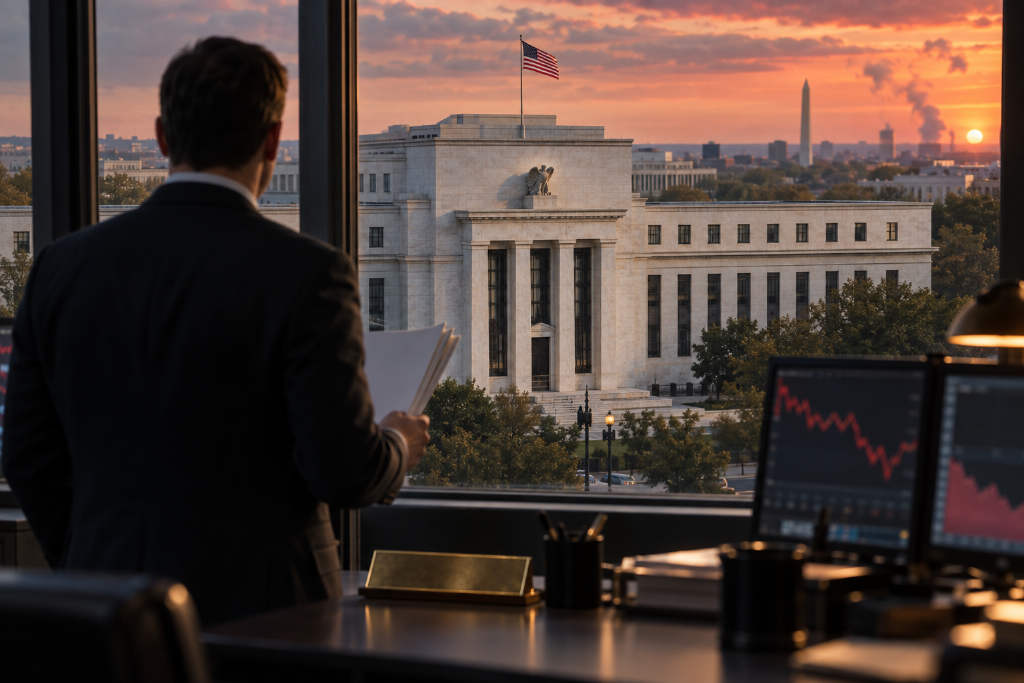
Investors’ worries over government deficits and persistent inflation are pushing borrowing costs higher, and the Federal Reserve still has room to ease stress in the bond market. The simplest option, according to the report, may be clearer communication.
Last week, an escalation in the Middle East conflict pushed energy prices higher again. Heavily indebted governments were forced to borrow more to expand defense spending and finance war-related costs. Global bonds came under renewed selling pressure, sending yields to multi-year and, in some cases, multi-decade highs. That has raised financing costs for consumers through mortgages and credit cards, while also increasing the debt-service burden on the U.S. government’s $40 trillion debt load.
Fed Chair Kevin Warsh had previously been relatively quiet on the outlook for interest rates. But at last month’s economic symposium in Jackson Hole, Wyoming, he sent an important signal, saying there was more “work to do” in the fight against inflation. Markets took that as a sign that additional rate hikes remain possible.
Investors welcomed the message, and the reaction also showed how strongly markets want greater transparency around Warsh’s economic thinking. Rising yields are being driven not only by fiscal concerns, but also by heavy corporate bond issuance linked to financing artificial intelligence buildouts.
Derek Tang, policy economist at Monetary Policy Analytics, told CNN: “The Fed’s job is only to control inflation, and if Warsh can do a better job of explaining policy over the coming months, then this source of anxiety may ease.”
Tang added that the Fed still has “unlimited balance sheet firepower.”
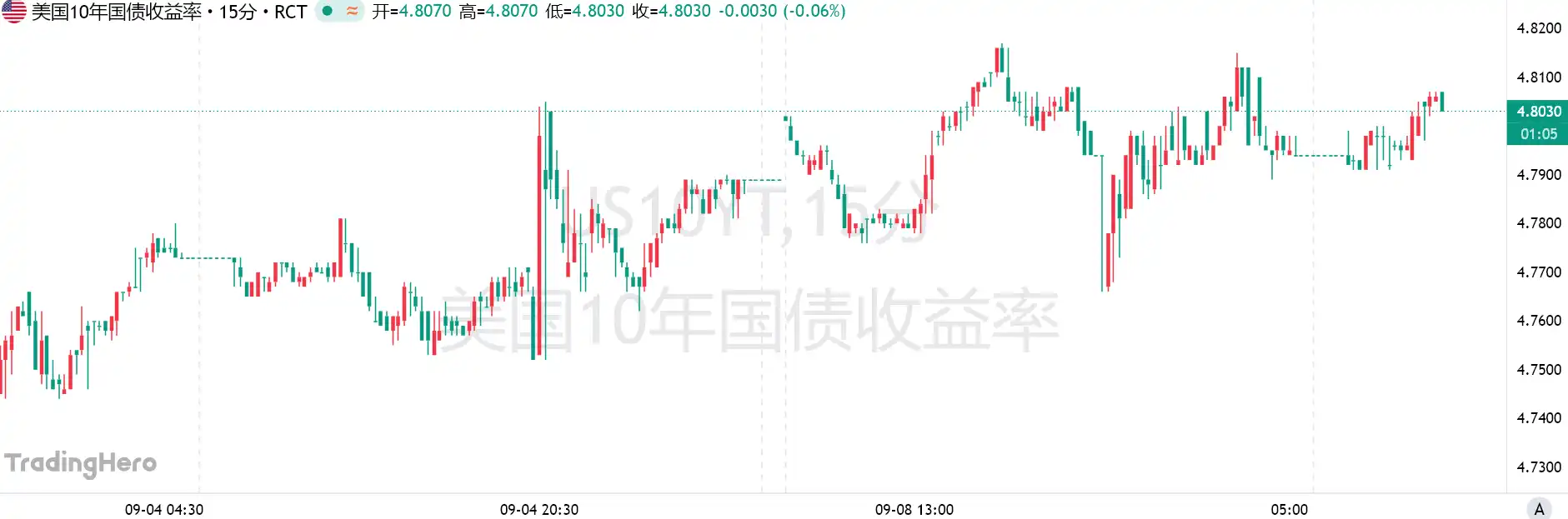
On Tuesday, U.S. Treasury yields edged higher as traders tracked oil prices and waited for inflation data due later this week. After a sharp rise last week, yields were steadier this week. The 10-year U.S. Treasury yield was trading at 4.80%, near its highest level since 2025 and also close to its high since 2023.
What markets are waiting for is the Fed’s reaction function
Warsh has repeatedly said the Fed is committed to its 2% annual inflation target, but that alone has not fully eased doubts among bond investors.
Not long after Warsh’s press conference following the Fed’s July monetary policy meeting, long-term Treasury yields moved noticeably higher. The report says that may have reflected doubts about Warsh’s commitment to bringing inflation under control. It may also have been tied to a quieter transition period at the Fed, or simply to investors beginning to price in the possibility of future hikes.
What is missing now is a fuller explanation of Warsh’s “reaction function.” The Brookings Institution defines that as what a central bank is watching, how it interprets the economy, how it weighs competing risks, and what changes would alter its judgment.
Warsh did not lay out that framework in detail in his Jackson Hole speech, but the signal that rates could still rise was itself seen as a step toward better communication with markets.
Jim Baird, chief investment officer at Plante Moran Financial Advisors, said: “Warsh needs to continue to refine the way he communicates with markets.” One key point, he said, is convincing investors that policymakers will act within a reasonable time frame.
Markets currently see about a 60% chance that the Fed will raise rates at next week’s meeting. If it does, that would be the first rate increase in more than three years. Investors also expect at least one more rate hike before year-end, though the timing remains uncertain.
The bond market is not dealing only with monetary policy. Fiscal deficits, inflation, and a financing wave tied to AI buildouts could all keep long-term borrowing costs elevated. In that environment, clearer policy communication is being treated as a direct way to stabilize expectations.
A $6.7 trillion balance sheet is not the preferred option
The Fed does have another tool that can affect long-term yields: its balance sheet. Even so, market participants cited in the report see little chance that the Warsh-led Fed will use it.
Mike Goosay, chief investment officer and global head of fixed income at Principal Asset Management, said: “The Fed has enough ammunition to have a bigger impact on the level of rates by introducing quantitative easing.” But he added that he does not think that will happen.
During the Great Recession, the Fed massively expanded its balance sheet by buying bonds and mortgage-backed securities, injecting money into the financial system and supporting the economy when rates were near zero.
Warsh, then a Fed governor, supported the first round of quantitative easing, or QE, as an emergency measure for extraordinary times. The Fed later launched two more rounds of QE, which helped stabilize markets and support the recovery, but that also became one factor behind Warsh’s eventual resignation. According to the report, he once described the Fed’s large-scale asset purchases as “reverse Robin Hood,” arguing that the policy benefited wealthy asset owners while hurting ordinary households.
Now that Warsh is Fed chair and has stressed the need for the central bank to return to basics, the likelihood that he would support QE in the current environment appears even lower.
The Fed has also used its balance sheet in the past to push long-term borrowing costs lower directly. Tang noted that during World War II, the Fed believed it had an obligation to support the war effort, and used its balance sheet to suppress bond yields so the government could expand spending. “But we are not in a world war right now,” he said.
At the time, the Fed set fixed low prices for short-term Treasury bills and long-term bonds, buying whatever private investors would not take, while also keeping short-term rates low.
That policy came at a cost. It weakened the Fed’s independence and made inflation harder for policymakers to control. The arrangement ended with the 1951 Treasury-Fed Accord, which restored the Fed’s independence from the Treasury.
Warsh has previously stressed that Federal Reserve independence is critical, and the report says that matters for the bond market as well. When investors believe the Fed is willing to take potentially unpopular monetary-policy steps to control inflation, they are more likely to trust the central bank’s commitment to price stability.
For the bond market now, the more direct choice may not be to use a $6.7 trillion balance sheet to influence long-term yields again. It may be to convince investors that, when inflation pressure persists, the Fed will act.