
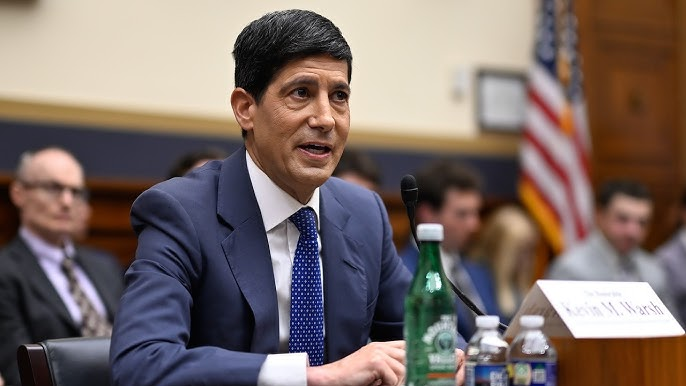
Federal Reserve Chair Kevin Warsh delivered his first semiannual congressional testimony since taking office in May, using the appearance to signal a hawkish approach to inflation and to reaffirm the central bank’s independence.
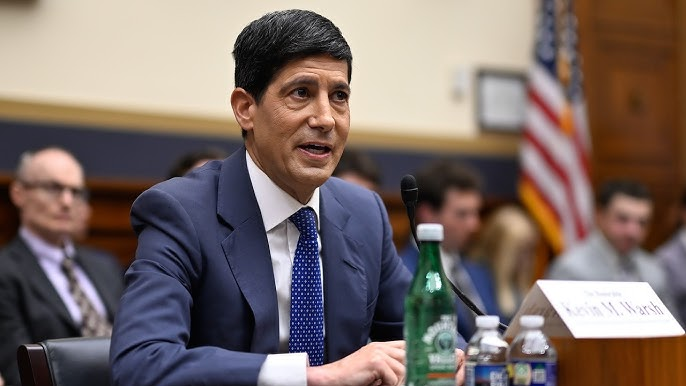
In prepared remarks, Warsh said the Fed has “zero tolerance” for persistently high inflation. He declined to provide specific forward guidance on interest rates and said policy decisions will be driven by incoming data. He also singled out the current boom in artificial intelligence investment as the most striking feature of the U.S. economy.
First appearance before Congress as Fed chair
On the evening of July 14, 2026, Taipei time, Warsh appeared before the House Financial Services Committee for the Fed’s semiannual monetary policy report, also known as the Humphrey-Hawkins hearing. It was his first appearance before Congress in the role after taking office in May.
With inflation easing somewhat but still proving sticky, and with political pressure building in an election year, Warsh used his opening statement to lay out what the article described as a tough but pragmatic policy line. He offered no explicit signal on whether rate cuts or rate hikes are next and instead stressed the Fed’s commitment to fully defeating inflation.
“Zero tolerance” for high inflation
Warsh warned lawmakers that the Fed has “zero tolerance” for persistently high inflation and said he intends to make elevated inflation “a thing of the past.”
He noted that the June Consumer Price Index showed the largest drop in recent years, falling 0.4% month over month. Even so, inflation as measured by the personal consumption expenditures price index remains around 4.1%, still far above the Fed’s 2% long-run target. Warsh said that gap continues to impose an unnecessary burden on U.S. households and businesses.
No forward guidance on rates
On policy communication, Warsh said he wants to sharply reduce the Fed’s use of forward guidance. He said the future path of rates will be fully data-dependent, leaving markets to price policy based on actual economic indicators.
The benchmark rate currently stands in a 3.5% to 3.75% range. While Fed officials remain split on whether another rate increase is needed before year-end, Warsh declined to disclose his own dot-plot projection.
AI investment stands out in the economy
Warsh said the broader U.S. economy remains “solid,” with the labor market still stable.
He described the ongoing wave of artificial intelligence investment as the economy’s “most striking feature.” According to the testimony summary, the Fed is closely monitoring AI’s potential impact on the real economy. Warsh said AI may significantly lift productivity, but the infrastructure needed to support that expansion could also push up prices for semiconductors and electricity-related energy inputs.
Fed independence and internal review
As calls for rate cuts grow in an election year, Warsh reiterated the Fed’s “independence” and said monetary policy will not be shaped by political pressure.
He also said the central bank has set up five task forces to review Fed communications, balance sheet reduction, data usage, and the inflation framework in an effort to improve policy effectiveness.
As the hearing moved into questions from lawmakers, markets were watching how Warsh’s hawkish tone might affect U.S. stocks and risk assets including cryptocurrencies.