
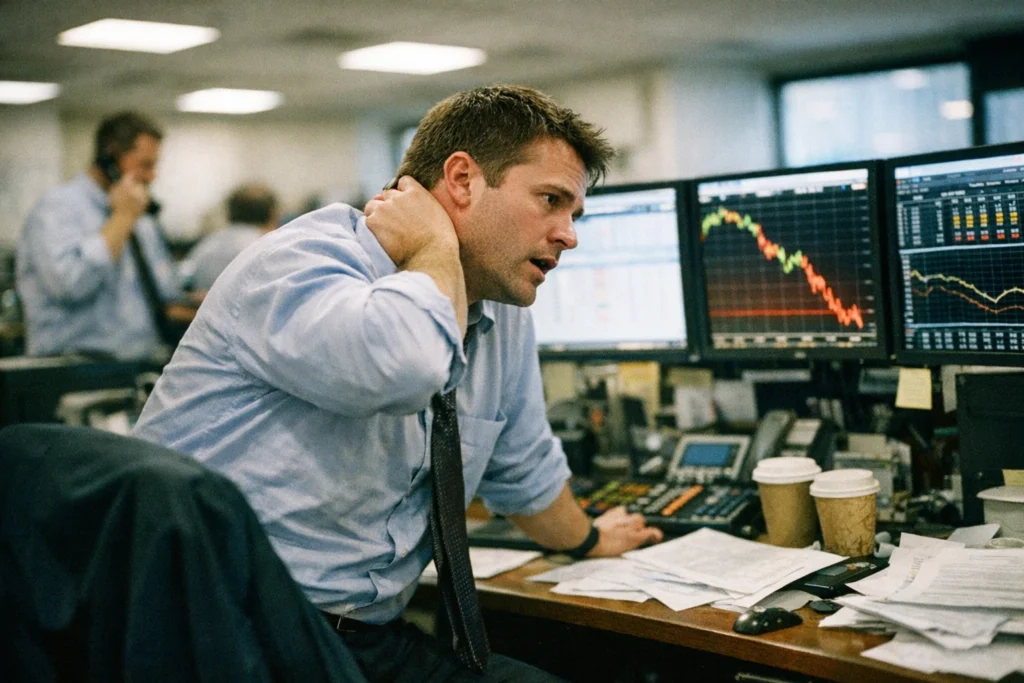
Bitcoin fell below $63,000 on Friday after three Federal Reserve officials who opposed this week’s hold decision released written statements explaining why they wanted an immediate 25 basis point rate increase. The cryptocurrency dropped from an earlier intraday high of $65,305 to $62,611, a 24-hour decline of about 3.2%.
Long-dated Treasury yields climbed at the same time. The 30-year U.S. Treasury yield reached 5.267%, while the 10-year yield touched 4.737%, its highest level since January 2025. U.S. equities also faded after an initially strong open, with semiconductor shares giving back early gains.
Three dissenting Fed officials explain their votes
The Federal Open Market Committee voted 9-3 on July 29 to keep the federal funds rate unchanged at 3.50% to 3.75%. Cleveland Fed President Beth Hammack, Minneapolis Fed President Neel Kashkari, and Dallas Fed President Lorie Logan dissented and each called for a 25 basis point hike at that meeting.
According to the source article, it was the first time since September 2016 that three policymakers dissented in the same direction at a single meeting.
On Friday morning U.S. time, all three released written statements, as is customary, laying out the reasons behind their opposition.
Hammack says inflation is the more urgent problem
Hammack offered the clearest language of the three. She said that with the labor market stable and unemployment near what she views as maximum employment, inflation remains the more pressing issue. Citing business contacts in her district, she said price pressures were “spreading rather than fading,” while consumers were “despairing over persistently high prices.”
“In my view, now is the time for the FOMC to act,” she said, calling for faster progress in returning PCE inflation to the Fed’s 2% target and delivering on its commitment to price stability for the public.
She added that the longer high inflation lasts, the harder and more costly it becomes to bring it back down.
Kashkari focuses on policy pace
Kashkari framed the issue around timing and pace. He acknowledged that the current round of price pressures includes supply-side factors such as Trump’s tariff policies and higher oil prices linked to the war in Iran. Even so, he argued that monetary policy is not powerless in the face of repeated supply shocks.
“To manage the risk of high inflation becoming entrenched, I would prefer to gradually tighten policy while we gather more inflation and employment data,” he said.
He also left room to slow or pause rate increases if inflation continues to cool.
Logan warns against the cost of inaction
Logan’s statement focused on the risks of doing nothing. She said that even if inflation eases slightly, inflation could remain above target in the absence of policy restraint unless an unexpected shock intervenes.
“Taking moderate action in the near term can reduce the likelihood that more aggressive steps will be needed later,” she said.
The disagreement, as described in the source report, is not really about the latest inflation readings themselves. U.S. core PCE for June rose 3.3% year over year, down from 3.4% in May, while headline PCE came in at 3.7%. The split is over whether that modest easing changes the broader picture, given that inflation has stayed above the 2% target for more than five years.
Warsh says markets are already doing part of the tightening
Fed Chair Kevin Warsh responded to the three dissents on Wednesday by saying, “I asked for a healthy family argument, and I got one.” He said the majority preferred to wait for July and August CPI data ahead of the September meeting.
Warsh also made a point the source article treated as central: financial conditions had already tightened in a way that was doing part of the Fed’s work. Put simply, the rise in long-dated Treasury yields meant markets had already delivered some of the tightening that would otherwise come from a policy move.
At the time Warsh spoke, the 30-year Treasury yield had risen from about 5.1% to 5.21%, the highest since 2007, while the policy-sensitive 2-year yield moved lower. The source article said that combination suggested the bond market was not pricing in a Fed hike, but rather the consequences of the Fed choosing not to hike.
After Friday’s statements from the three dissenters, the 30-year yield pushed higher again to 5.267%, and the 10-year yield touched 4.737%.
Stocks swing from gains to losses
U.S. stocks opened higher but lost momentum as the session developed. Amazon rose more than 15% after strong earnings helped ease concerns over AI capital spending.
The major indexes all started in positive territory. The Nasdaq at one point gained 1.33%, while the Dow Jones Industrial Average rose 0.52%. After the Fed officials’ statements and the continued rise in yields, both indexes slid lower. The Nasdaq briefly turned negative and fell as much as 0.47%, while the Dow dropped as much as 0.41%, erasing its opening gains.
Apple fell more than 9% after its results for China sales and services missed expectations described in the source report.
Crypto gives back post-FOMC gains
Two days earlier, bitcoin had climbed back above $64,000 after the Fed left rates unchanged. On Friday morning, it rose as high as $65,305 before reversing lower once the three dissenting officials published their statements.
Bitcoin was last quoted at $62,611, down about 3.2% over 24 hours. Ether also fell below $1,900 and traded at $1,857, down 3.1%.
Total crypto market capitalization slipped to $2.24 trillion, a daily decline of 2.3%.
Key figures from the move
- The July 29 FOMC meeting ended in a 9-3 vote to hold rates at 3.50% to 3.75%.
- Hammack, Kashkari, and Logan each favored an immediate 25 basis point increase.
- The 30-year Treasury yield touched 5.267%.
- The 10-year Treasury yield reached 4.737%, the highest since January 2025.
- Bitcoin fell from a 24-hour high of $65,305 to $62,611.
- Ether dropped to $1,857, down 3.1%.
- Total crypto market capitalization declined to $2.24 trillion, down 2.3% on the day.