
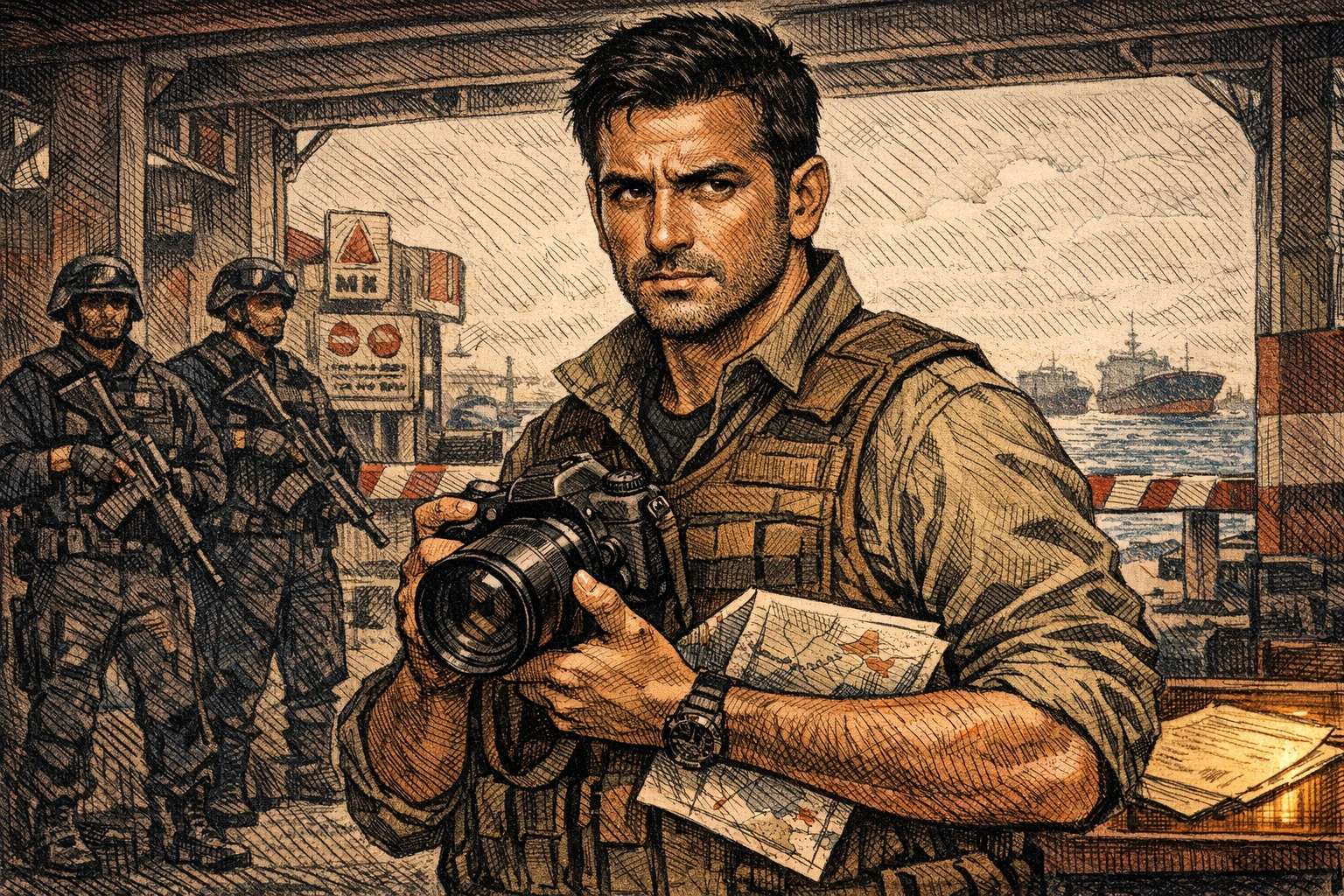
A Citrini Research analyst, designated as "Analyst No. 3," traveled to the Strait of Hormuz and uncovered that Iran's control over the waterway is far more nuanced than a simple "open or closed" binary. The reality resembles a toll road where Iran grants passage on a case-by-case basis.
How Iran's 'Toll Booth' Works
In Oman's Musandam Governorate and the village of Kumzar, the analyst interviewed local fishermen, smugglers, and a Greek-Australian ship captain. The captain described his vessel waiting in line for Iranian approval, requiring repeated communication with middlemen to submit documents. "No approval, no transit," he said. The analyst noted that markets have long priced the strait as blocked, but the situation on the water is increasingly like a toll road: Iran holds the switch, and those who follow the rules can pass.
Field observations confirmed this: a Greek Dynacom tanker steamed straight through the center of the strait at full speed, ignoring drones overhead while other vessels hugged the coast. The analyst interprets this as evidence that the ship has secured an agreement with Iran, visually confirming "the strait reopening under Iranian control." On April 2, the team counted 15 vessels transiting the strait, compared to only 2 to 4 per day in the previous two weeks, indicating a sharp rise in traffic.
Attacks and Shipping Climb Simultaneously
Fishermen in Kumzar conveyed two seemingly contradictory facts: far more ships are passing through than reported, and far more attacks are occurring than covered by media. Drone strikes mainly target tankers that refuse to comply with Iran's rules, but civilian fishing boats have also been hit, sometimes by mistake. One fisherman who has crossed the strait 20 times since the conflict said: "You see a ship, hear a loud noise, and then it disappears. Here, that's just an ordinary day."
The analyst spotted multiple tankers with their Automatic Identification Systems turned off ("ghost ships," as locals call them) and confirmed vessels under Indian, Malaysian, Japanese, Greek, French and other flags transiting. Local residents reported that after airstrikes hit Qeshm Island and two US aircraft were downed, shipping activity actually increased rather than halted.
Risk on the Ground and Market Lessons
The investigation was fraught with danger. The analyst was detained by Oman's Criminal Investigation Department, had his phone confiscated, and received a deadly warning before attempting to go to sea. Nevertheless, he boarded a dilapidated speedboat without GPS, assisted by a smuggler, and reached waters just 18 miles off the Iranian coast. He even jumped into the sea while a drone circled overhead.
The analyst concluded that binary thinking about geopolitical crises — "open vs. closed, escalation vs. de-escalation" — is obsolete. In this scenario, war and commerce run in parallel: the US threatens all-out war while allies negotiate with Iran; drone strikes increase while shipping volumes rise. For institutional investors dependent on global supply chains, Iran is unilaterally rewriting the rules of the Strait of Hormuz, and the massive gap between public data and on-the-ground reality has become a critical variable for risk assessment.