
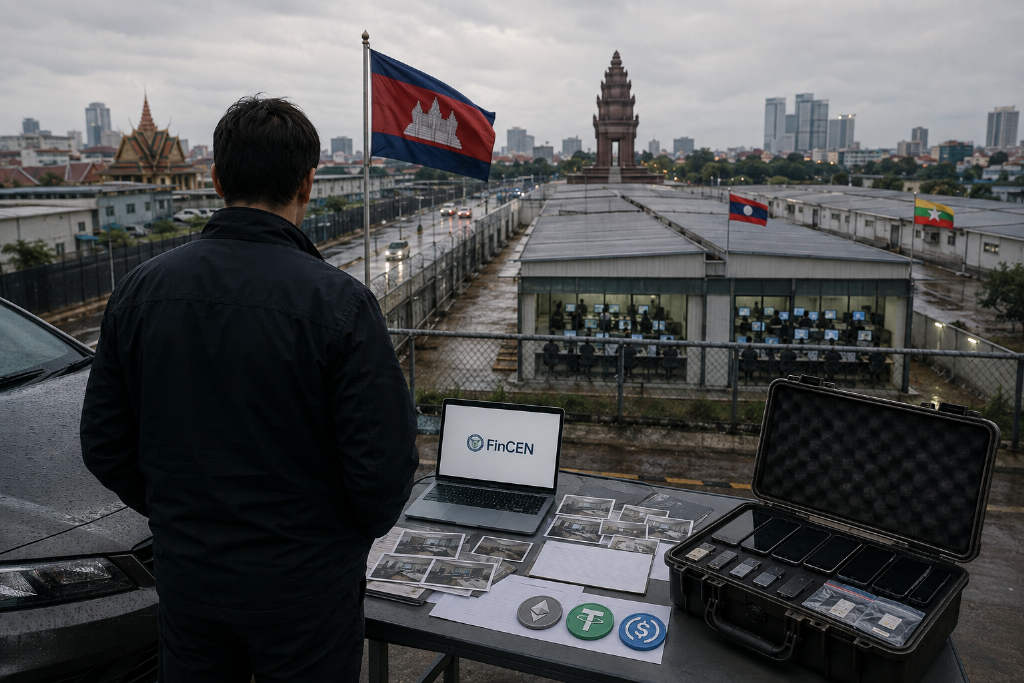
FinCEN Analysis Highlights $12.7 Billion in Suspicious Activity
On Thursday, the U.S. Treasury's Financial Crimes Enforcement Network (FinCEN) put out an analysis and alert tying about $12.7 billion in suspicious financial activity to crypto investment scams run from compounds in Southeast Asia. The filings came from about 1,300 institutions, which submitted 33,904 Suspicious Activity Reports (SARs) covering September 2023 through December 2025.
Money services businesses (MSBs), mostly cryptocurrency firms, sent in 55% of the reports, equal to $5.5 billion. Banks accounted for 41% of the reports and $6.4 billion. Securities firms filed the remaining $784.5 million. And the volume kept climbing: the number of reports rose at an average monthly rate of 10.9%, while the dollar total jumped 18%.
Scam Methods and Fund Flows
Scammers relied on at least 22 different digital assets. The names that showed up most often were Ethereum, Tether (USDT), and USD Coin (USDC). On-chain analysis found that no matter what victims bought first, the money was almost always switched into stablecoins, mostly USDT. From there, it moved through DeFi protocols or exchanges outside the United States. A simple pattern, too: scammers reused receiving addresses across multiple victims, which helped some institutions spot the scheme.
Victim Demographics
About 25% of the reports involved elderly individuals, which lines up closely with the 24.4% share of the U.S. population age 60 and older. FinCEN said this suggests seniors are not being disproportionately targeted. The FBI reported that in 2024, Americans age 60 and older lost $4.8 billion to fraud overall.
Compound Locations and Enforcement
The compounds tied to the scams are mainly in Cambodia, Laos, and Myanmar. And this year, U.S. authorities have seized more than $25 million in funds linked to the scams, according to the report.