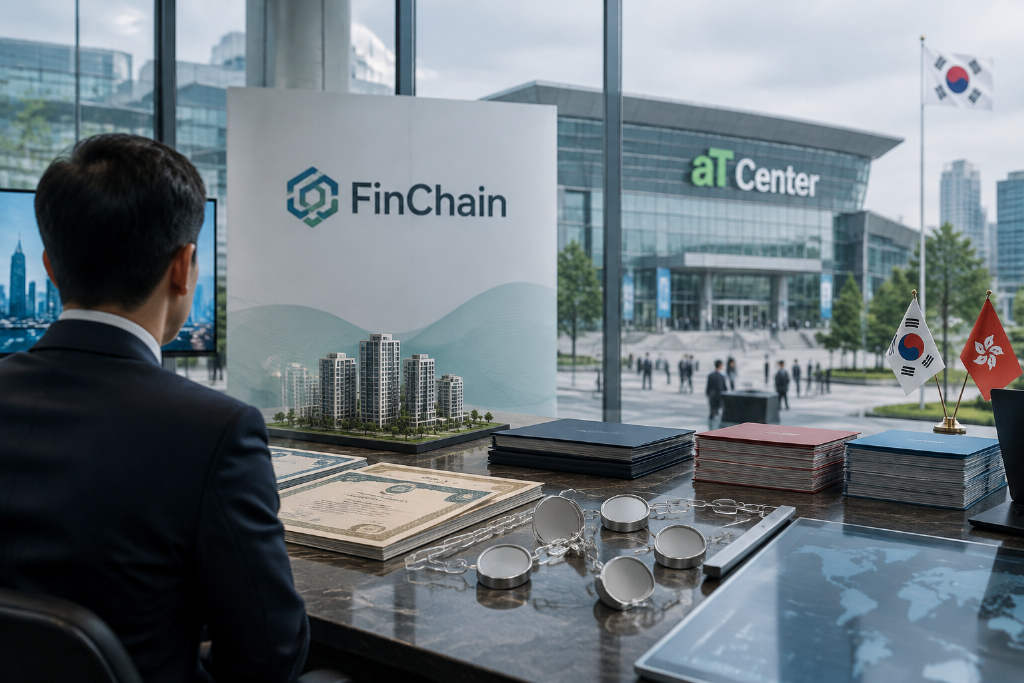
FinChain CEO Zhao Chen said capital is rotating toward traditional finance yields as returns available on-chain have fallen this year, framing the shift as a core driver behind interest in real-world assets, or RWAs. Speaking during a panel at GWDC 2026 Korea in Seoul, Zhao said that if funding-rate arbitrage or overcollateralized lending rates are treated as crypto’s risk-free rate, those returns were around 8% to 10% last year, when RWAs were not especially popular. This year, he said, unincentivized stablecoin deposit yields on-chain have dropped to roughly 3% to 4%, prompting users to seek traditional financial yield exposure without off-ramping.
Zhao described the relationship between traditional finance yields and on-chain yields as a seesaw, with capital moving to whichever side offers higher returns. In his view, the essence of RWAs is to bring traditional financial yield into the crypto market. He also pointed to regulatory differences across jurisdictions as a source of compliance arbitrage, citing the example of putting restricted leveraged ETF-type products on-chain and accessing them with stablecoins. On the data side, he said assets such as real estate and private credit may update net asset value only once a month, while on-chain pricing is calculated block by block, and the industry still lacks a clear standard for smoothing that gap.
GWDC 2026 Korea was held on Sept. 29-30, 2026, at the aT Center in Seoul, South Korea. The event was hosted by Web3Labs and co-organized by Techub News, HypaiLabs, and TokenPost.
During a panel discussion, FinChain CEO Zhao Chen said FinChain is the Web3 business unit of a licensed Hong Kong brokerage. Its goal is to bring traditional funds and financial products on-chain and make RWAs more liquid, more accessible, and more composable.
Capital is moving as on-chain yields fall
Zhao said that if funding-rate arbitrage or overcollateralized lending rates are treated as the crypto sector’s “risk-free rate,” that level was about 8% to 10% last year, when RWAs were not a hot theme. This year, unincentivized stablecoin deposit yields on-chain have fallen to around 3% to 4%, and capital has started looking for yield exposure from traditional finance without going through off-ramping.
He said traditional finance yields and on-chain yields behave like a seesaw, with capital flowing to whichever side offers the higher return. In his view, the essence of RWAs is to bring traditional financial yield into the crypto world.
Regulatory gaps and pricing standards remain open issues
Zhao also said differences in regulation across jurisdictions can create room for compliance arbitrage. He gave the example of putting restricted leveraged ETF-type products on-chain and accessing them with stablecoins.
On data, Zhao said the net asset value of assets such as real estate and private credit may be updated only once a month. How to smooth that against prices calculated on-chain block by block remains unresolved, and the industry still does not have a clear standard.
This article was originally published by Bit.Fan. For more cryptocurrency news and market insights, visit www.bit.fan. Disclaimer:
The market information, project data, and third-party content displayed on this platform are for industry information sharing only and do not constitute any form of investment advice or return commitment.
Cryptocurrency trading carries high risks. Users should fully assess their risk tolerance and make independent decisions. All profits, losses, and legal responsibilities are borne by the users themselves.