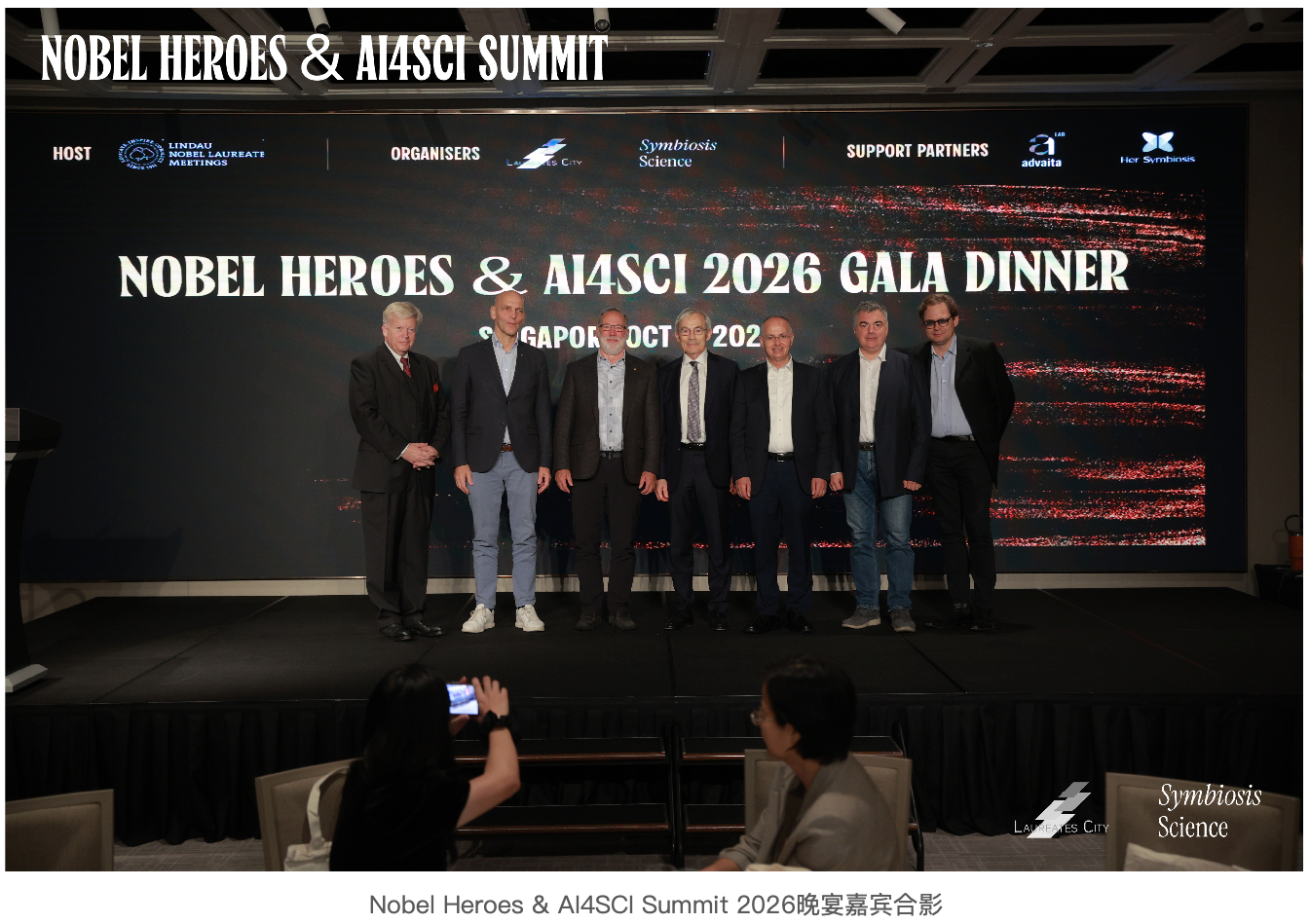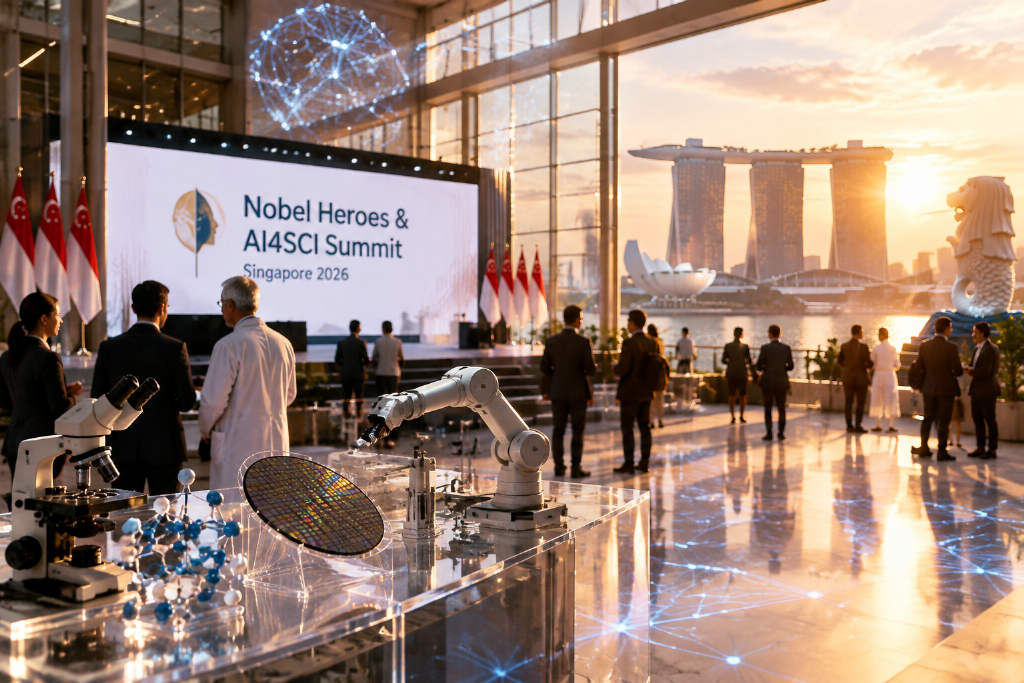
Five past Nobel laureates gathered in Singapore during the 2026 Nobel announcement week to discuss a question that is now reshaping research practice: whether artificial intelligence can accelerate the next scientific revolution.
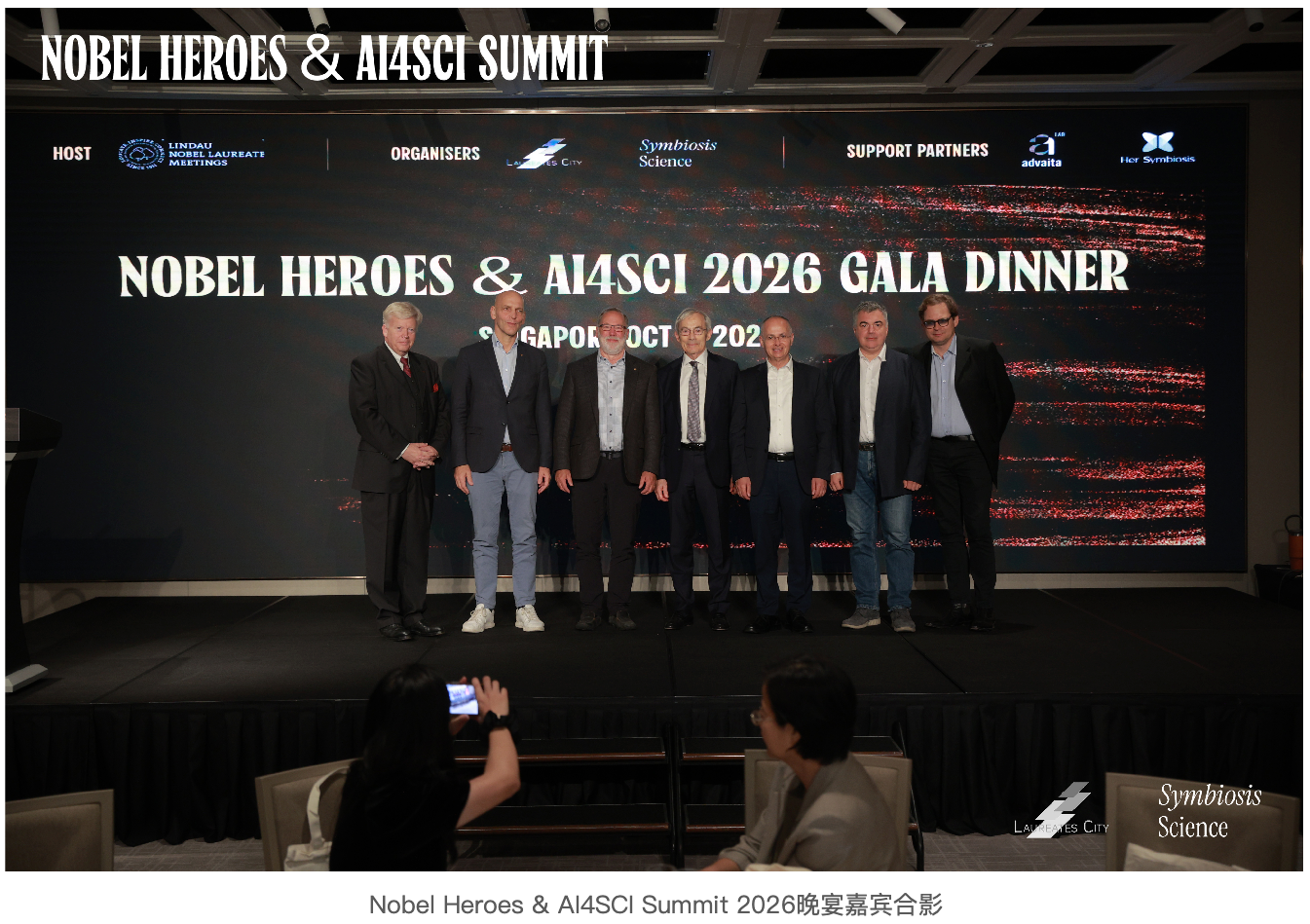
Nobel Heroes & AI4SCI Summit Singapore 2026 took place on Oct. 5 and 6, while the 2026 Nobel Prizes in physiology or medicine, physics, and chemistry were announced from Oct. 5 to 7. The two-day forum brought together about 500 guests and hosted seven Nobel roundtables and dialogues covering AI for Science, scientific discovery, healthy longevity, the future of work, and urban sustainability.
Five past Nobel laureates joined the summit
The five laureates attending the summit were 2025 Nobel Prize in Chemistry winner Omar M. Yaghi, 2025 Nobel Prize in Physiology or Medicine winner Fred Ramsdell, 2021 Nobel Prize in Chemistry winner Benjamin List, 2010 Nobel Prize in Physics winner Sir Konstantin Novoselov, and 2010 Nobel Prize in Economic Sciences winner Sir Christopher Pissarides.
The summit was jointly organized by Laureates City Holdings Limited and Symbiosis Science. Lindau Nobel Laureate Meetings served as the hosting institution, with Advaita Lab and HER SYMBIOSIS as supporting partners.
The 2026 science Nobels put the spotlight back on basic research
The event coincided with the release of the 2026 science Nobel results, which the report said again showed the long-term value of basic research.
The 2026 Nobel Prize in Physiology or Medicine went to Karl Deisseroth, Peter Hegemann, and Georg Nagel for pioneering discoveries in light-gated ion channels and optogenetics. Starting from the basic question of how green algae sense light, the work eventually led to technologies that use light to control neural cell activity and opened new paths for studying brain function.
The 2026 Nobel Prize in Physics was awarded to Francis Halzen for decisive contributions to the IceCube Neutrino Observatory and for the discovery of high-energy neutrinos of astrophysical origin. The report described the project as a bold idea built through long-term research and international collaboration: turning deep Antarctic ice into a giant instrument for observing the universe, which gave scientists a new window into the high-energy cosmos.
The 2026 Nobel Prize in Chemistry went to Henri B. Kagan and Kenso Soai for discovering nonlinear effects and autocatalytic phenomena in asymmetric organic synthesis. According to the report, that work deepened understanding of molecular chirality and how it forms, while also offering important clues for explaining asymmetry in molecular structures within living systems.
From neuroscience to cosmic exploration to molecular chemistry, the discoveries crossed disciplines but shared a similar starting point: an important scientific question and years of work in pursuit of an answer. With AI entering laboratories, another question has come into view: could discoveries that once took decades happen faster in the future?
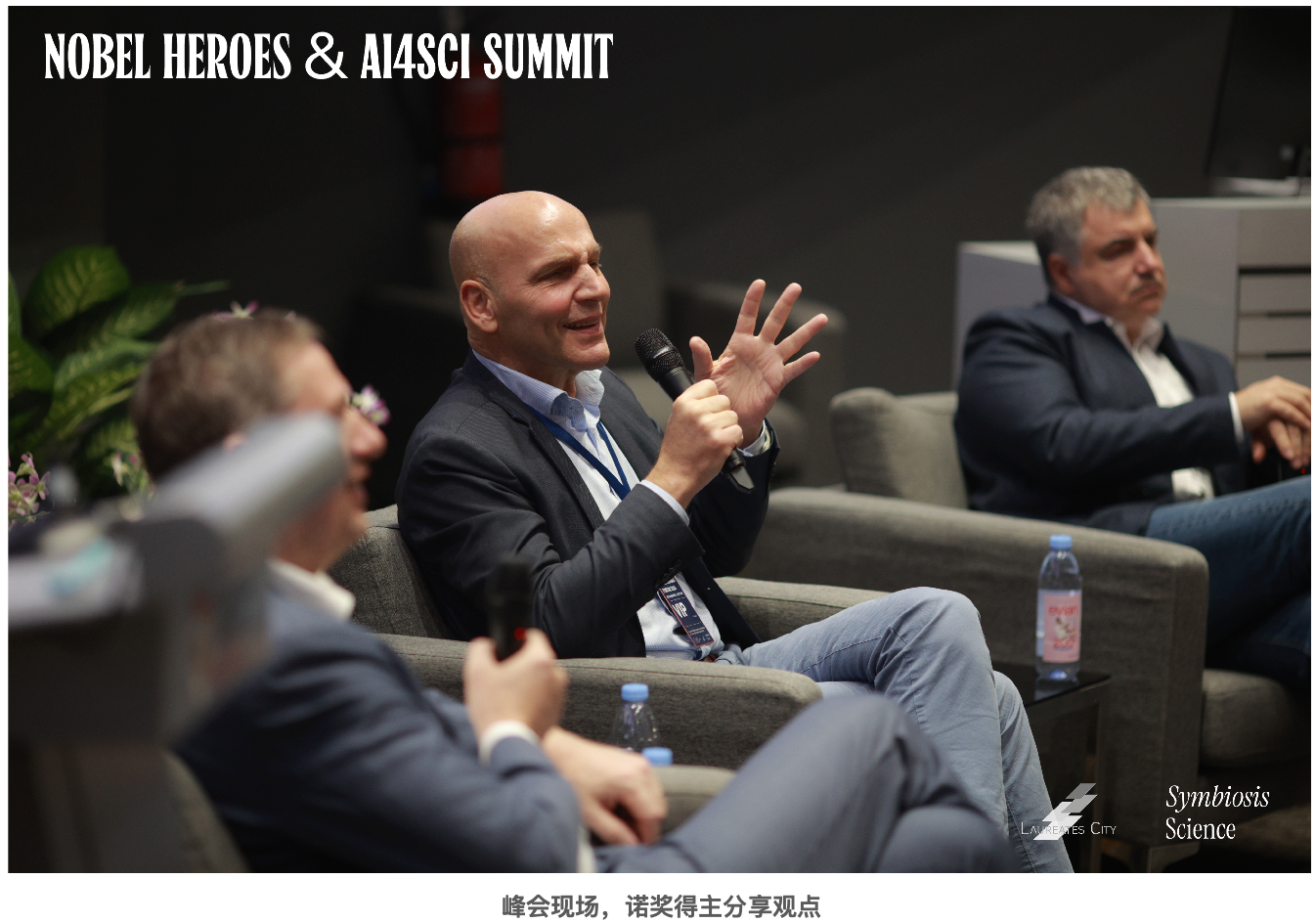
Laureates said AI is changing discovery, but humans still have to frame the questions
At the Singapore summit, the five laureates discussed scientific change driven by AI from the perspective of their own fields.
Omar M. Yaghi, the 2025 Nobel chemistry laureate, took a positive view of AI's use in materials research. He shared examples of AI accelerating work in the field and said, 「AI is not just a new tool, it『s a new environment that we are being dropped into.」 In his view, AI is changing how scientists explore materials, design experiments, and move discoveries forward.
The report also noted that the 2026 Nobel chemistry focus on asymmetric synthesis echoed Benjamin List's research area. List, who won the 2021 Nobel Prize in Chemistry for asymmetric organocatalysis, again stressed the importance of bold imagination in scientific breakthroughs. He said, 「A necessary condition for a revolutionary discovery is what feels like a crazy idea.」
Sir Konstantin Novoselov, winner of the 2010 Nobel Prize in Physics, also stressed that the human ability to ask the right questions remains critical in scientific research. Even if AI can speed up computation, analysis, and experimentation, deciding which questions are truly worth pursuing is still a core challenge in discovery.
From the life sciences side, Fred Ramsdell, the 2025 Nobel Prize in Physiology or Medicine laureate, said complex biological systems still contain many unknowns. High-quality data and a deep understanding of biological mechanisms remain important preconditions if AI is to drive real breakthroughs in the life sciences.
Sir Christopher Pissarides, who won the 2010 Nobel Prize in Economic Sciences, extended the discussion to AI's economic and social effects. His focus was not only on technical capability, but also on whether AI can produce applications with practical value and how those changes may affect employment, productivity, and future society.
The report said the five laureates did not hold identical views, but together they pointed to a shared issue: as machines become better at finding answers, the human ability to ask important questions may become even more valuable.
Younger researchers and cross-disciplinary work were also central themes
The summit did not focus only on established scientists. It also placed youth development and cross-disciplinary collaboration high on the agenda.
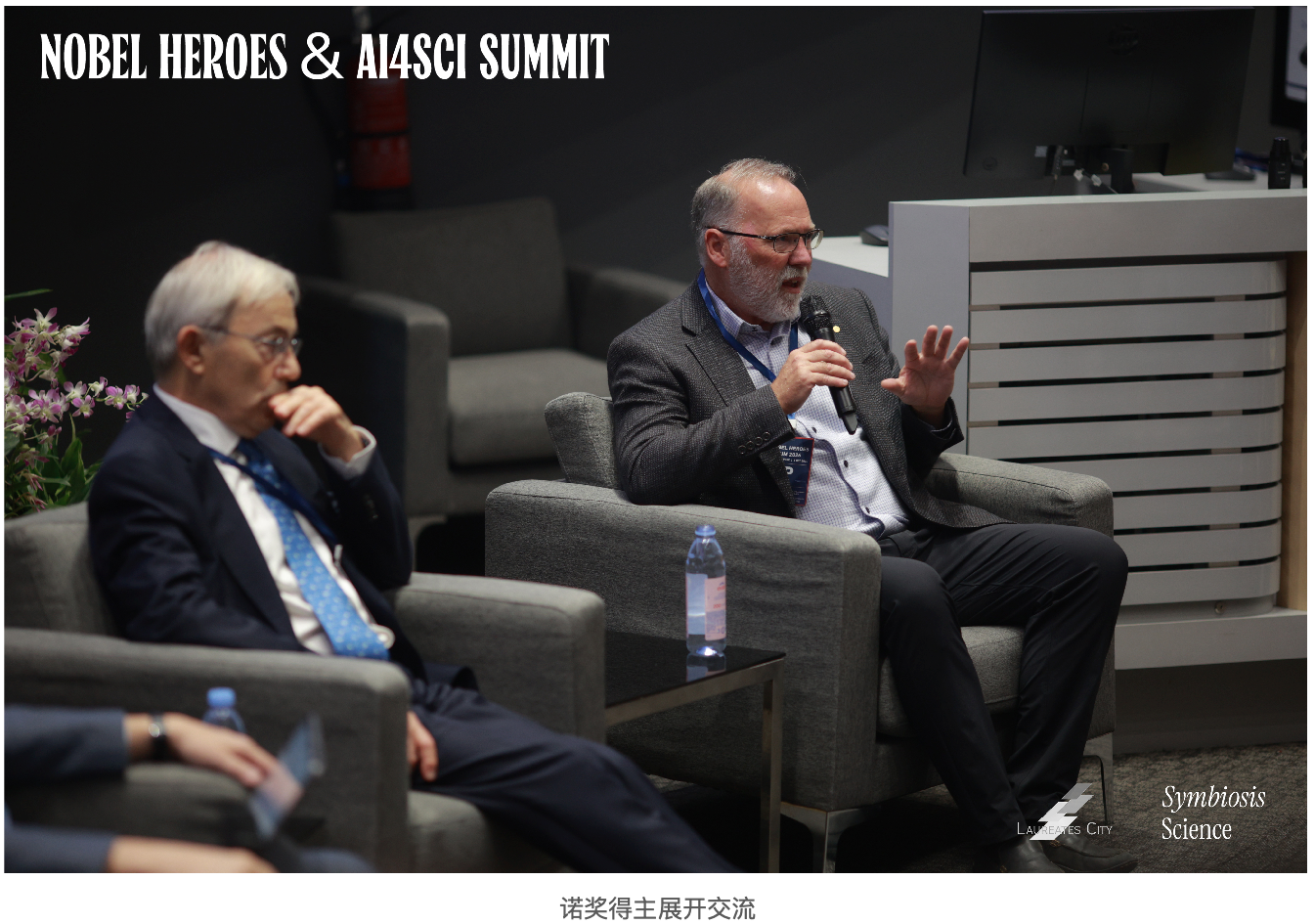
On the afternoon of Oct. 5, an AI for Science forum was held at Nanyang Technological University, bringing together representatives from universities, AI research institutions, and technology industry groups from around the world to discuss how AI can accelerate scientific discovery and interdisciplinary innovation.
During the young scientist presentation session that afternoon, the Rising Minds — AI4SCI Young Talent Program completed its first round of recognition. Three young researchers presented their frontier work and became the first recipients named to the AI4SCI Rising Stars 100.
The program was jointly launched by AI² Science Foundation, Symbiosis Science, Advaita Lab, AuraSci, Avinasi Labs, and Cit Labs. Its stated aim is to support the next generation of young scientists in AI for Science and help promising research talent gain more visibility and development opportunities.
Also that afternoon, Advaita Lab shared frontier AI research directions, while HER SYMBIOSIS held a women in leadership roundtable to discuss the future of artificial intelligence and social innovation from different perspectives.
On Oct. 6, the summit continued at Singapore Management University. SMU Provost Professor Alan Chan and Lindau Nobel Laureate Meetings Foundation Executive Director Nikolaus Turner delivered remarks, and Dr. Cheong Wei Yang, SMU's Vice Provost for Strategic Research Partnerships, gave the opening keynote. Three Nobel dialogues then examined healthy longevity, urban sustainability, and the future of work in the AI era.
The event also looked at long-term support and public engagement
Beyond academic discussion, Nobel Heroes & AI4SCI Summit Singapore 2026 brought together representatives from government, international institutions, technology companies, and the investment community to explore possible links between scientific research, long-term capital, and industrial resources.
A gala dinner on Oct. 5 drew more than 150 international guests. Laureates City Holdings Limited Chairman Michael Ong, Symbiosis Science founder Kamala Zhu, and Lindau Nobel Laureate Meetings Foundation Executive Director Nikolaus Turner each delivered remarks on international scientific exchange, cross-sector collaboration, and long-term support for innovation.
Scientific exchange also moved beyond the conference venue into public urban space. On Oct. 6, German photographer Peter Badge's Nobel Laureates Portrait Exhibition Singapore 2026 opened at Gardens by the Bay. The exhibition features portraits of 35 Nobel laureates and was scheduled to open to the public free of charge from Oct. 6 to 11.
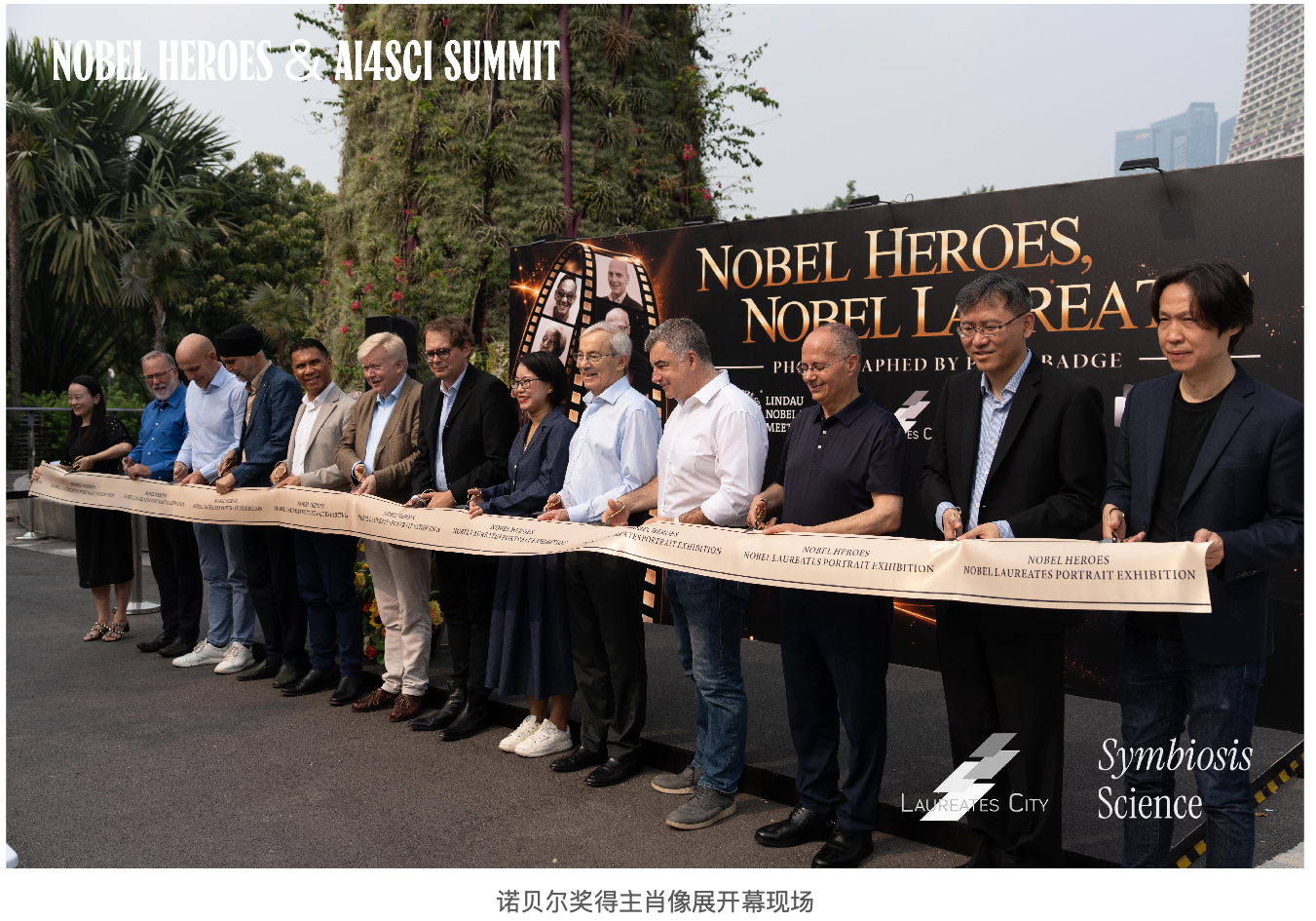
The report said the exhibition uses photography, outdoor display, and digital interaction to give the public a chance to get closer to the people behind major discoveries and to help more young people experience the appeal of science.
Organizers said the discussion will continue in Hong Kong in December
The report concluded that the summit was not only about how much faster AI can make scientific research, but also about how important scientific questions, strong young talent, and long-term support systems can meet earlier.
Starting from Singapore, Laureates City and Symbiosis Science said they will continue working with international academic institutions, technology companies, and global partners to promote sustained exchange across science, artificial intelligence, industry, and capital.
According to the report, Masters of Abstraction & AI4SCI Summit will be held in Hong Kong on Dec. 16 and 17, bringing together scientists, technology leaders, and innovation communities from around the world to examine the possibilities for the next generation of scientific discovery in the AI era.
Hosting institution: Lindau Nobel Laureate Meetings
Co-organizers: Laureates City Holdings Limited, Symbiosis Science
Supporting partners: Advaita Lab, HER SYMBIOSIS