
Flexion Robotics, a Swiss startup founded by former Nvidia robotics researchers, has raised about $50 million in Series A funding to develop what it describes as an AI brain for humanoid robots. According to WIRED, the company was launched in Zurich in January, and its investors include Nvidia’s NVentures, DST Global, Prosus, and Redalpine.
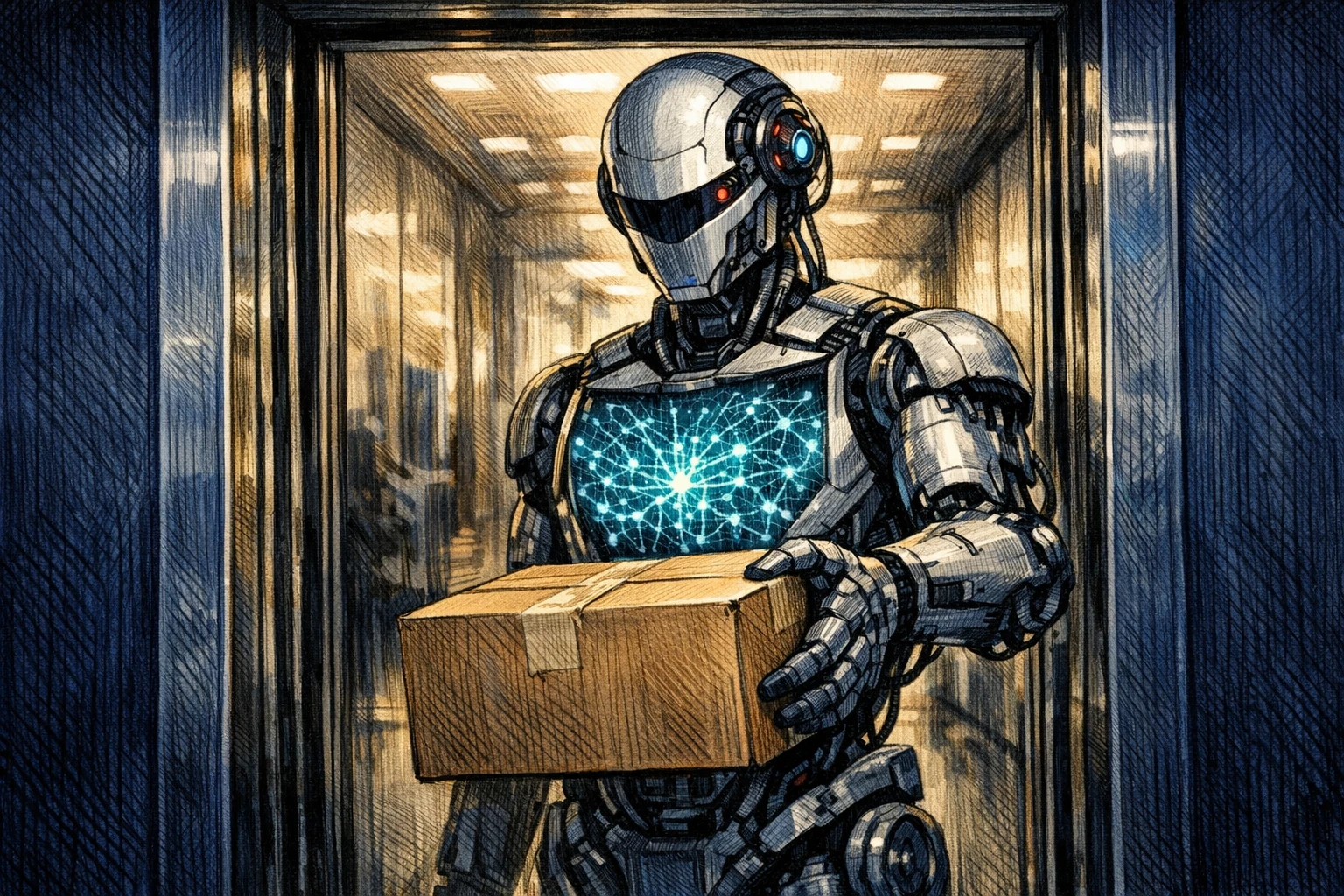
In a recent demo highlighted by the publication, a modified Unitree humanoid robot received a spoken instruction and completed a multi-step office errand on its own: going downstairs to collect a snack package, taking the elevator back up, opening the box, and placing the items into empty snack drawers. No human was remotely controlling it during the process. That detail matters, because many humanoid robot demos still rely on teleoperation behind the scenes, and performance often weakens once the machine is moved into an unfamiliar setting.
Single skills are trained first, then assembled by a central model
Flexion’s system trains robots on individual skills such as opening doors, climbing stairs, and carrying boxes inside simulation. A higher-level AI model then decides how to combine those learned behaviors after receiving a natural-language command. The model is trained by watching large volumes of human video data, linking those observations to skills learned in simulation, and applying them in the physical world to infer steps such as which doors to open or which elevator to take.
The same software stack also handles lower-level control, including locomotion, limb movement, and balance. Nikita Rudin, Flexion’s chief executive and a former Nvidia robotics research scientist, said the company’s core approach relies heavily on reinforcement learning. That applies across the stack, from the top-level planner to simulation training and motor control.
Why investors are focusing on the model layer
The report points to a broader shift in the humanoid robotics market: attention is moving from hardware to software. Elon Musk and Nvidia chief executive Jensen Huang have both spoken positively about the economic potential of humanoid robots, but Flexion’s demonstration highlights a more immediate point. Robots need a major AI leap before they can do useful work consistently.
George Chowdhury, an analyst at ABI Research who tracks the sector, estimates the market for robotic foundation models could reach $150 billion by 2036. His view is blunt: the humanoid robot itself is not the most revolutionary part, the AI model behind it is. Flexion says its software can run across humanoid robots from different manufacturers, giving it a hardware-agnostic pitch at a time when the device market is still fragmented.
The company plans to use the new funding to open a headquarters in the San Francisco Bay Area. Its business model is based on annual software licensing fees charged per robot.