

Fomo has emerged as one of the breakout products in onchain social trading this summer, according to an article written by Bootly. The piece says the app has drawn more than a million users, generated more than $1 million in daily revenue, briefly climbed into the top three finance apps in the U.S. App Store, and kept gaining momentum as meme trading on Robinhood Chain accelerated.
The article says many people were still describing Fomo as a product on its way to the mainstream just a month ago. Over the following three weeks, its expansion did not slow. It sped up. In August, Fomo recorded $13.8 million in revenue, which the article annualized to $165.6 million, easily surpassing the previous monthly record of $6.4 million set in July. The pace carried into September, with revenue reaching $1.1 million on Sept. 1, a new all-time daily high. Compared with August last year, when monthly revenue stood at $450,000, the figure was up nearly 30x.
User growth is no longer just a whale story
One of the article’s main arguments is that the latest wave was not driven only by a small group of large traders. New users arrived in force. Fomo’s average daily active users were around 7,500 in June. In the most recent week, that number reached 101,000. As that user base expanded, the app climbed to No. 15 in the U.S. App Store finance ranking. The article frames that move as evidence that Fomo is bringing new users from outside crypto into onchain trading.
Meme coins remain the main traffic engine
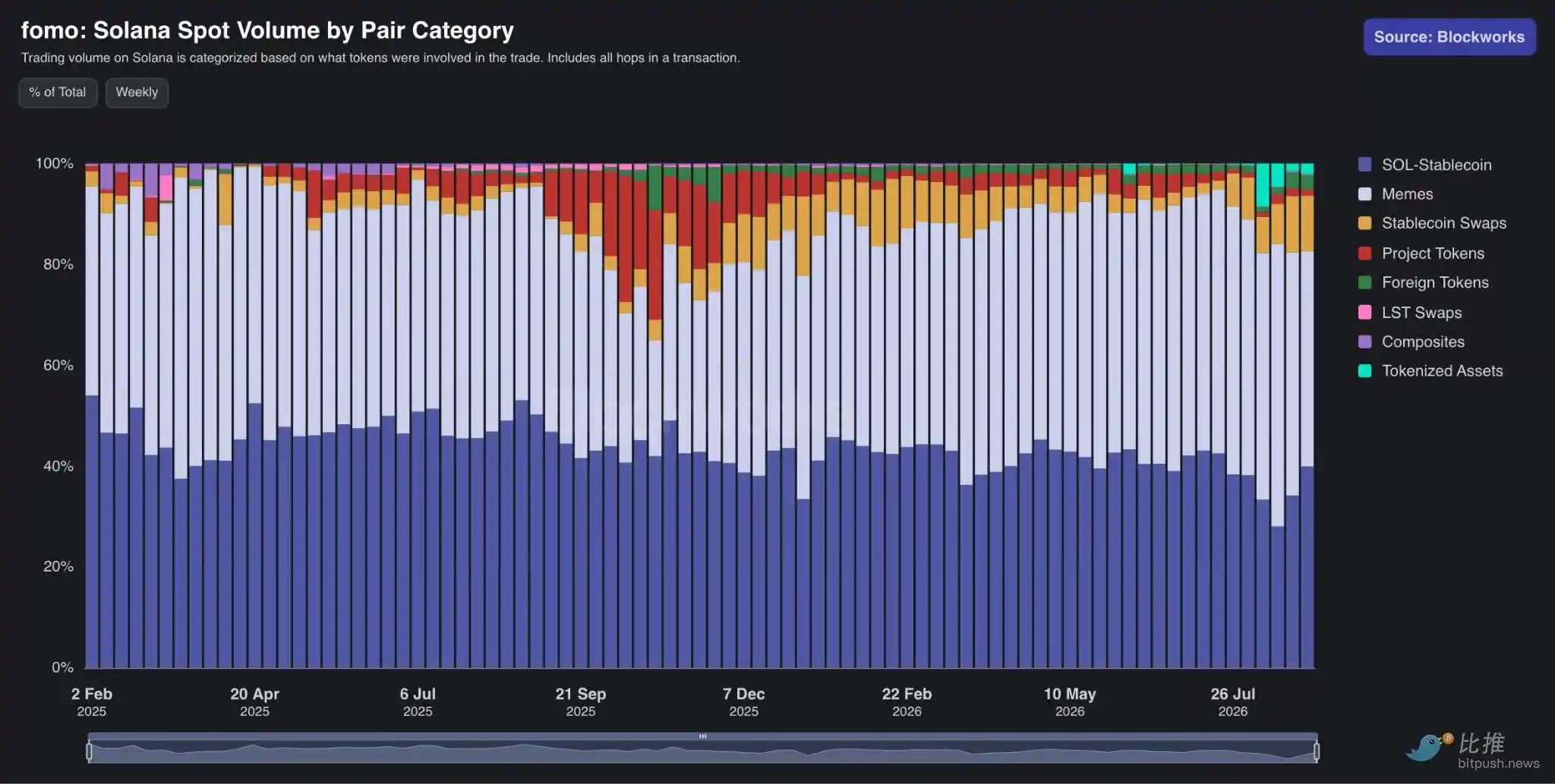
Data from Solana spot trading pairs on Fomo shows meme coin pairs consistently making up 40% to 60% of the total, with SOL-stablecoin pairs accounting for a similar share. Because Fomo quotes trading in stablecoins, the article says many SOL-stablecoin trades likely sit inside meme coin flows as well. The path for a meme purchase often runs from USDC to SOL and then into the meme token.
That structure has led some critics to dismiss Fomo as just another meme casino. Still, the piece argues that user behavior is not limited to meme speculation alone.
Hyperliquid and Robinhood Chain added new volume
Earlier this year, Fomo integrated Hyperliquid’s builder code, allowing non-U.S. users to trade Hyperliquid through the app, the article says. Initial uptake was muted. That changed in August, when notional trading volume jumped to $1.3 billion, up from $448.5 million in July.
The article identifies Robinhood Chain as the biggest recent catalyst. Its daily spot DEX volume reportedly crossed $2 billion for the first time, with meme coins contributing a large share. Fomo served as a front-end gateway for Robinhood Chain, which left it well positioned to capture that activity.
App growth did not mean broad user profits
For all the momentum, the article centers on a more painful question: did retail users actually make money on the platform?
In mid-August, analyst MidCurveMortal used Fomo’s fee routing to run a public Dune query. Over the previous 90 days, only 18,000 of roughly 293,000 wallets that traded through the app posted positive returns, for a win rate of about 6.16%, according to the article. Combined losses across that group reached about $1.26 billion, and the median trader lost around $120. Even within the profitable cohort, gains were usually small: about 88% of winning wallets made less than $100, and only around 25 wallets had profits above $10,000 at that time.
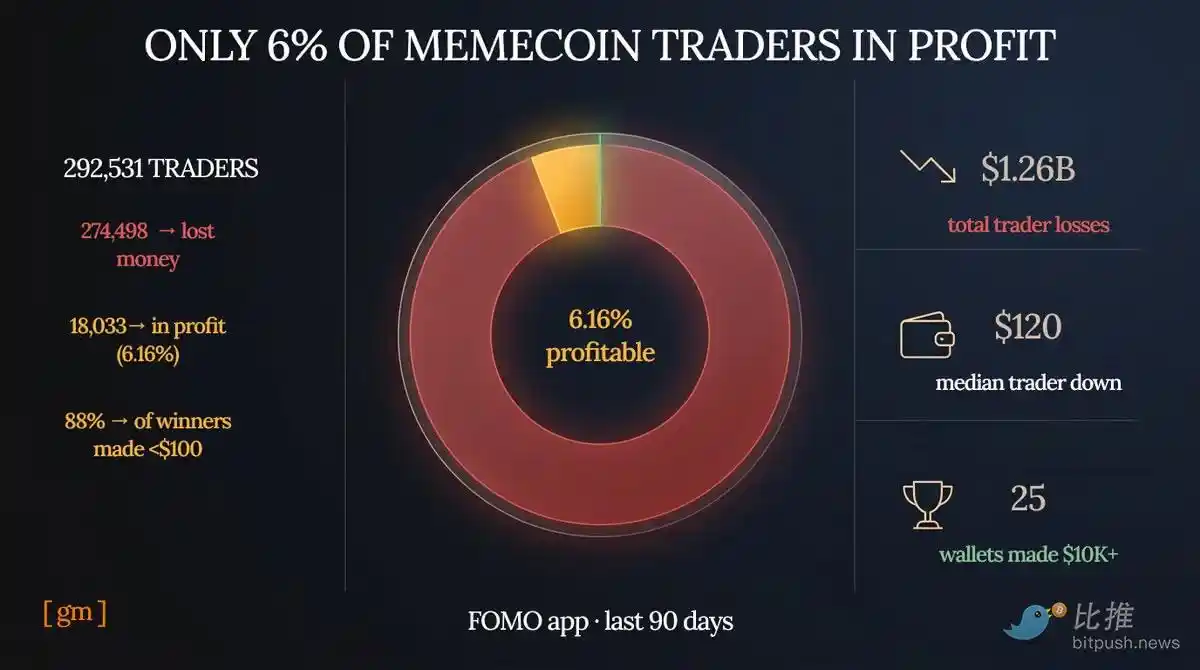
The article adds that some people compared Fomo with a gambling platform charging about a 1% take rate, where the user profit ratio was around 37%. Later analysis using a broader sample reached a similar conclusion: losses dominated, while profitable accounts were heavily concentrated in small positive returns.
Leaderboard claims and onchain data show different pictures
The platform’s own leaderboard told a different story. By late August, the article says, Fomo claimed that 25 traders on its 30-day profit ranking were showing paper gains above $1 million, with about 26 users having crossed the $1 million mark in cumulative profits. Monitoring in early September showed the top-ranked account adding about $9.8 million more in a single month.
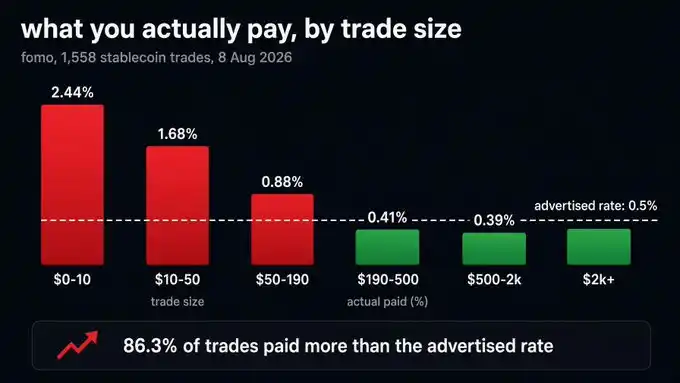
The copy-trading narrative also drew criticism. The article says traders being copied can sell into incoming copy-trade flows at higher prices, leaving retail users as exit liquidity. Fomo, by contrast, earns trading fees. Its August revenue had already reached the tens of millions level, while user return expectations did not rise alongside daily active users.
The article’s conclusion is blunt: most users are losing money, while the platform and a small group of large traders are the ones making steady gains.