

“Ethereum Is Dead” Narrative Peaks, But Consolidation Isn't the End
Across crypto social platforms, bearishness on Ethereum has reached rock bottom. Lucas openly admits that many colleagues he's worked with for years have gradually exited the Ethereum space; some have even left crypto entirely. The vast majority no longer hold ETH, and the core reason is a loss of belief in its investment value. Massive capital outflows reflect not only the diversion of funds to hot sectors like AI, robotics, and longevity research, but more directly the terrible returns on ETH—holding it has been a miserable experience for several years.
The numbers are stark. Those who bought in 2021 are at best break-even, and most are deeply underwater. Bitcoin still sits above its 2021 bull market high, and its 2025 peak nearly doubled that level. In contrast, ETH has plunged roughly 60% from its last all-time high, failed to set a new record in 2025, and never even touched the $5,000 mark. Meanwhile, the S&P 500 hits new highs almost daily, with AI, semiconductor, and energy stocks surging, making ETH's weakness all the more glaring.
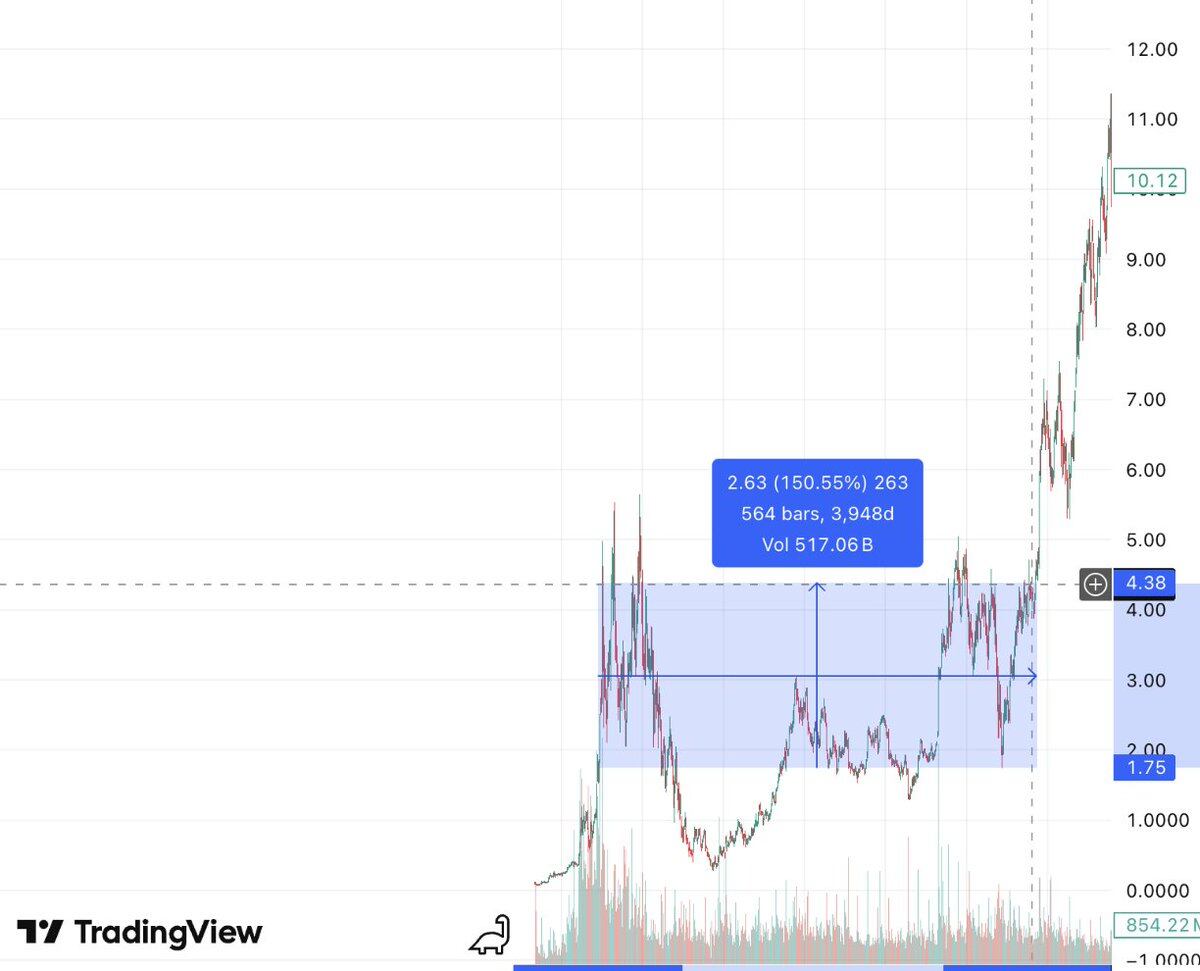
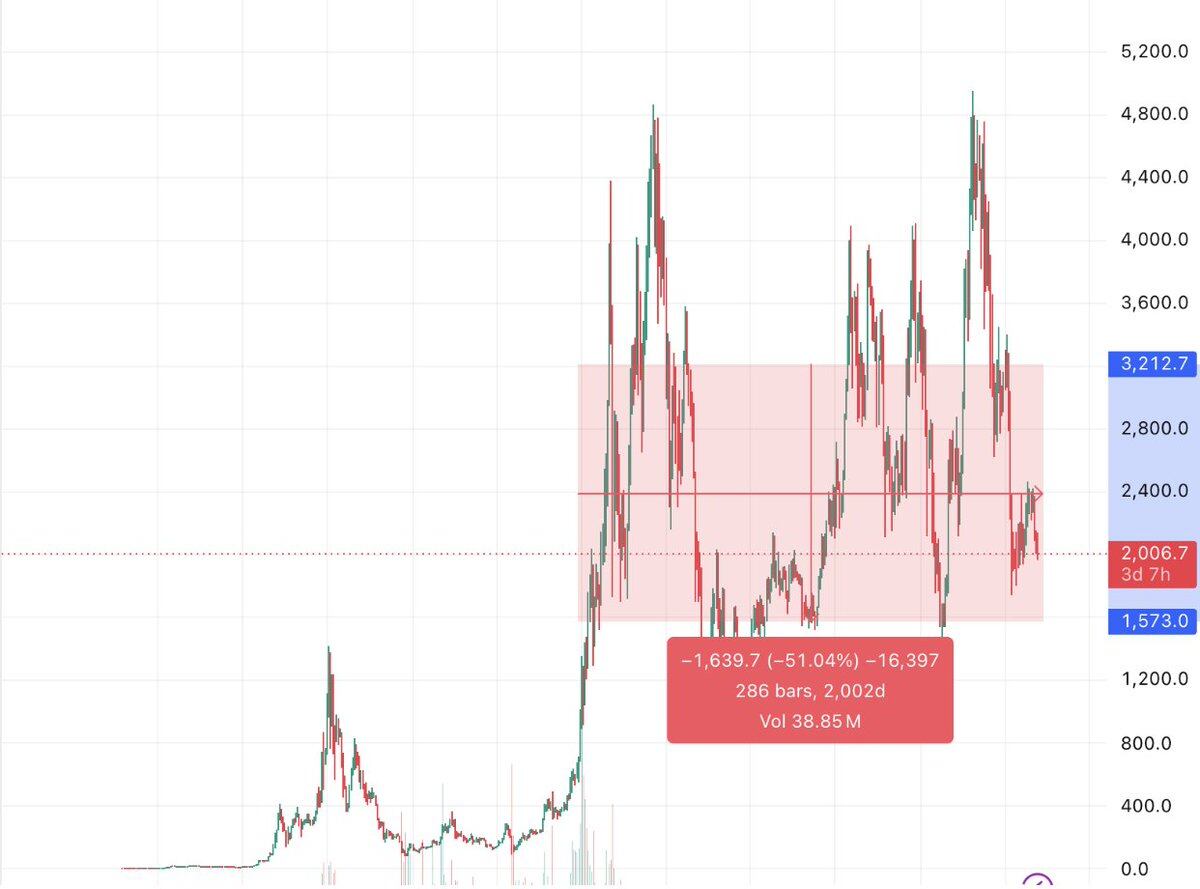
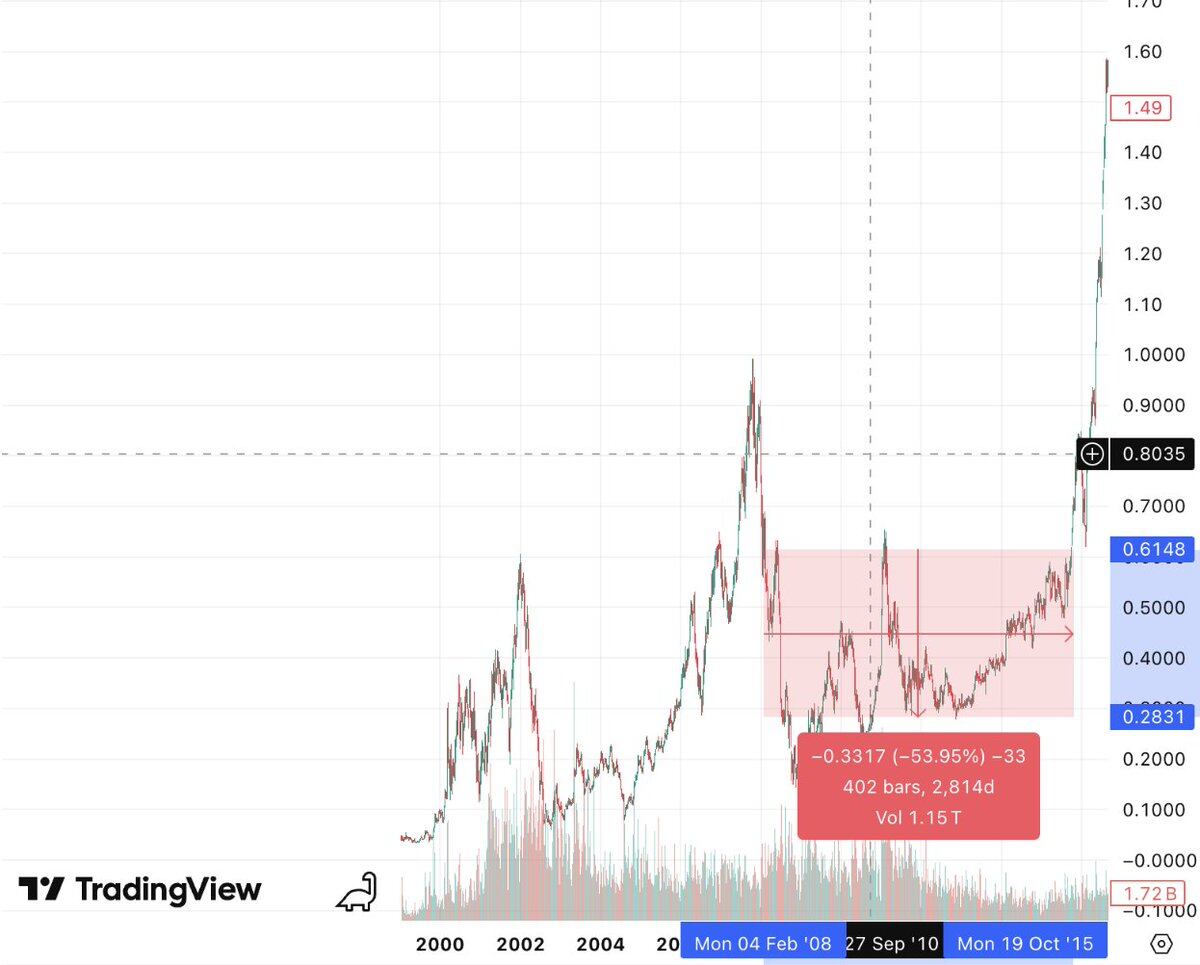
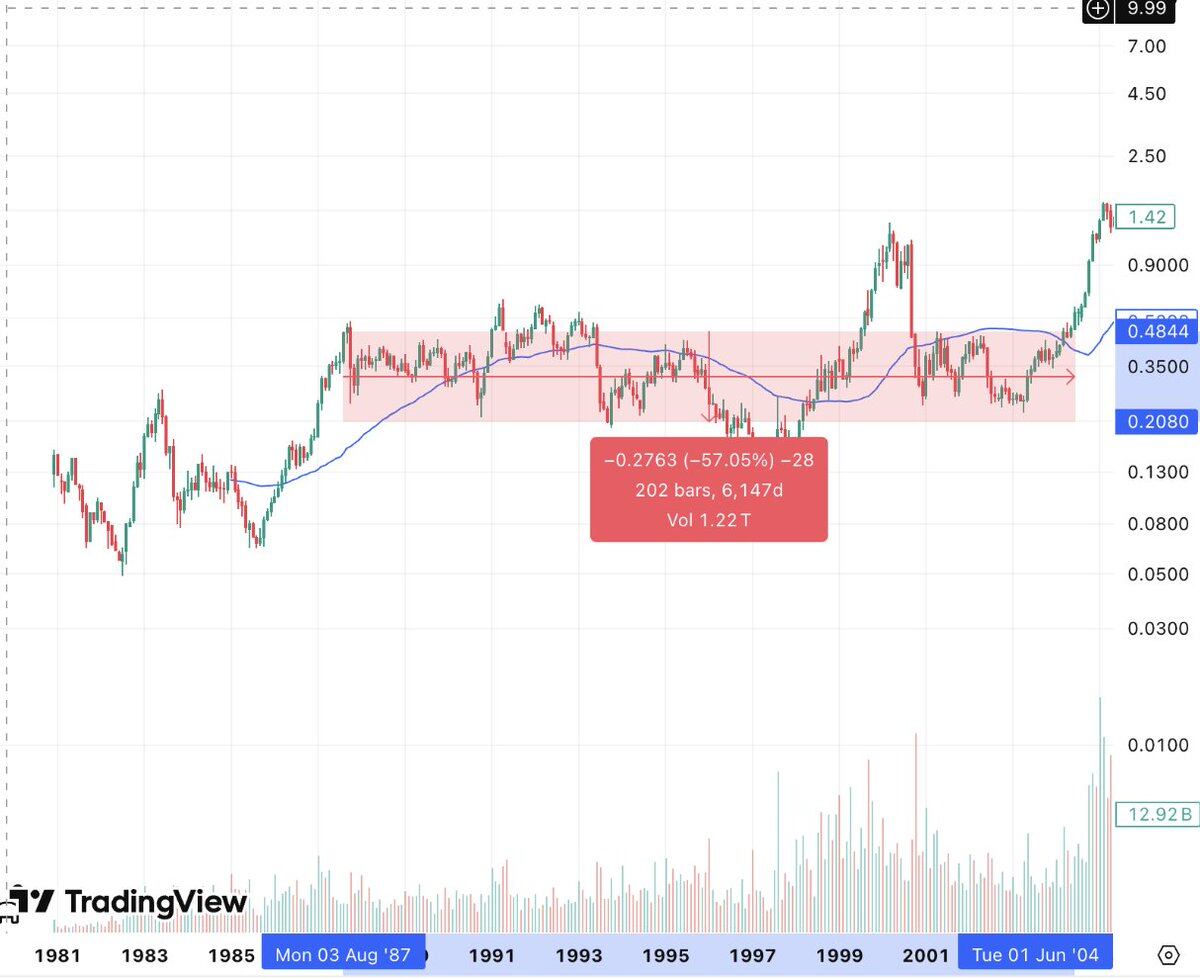
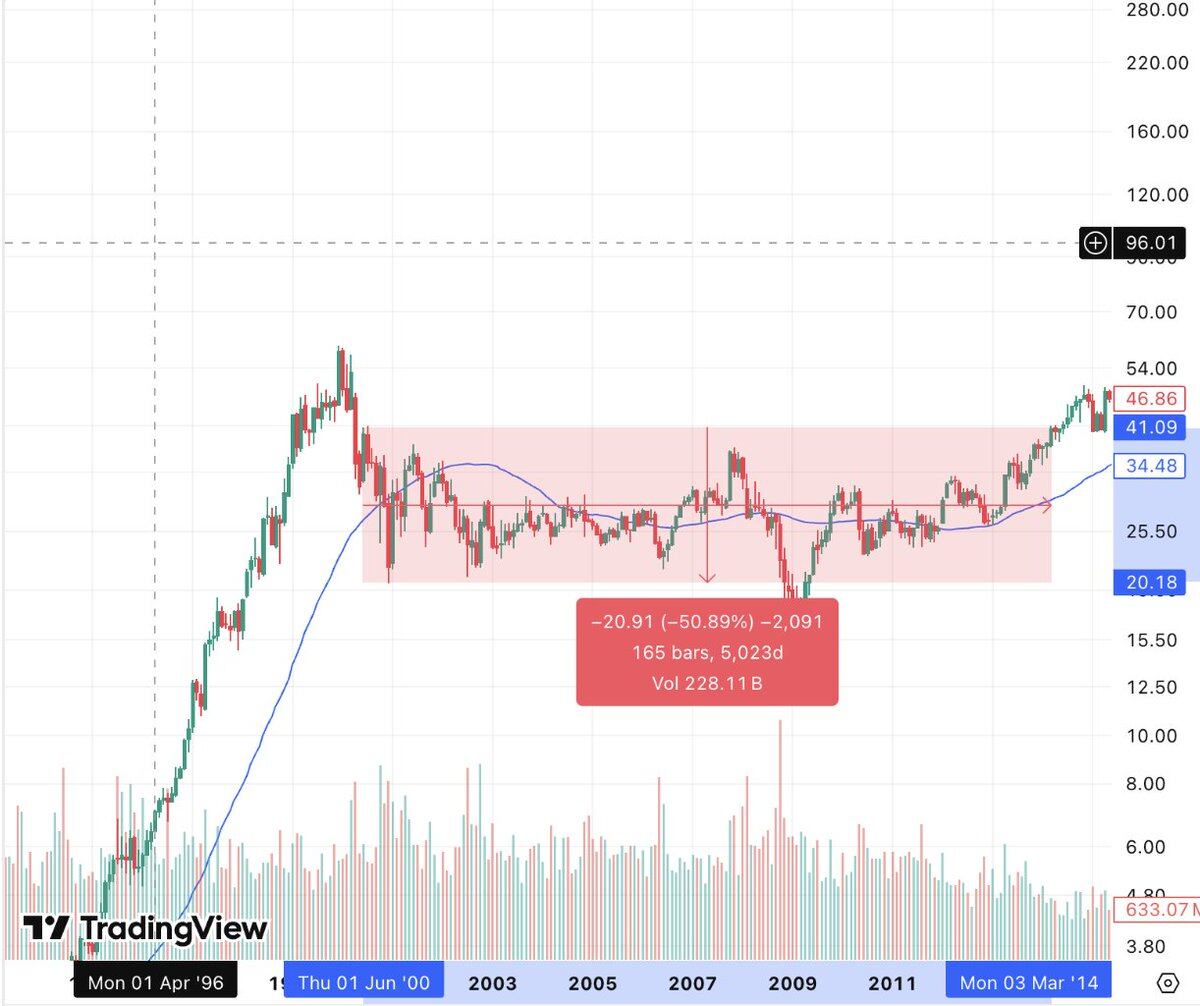
But Lucas urges a longer view: ETH is actually consolidating in a multi-year range. Ethereum's market cap exceeds $200 billion, and the price has firmly held the $2,000 level, keeping it among the world's top 100 assets. In capital market history, it's common for quality assets to spend years in a grinding sideways pattern before breaking into a multi-year bull run—many top names endured prolonged consolidation even as the broader market repeatedly made new highs, then a sector catalyst launched the next cycle. So ETH's five-year underperformance is hardly unusual in financial history.
On-Chain Fundamentals Defy the Gloom, Hitting All-Time Highs
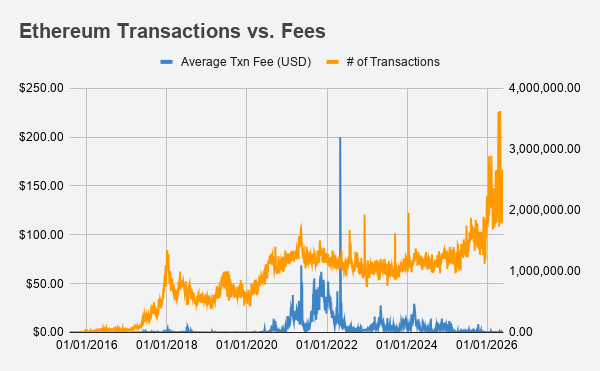
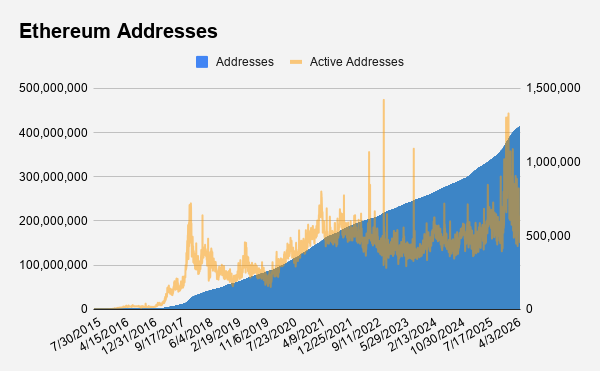
Contrary to the bearish narrative, Ethereum's on-chain activity is strengthening across the board. According to Etherscan data, average daily transactions reached 2.27 million in May 2026—an all-time high—while the average transaction fee was just $0.27, a massive efficiency leap from the $50–$100 fees seen during the 2021 bull market. The total number of addresses exceeded 400 million, growing roughly 0.08% daily in 2026, and daily active users have consistently topped 1 million. Without a major catalyst, the address count is on track to hit 1 billion by mid-2029.
On the staking front, over 32% of all ETH is now locked, continuously underwriting network security. Over more than a decade of operation, Ethereum has never suffered a network-wide outage. Its combination of extreme neutrality, security, and programmable block space gives it a core qualification to compete as global financial infrastructure. Lucas argues this is precisely the prerequisite that enables Ethereum to serve as the settlement layer for vast amounts of traditional asset tokenization.
The Tokenization Wave: Global Assets Migrate to Ethereum’s Settlement Layer
Lucas reaffirms the thesis he's held since entering the space in 2017: all valuable assets will eventually be tokenized, Ethereum will become the unified settlement layer for every type of tokenized asset, and ETH will capture all the value generated by that settlement business. The first decade saw Ethereum serve as a testbed for crypto-native assets—DeFi, NFTs, and memecoins all took root and solidified its ecosystem. The coming decade will propel Ethereum toward multi-trillion-dollar market cap territory.
Onboarding traditional finance may seem dull to crypto natives, but it's an indispensable step for blockchain to go mainstream. The vast majority of the world's $700 trillion in real-world assets will eventually be tokenized on-chain, and Lucas sees Ethereum as the network of choice. Skeptics point to scaling limitations or competition from other blockchains, but the data is already refuting those arguments: traditional financial institutions are connecting to Ethereum's ecosystem in large numbers.
Stablecoins are the first tokenized asset class to achieve product-market fit, with total circulation exceeding $300 billion—Tom Lee calls this crypto's “ChatGPT moment.” Ethereum holds 54% of the stablecoin market cap, firmly maintaining its leading position.
As of June 1, 2026, the total stock of tokenized real-world assets (RWA) exceeded $30 billion, with more than 53% deployed on Ethereum. Even as other chains try to carve out a share of the non-stablecoin RWA market from scratch, Ethereum's dominance remains intact.
History Rhyming: RWA Parallels DeFi’s Infancy
Lucas likens the current RWA development stage to the 2019–2020 dawn of DeFi. Back then, DeFi total value locked was growing exponentially while ETH went sideways; when DeFi assets reached roughly 20% of Ethereum's market cap, ETH surged from $300 to $4,000 by year-end, igniting a super-cycle. Today, excluding stablecoins, non-stablecoin RWA on Ethereum is approximately $16 billion, accounting for just 7% of ETH's market cap, still an early penetration figure. Yet the scale is ten times larger: DeFi started from a base of $3 billion, while RWA starts from $30 billion; ETH's floor was $200 then, now $2,000; the rival was BNB Chain, now it's Hyperliquid and other high-performance L1s.
More importantly, during the early DeFi and NFT booms that drove ETH demand, Ethereum had not yet implemented proof-of-stake staking or EIP-1559 burn mechanisms. Now both are fully active, meaning every on-chain transaction directly contributes deflationary pressure and value accrual to ETH. Consequently, if the total non-stablecoin RWA market scales toward $1 trillion, ETH’s valuation will undergo a systematic repricing. The US CLARITY Act is seen as a key catalyst; its probability of passage in 2026 is around 55% according to Polymarket, and its enactment would open a compliant, nationwide on-ramp for US financial assets—a massive tailwind for Ethereum.
The Core Bull Case: Security and an Unreplicable Moat
Even as the crypto narrative crowd broadly turns bearish, Lucas remains convinced: Ethereum will be the underlying settlement layer for the vast majority of tokenized assets. The security, reliability, and liquidity moats it has accumulated over years cannot be quickly replicated by competitors. When banks, asset managers, and clearinghouses choose a blockchain to host trillions in assets, certainty trumps raw performance or low fees—and that structural advantage secures Ethereum’s position in the RWA arena. Once massive global assets are deployed on Ethereum, the market will inevitably reprice ETH, and the years-long depressed price could give way to the kind of explosive moves seen in past cycles.
Lucas closes with a call to action: holding ETH has been a painful experience, but Ethereum’s fundamentals, the historic opportunity in asset tokenization, and the unwavering support from on-chain data all point to one conclusion—Ethereum is entering its most promising adoption and growth cycle ever. Investors would do well to look past short-term price anxiety and focus on the paradigm shift unfolding in global financial infrastructure.