
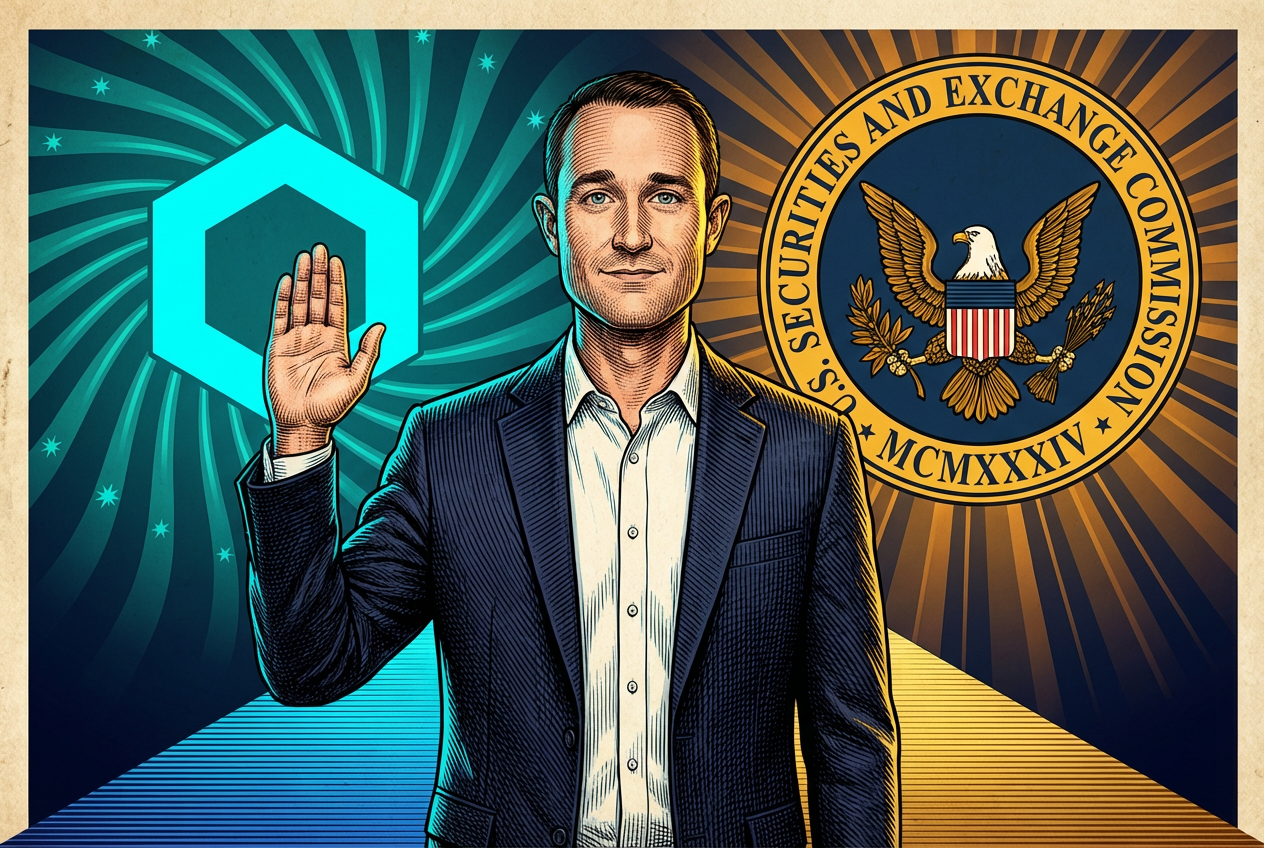
The U.S. Securities and Exchange Commission’s crypto task force has named a new chief counsel. Taylor Lindman, formerly deputy general counsel at Chainlink Labs, has officially joined the group, taking over a role previously held by Michael Selig, who moved to become chair of the Commodity Futures Trading Commission in December 2025.
From Chainlink legal work to a regulatory post
Lindman spent more than five years at Chainlink Labs, serving in legal roles including deputy general counsel and associate general counsel. His work focused on helping the company comply with U.S. and international rules. Before Chainlink, he worked at Debevoise & Plimpton from 2016 to 2018 and at Perkins Coie from 2018 to 2021, building close to a decade of legal experience.
The appointment draws added attention because Lindman had already engaged with the SEC crypto task force from the industry side. In March 2025, he was part of a Chainlink delegation that met with the group to discuss token taxonomy and securities recordkeeping requirements. He is now moving from those policy discussions into the regulatory structure itself.
Peirce confirms the appointment as the team grows
SEC Commissioner Hester Peirce, who leads the crypto task force, publicly confirmed the hire and expressed optimism about Lindman joining the team. Chainlink Labs also issued a statement thanking him for his contribution and said it looks forward to continuing work toward modernizing the U.S. financial system.
As chief counsel, Lindman is expected to handle legal interpretation, compliance oversight, organizational risk controls, and support for senior decision-making. The post carries weight inside the task force because it sits close to how regulatory positions are assessed and applied.
Industry specialists continue moving into government roles
The SEC crypto task force has continued to add staff. At the time described in the source material, the group had 14 members with crypto industry expertise, including former Coin Center policy director Landon Zinda as senior adviser and former Baker Hostetler digital assets and Web3 lawyer Veronica Reynolds. The task force has also held multiple roundtables and site visits to gather input from industry participants, academics, and other market stakeholders on digital asset regulation.
Lindman’s move adds to a broader pattern: regulators are bringing in people with direct experience in token structures, compliance operations, and crypto business models. In staffing terms, the flow of talent between the crypto sector and U.S. regulators is becoming more visible.