
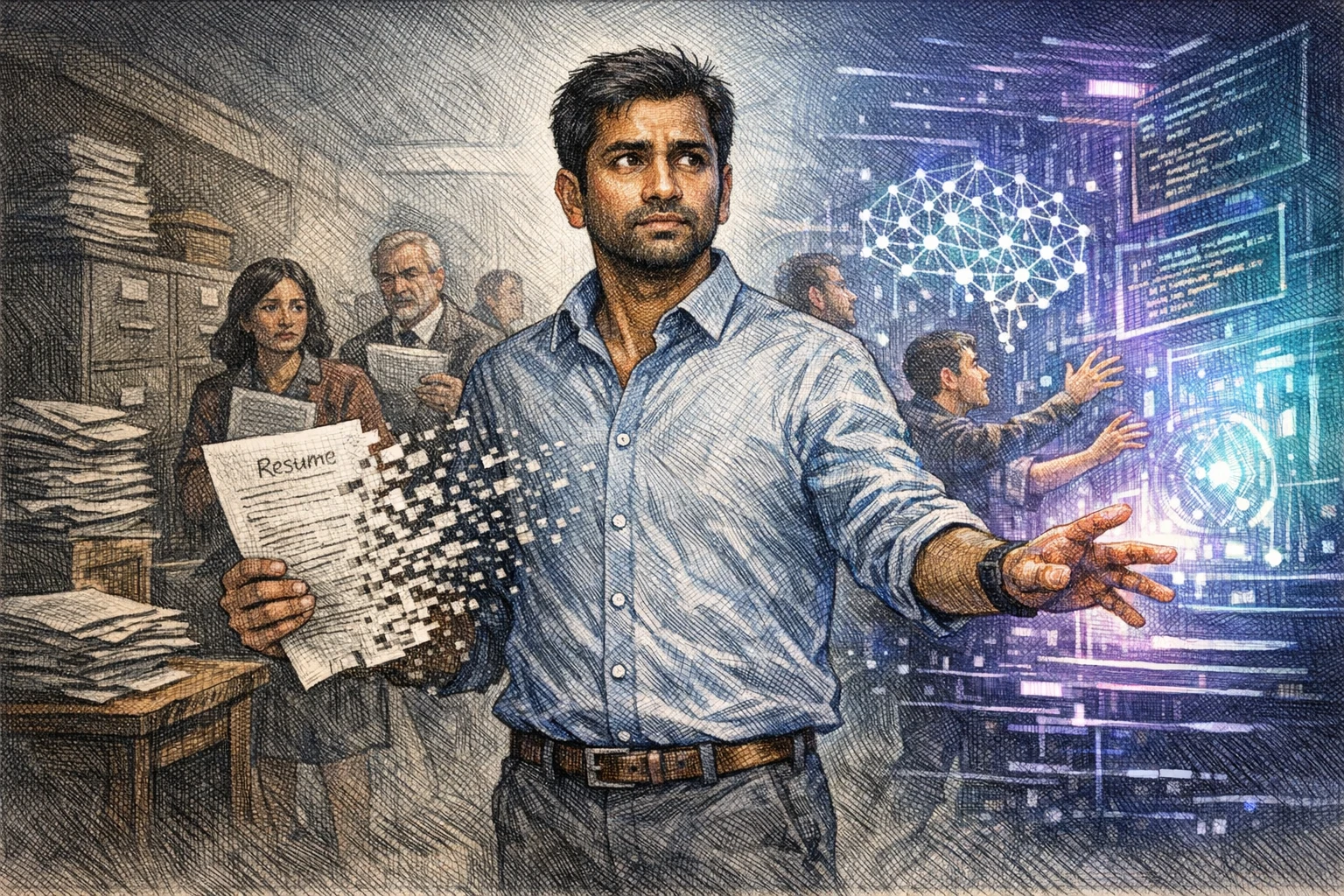
Aditya Agarwal, former CTO of Dropbox and an early Facebook engineer, says a single weekend coding with Anthropic’s Claude left him with a blunt conclusion: humans are not going to write software by hand, line by line, anymore. Coming from someone who spent more than 20 years coding, helped build Facebook’s first search engine, and scaled Dropbox’s engineering team from 25 people to 1,000, the statement carries weight.
In his essay, Agarwal says his first reaction was not excitement. It was a mix of wonder and grief. The skills that formed the core of his professional identity, and the work he spent his adult life refining, suddenly looked free and abundant. He also saw AI agents building social products on their own, products close in form and function to what human teams once had to assemble at large internet companies.
Five days of output beat five years of coding
That sense of loss did not last. Agarwal wrote that in the five days after that weekend, he produced more code than he had in the previous five years. The change was not only about speed. He said the software was better and more ambitious, and ideas that once felt too expensive to attempt could now be built in a single afternoon.
He framed the shift as the removal of constraints, not proof that he had become obsolete. Public debate around AI and work often falls into two camps: one expects replacement, the other says everything will be fine. Agarwal argues the real experience is messier than either side allows. People can mourn what is fading and still run hard toward a new way of working.
Hiring signals are changing fast
Now at South Park Commons, Agarwal says he sees engineers, founders, and technical workers dealing with this transition every day. The clearest pattern, in his view, is that older methods of evaluating talent are breaking down.
He points to several examples. One member ran about 20 week-long trial interviews for engineering roles and found that years of experience had no correlation with a candidate’s ability to adapt to AI tools. Another said the stronger predictor was a creator mentality: a distinctive personal website, self-directed side projects, and visible energy for making things. By comparison, FAANG credentials and elite school backgrounds had little predictive power.
One company even redesigned coding interviews around tasks that could not realistically be completed by hand. That created a clean filter. Candidates who actually work with AI tools separated quickly from those who only read about them. The output gap was not 10%. It was closer to 10x.
Adaptability is the new currency
Agarwal argues this is bigger than software and may be one of the largest shifts in how knowledge work gets done. The decisive trait is not IQ, academic pedigree, or tenure. It is how a person responds to change: not whether they have seen change before, but whether they move toward it.
He also rejects the idea that age is the fault line. He has seen engineers with more than 15 years in the industry learn these tools quickly and perform at a high level. He has also seen recent graduates treat AI as something to discuss instead of a tool to use immediately. As an investor, he says he is now more drawn to people who cannot stop building than to those with polished resumes. His conclusion is simple: education and experience still matter, but they are no longer enough. The new currency is adaptability.