
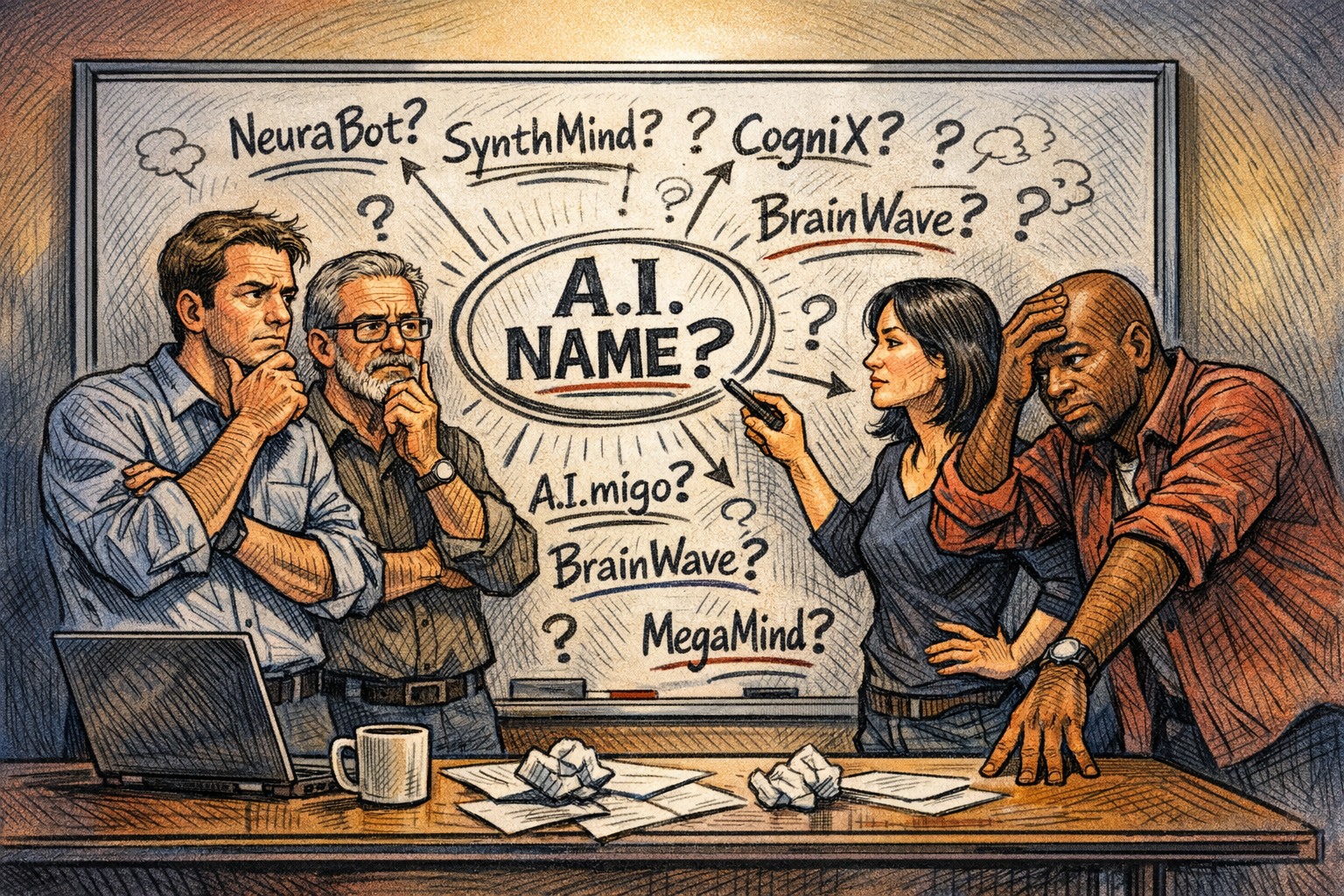
Claude, Grok, Gemini, and Doubao may sound wildly different, but their names were not picked at random. In many cases, a model's name carries a technical clue, a cultural reference, or a statement about what the builder wants the product to be.
US model names often point to technical roots or product roles
OpenAI's GPT is the most literal example. It stands for Generative Pre-trained Transformer, which describes the core architecture behind the model. ChatGPT simply adds the chat function to that base name. The source describes this style as practical, and notes that Sora means “sky” in Japanese.
Anthropic took a different route with Claude. The name honors Claude Shannon, widely known as the father of information theory. According to the source, Shannon's 1948 paper, “A Mathematical Theory of Communication,” laid key foundations for the digital age and has been cited more than 160,000 times. Naming the model after him ties Anthropic to the earliest layer of modern computing theory.
Google's Gemini comes from the Latin word for “twins.” In the source material, that refers to the merger of the Google Brain and DeepMind teams that developed the model. The name also echoes NASA's Project Gemini. Google reportedly used Titan as an earlier internal codename before settling on Gemini.
xAI's Grok comes from Robert Heinlein's 1961 novel Stranger in a Strange Land. In the book, grok is a Martian word that means understanding something so deeply that the boundary between observer and object disappears. That makes the name far more ambitious than a label suggesting simple question answering.
Meta's Llama is built as an acronym that turns into something memorable. It expands to Large Language Model Meta AI. The source cites LlamaIndex founder Jerry Liu, who said the name emerged during brainstorming around cute animal names, with the added appeal that “llama” contains the letters tied to LLM.
Tool-focused AI products use even clearer naming logic. GitHub and Microsoft chose Copilot to stress assistance rather than replacement, intentionally avoiding “Autopilot.” Anysphere's Cursor takes its name from the blinking cursor in a code editor. Cline is short for CLI aNd Editor, highlighting support for both command line and editor workflows. Kilo Code was explained by its CEO as a nod to code being produced in bulk in the AI era. OpenClaw uses “claw” to represent an AI agent that can grab and execute tasks.
Chinese model names lean more heavily on literary and local references
Alibaba's Tongyi Qianwen, or Qwen, blends philosophy and usability. The Chinese name suggests reaching understanding through countless questions, while Qwen works as an international shorthand for Qianwen. DeepSeek combines a modern AI term, “deep,” with the classical phrase “I shall search high and low,” taken from Qu Yuan's Li Sao.
Moonshot AI also splits its identity across two references. The company name “Moonshot” is tied in the source to Pink Floyd's album The Dark Side of the Moon, while Kimi is said to be founder Yang Zhilin's English nickname. Baidu's Wenxin Yiyan draws from the classical Chinese literary text Wenxin Diaolong. Its English name, ERNIE, stands for Enhanced Representation through Knowledge Integration, and also echoes the Sesame Street character name mentioned in the source.
Doubao, ByteDance's model, is the outlier. The source says there is no hidden symbolism and no grand allusion behind it: the name simply refers to a bean paste bun. Set against names that sound academic or philosophical, that plain and familiar choice makes it unusually easy to remember. The source also notes that its overseas version is called Cici.
Seen together, these names function as short public statements. Claude reaches back to information theory, Grok borrows from science fiction, and Doubao turns to an everyday snack. Even before users test the product, the naming already tells them how the company wants the model to be read.