
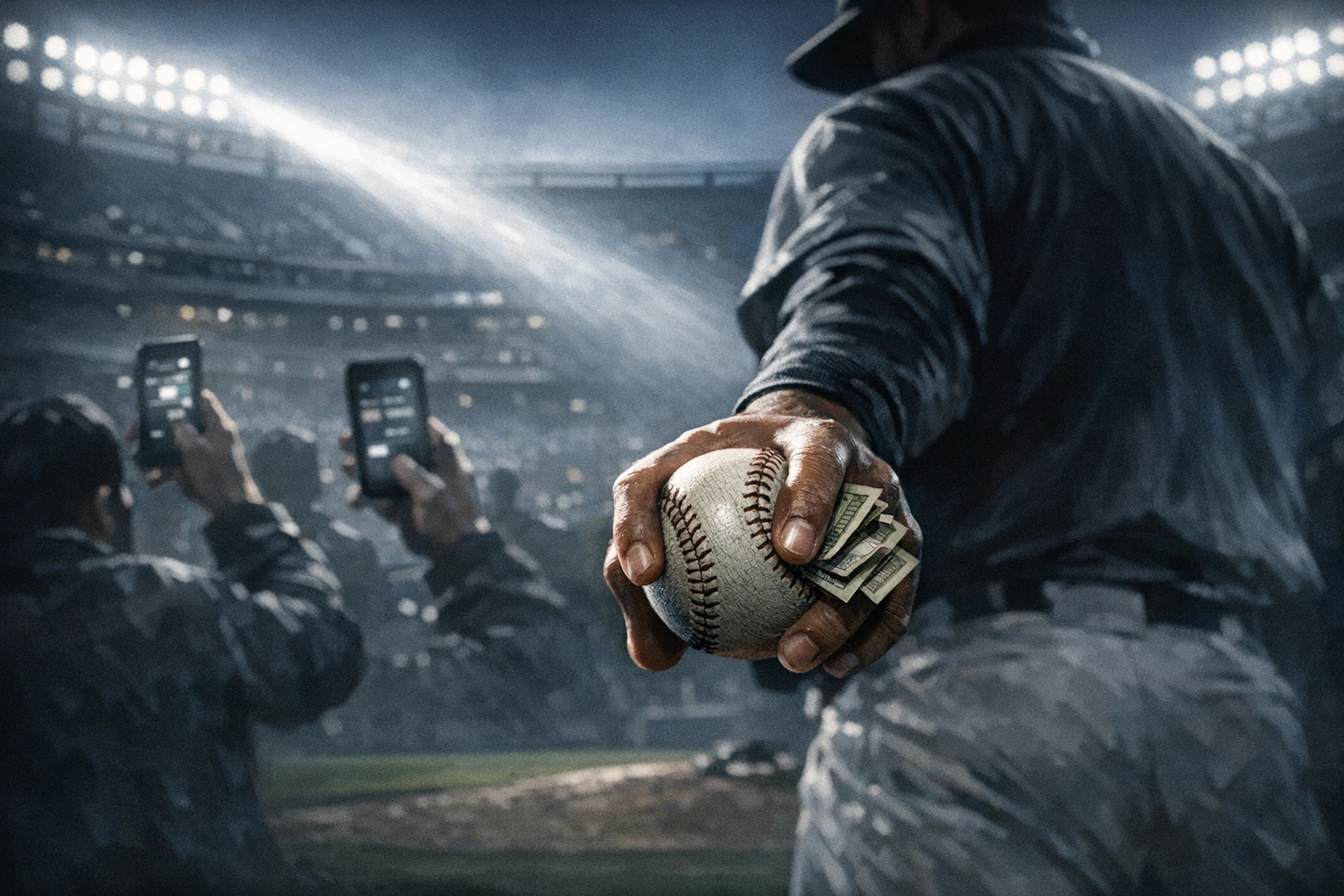
From baseball pitchers bribed to throw bad balls, to someone placing a huge bet on a U.S. airstrike against Iran hours before it happened, to a journalist threatened to rewrite his report — the logic of gambling and prediction markets is infiltrating sports, politics, and journalism at a terrifying speed.
Baseball: $450,000 for a Few Bad Pitches
In November 2025, Cleveland Guardians pitchers Emmanuel Clase and Luis Ortiz were indicted for conspiracy to "manipulate pitches." The scheme was simple: gamblers bet that certain pitches would be balls, the pitchers threw them into the dirt, the gamblers collected, and split the winnings. In a game with hundreds of pitches, no one notices one bad ball. The fraudsters won $450,000 on those few pitches — and even die-hard fans couldn't recall them the next day.
War: A $553,000 Bet That Hit the Bullseye
On February 28, 2026, someone using the name "Magamyman" placed an unusually large bet on Polymarket, wagering that the U.S. would bomb Iran on a specific date. Hours later, bombs fell. The bet was part of $553,000 in winnings — and just one of many suspicious bets totaling millions of dollars placed in the hours before the attack. It is almost impossible to believe the bettor didn't have inside information from government officials. "War profiteering" used to mean arms dealers; now, online gamblers can profit by simply aligning their wagers with military timing.
Journalism: A Reporter Pressured to Change His Story
On March 10, journalist Emanuel Fabian reported that an Iranian missile struck near Jerusalem. Polymarket users had already placed bets on the exact location of the missile's impact, with the total pool reaching $14 million. Bettors pressured Fabian to rewrite his report, and threatened to make his life "miserable." When reporters earning modest salaries can be offered six-figure deals to fabricate stories that pay off in prediction markets, the supposedly "absurd" future is already here.
These are not conspiracy theories — they happened. The pattern is clear: rigged pitches, rigged war bets, attempts to rig war coverage. A kind of paranoid logic now seems like distorted common sense: everything that happens on Earth has a price, and behind every price is a mysterious counterparty.
From Laundromat to Airlines: The Explosion of Gambling
Since the Supreme Court legalized sports betting in 2018, the industry has exploded. Nine years ago Americans spent less than $5 billion on sports betting; last year, that figure hit at least $160 billion — roughly the equivalent of the entire domestic airline industry. The NFL alone saw $30 billion wagered, earning the league over $500 million from ads, licensing, and data deals.
Prediction markets like Polymarket and Kalshi together generated about $50 billion in revenue in 2025. People can bet on who wins the Oscars, when Taylor Swift gets married, when the Iranian regime collapses, or whether a famine will occur in Gaza. The market logic is cold: more bets mean more information, more efficient forecasting. But turning a famine into a windfall for prescient gamblers is grotesque.
Four Ways We Lose: From Personal Ruin to Systemic Distrust
First, the risk to individual gamblers. Roughly one in five men under 25 is on the problem gambling spectrum. States that legalized online sports betting between 2018 and 2023 saw bankruptcy filings rise by 10%. We have guardrails for alcohol (age limits, sale hours); we have almost none for gambling.
Second, the risk to players and professionals. Top tennis player Caroline Garcia receives a flood of hate mail regardless of wins or losses. Gambling turns ordinary people into mini-mobsters who threaten anyone they believe cost them a few thousand dollars.
Third, the erosion of trust in institutions. In late 2025, the FBI arrested 30 people involved in NBA betting fraud. Two-thirds of Americans believe professional athletes sometimes alter performance to influence betting outcomes. When a large share of the public starts believing world events are merely the result of some mysterious interest's bet, conspiracy theories will have an endless season.
Fourth, political corruption. A politician leaking inside information or shaping policy to match his betting position — that is the "rigged pitch" of politics. Not just betting on expected outcomes, but twisting outcomes themselves to win bets.
The Last Virtue: Money as the Final Arbiter
Why does gambling thrive? It fits a low-trust, lonely world where young people crave a shot at instant wealth. Voting is questioned, polls are manipulated, news is filtered by algorithms — but a bet has a result. You win or you lose. A 2023 Wall Street Journal poll found Americans are abandoning traditional values like patriotism, religion, community, and family. Markets are filling the moral vacuum. Money has become the last virtue, the final moral arbiter.
But when a young man bets on a terrorist attack or a famine, he is not a concerned citizen improving market efficiency. He is a person in a room with his phone, rooting for death. Beyond the market, there is morality. Can we still reclaim it? Don't bet on it.