

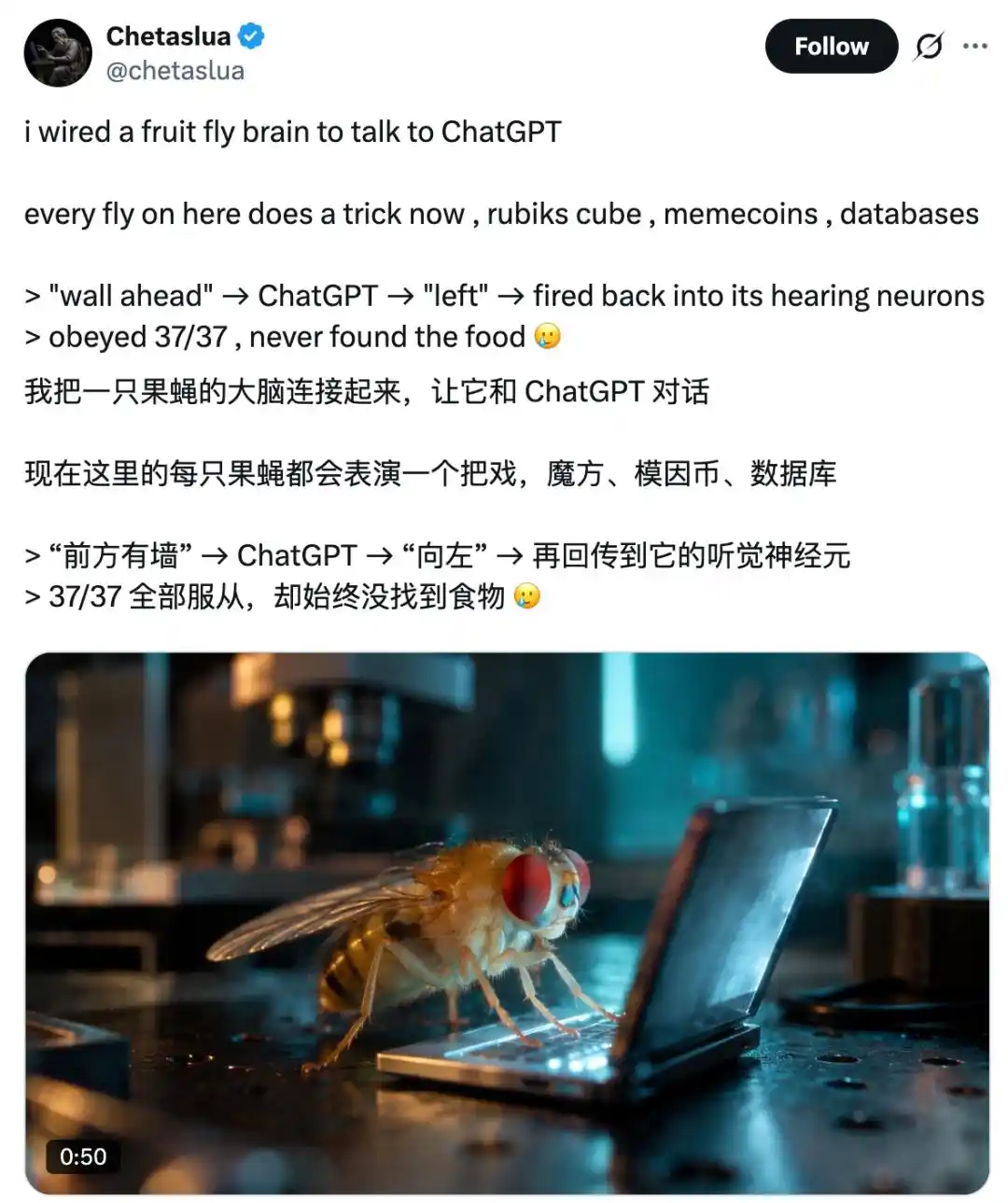
Developer @chetaslua said he has connected a full fruit fly brain simulation to ChatGPT, using a system that decodes neural spikes into words and then assembles them into sentences for the model. According to the post described in the source article, the setup ran on a MacBook with NumPy and a connectome dataset, without a neural chip or a GPU.
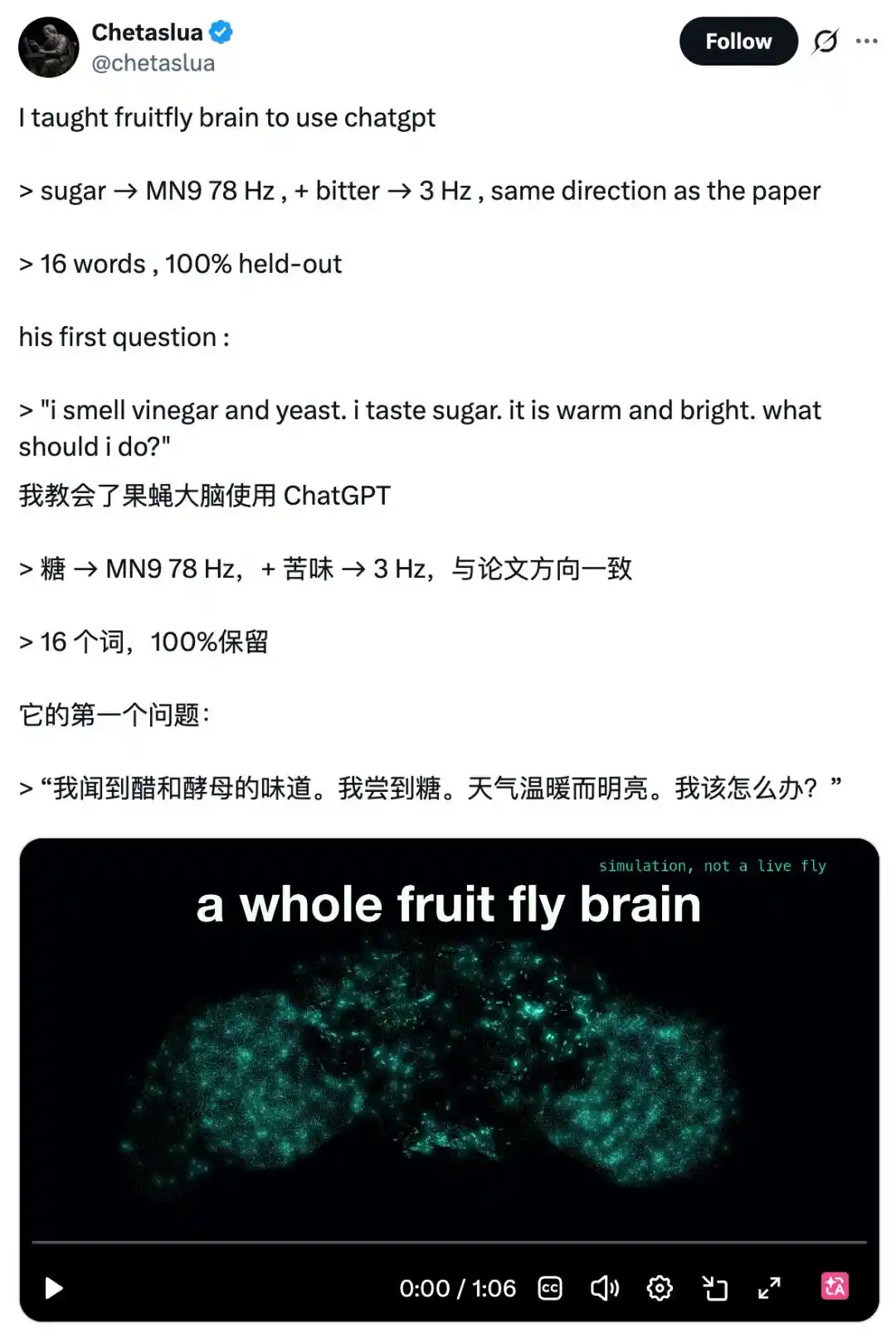
The simulation covered a fruit fly brain with roughly 138,000 neurons and about 15 million connections, processed one spike at a time. The first sentence produced by the pipeline was: “I smell vinegar and yeast. I taste sugar. It is warm and bright. What should I do?” The report said that line came from brain activity, was decoded by a translator, and was passed to ChatGPT unchanged.
Validation came before the language layer
Before turning neural activity into language, @chetaslua first tested whether the simulated brain behaved in a way that matched published work. He set up a plausibility check based on an experimental design described in a paper.
When sugar was introduced, the MN9 neuron, which controls proboscis-related movement, fired at 78 Hz. In the report’s interpretation, that indicated the fly had detected sweetness and was extending its mouthparts in preparation to feed. When bitter input was added, the firing rate dropped to 3 Hz, indicating withdrawal.
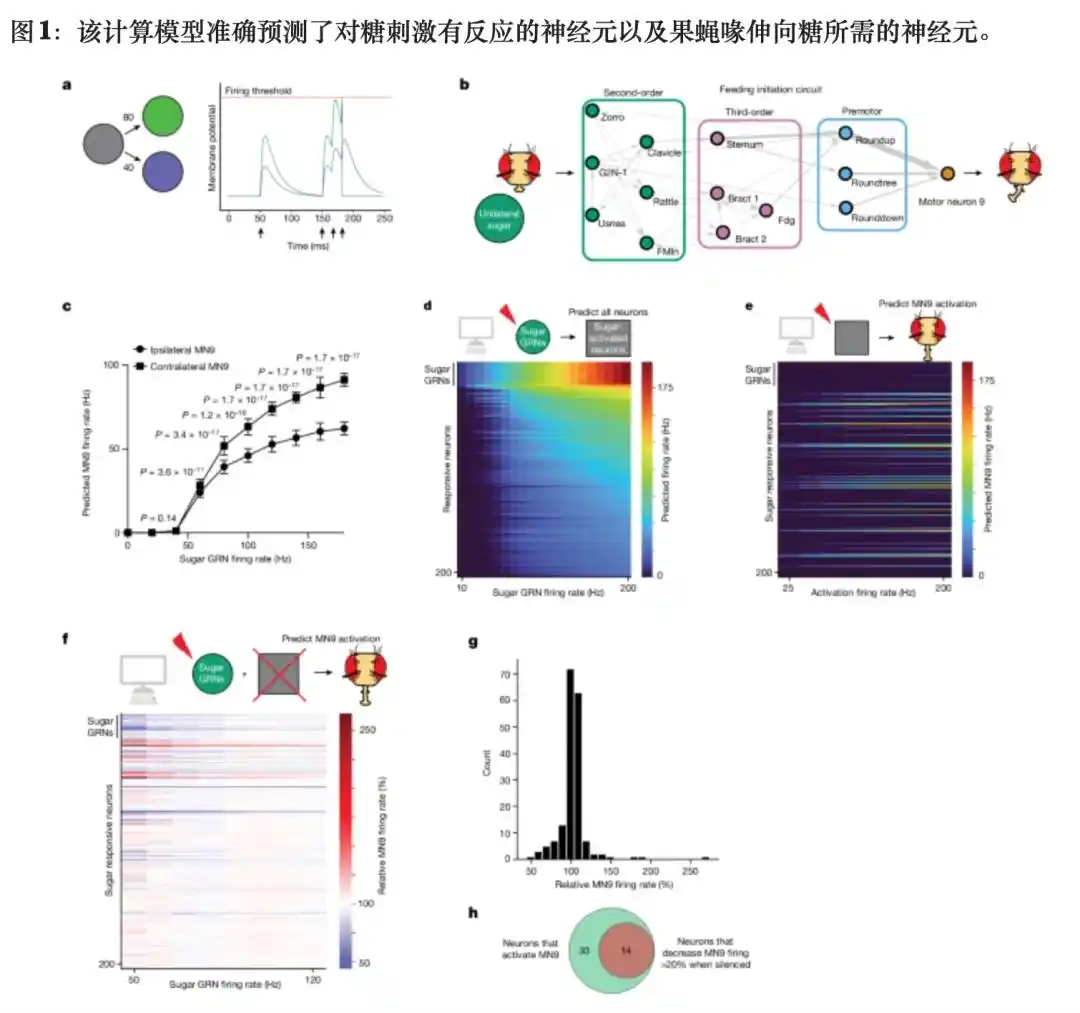
The article said the direction of that result matched conclusions from a 2024 paper published in Nature. When asked whether the 78 Hz value came from real connectome data or from the model itself, the developer replied: “its real”.
That check mattered because simulated brains can produce internally consistent outputs that do not reflect real biological behavior. The report framed the validation step as a way to establish that later results were worth taking seriously.
How spikes became words
The core of the experiment was a “linear readout” trained on the fly brain’s own activity. In practical terms, it acted as a translator, mapping different patterns of neural firing to different words.

Each time the fly brain generated a specific activity pattern, the readout emitted the corresponding word. During training, the developer excluded sensory neurons on purpose. The idea was to avoid reading the cleanest possible signal right at the input layer and instead test whether information could still be identified after it had moved through multiple downstream stages in the brain.
The result was 100% accuracy across 16 words. When the available signals were reduced to descending neurons and motor neurons only — the layer closest to sending action commands to the body — accuracy was still 85%.
The report said this showed that sensory information such as smell, taste and touch remained decodable even after it had traveled from perception toward the action layer. The signal, in other words, was not washed out during transmission.
Those decoded words were then assembled by the fly system itself into a prompt and sent to ChatGPT without edits. The sequence described in the article was explicit: spikes first, then words, then sentences. No human polishing in between.

What makes this different from earlier simulations
Running a whole fruit fly brain simulation on a laptop is not entirely new. In October 2024, Berkeley researchers used the FlyWire connectome to simulate 139,000 neurons and 50 million connections on a laptop, and the resulting model could predict how real flies would respond to stimulation.
What is new here, according to the report, is that neural firing was translated into natural language and handed directly to a large language model. Earlier simulated neural activity had mainly been compared with the behavior of real flies.
Open connectome data made the experiment possible
The article said the project depended on publicly available connectome data. Its data foundation was MaleCNS v1.0, a male fly central nervous system connectome produced over 10 years by HHMI Janelia, the University of Cambridge and Google Research.
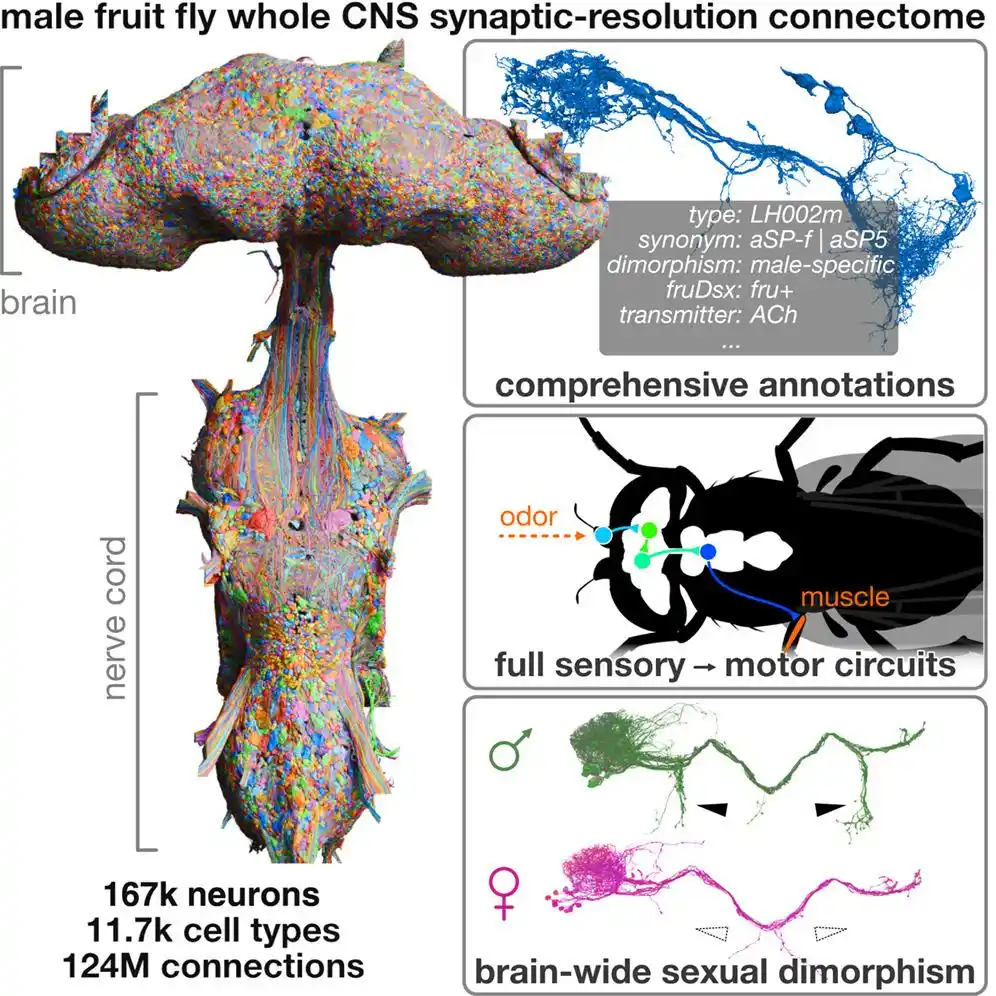
The dataset, which appeared in Cell on Sept. 3, includes 166,700 neurons and 125 million synaptic connections. The report said it required 44 person-years of manual proofreading and was released under a CC-BY license.
With a token after registration and a few pip install commands, users can pull upstream and downstream connections for any neuron to a local machine, the article said.
From published map to game environments
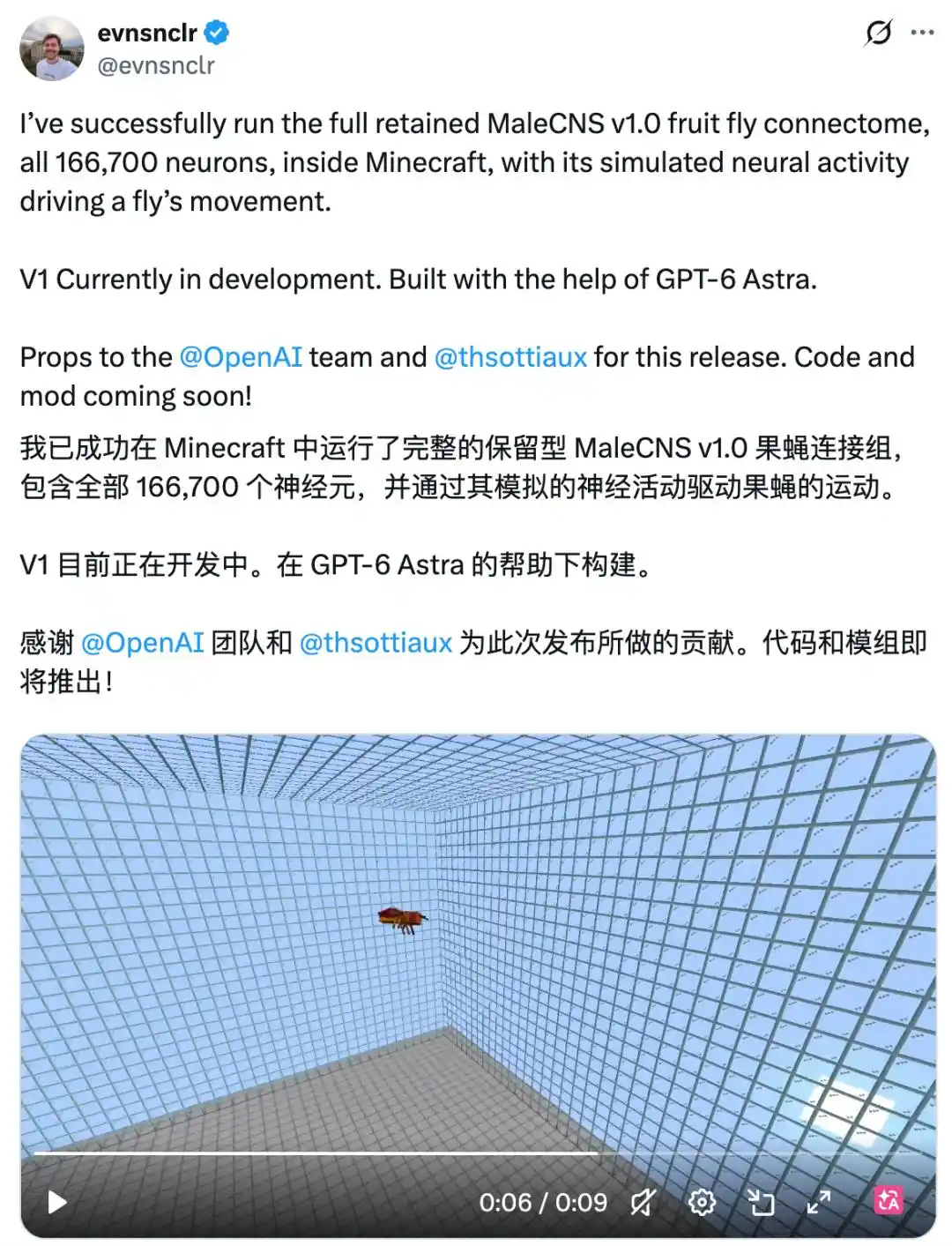
Just two days after the MaleCNS paper was published, Georgia Tech graduate student Evan Smith used GPT-6 Astra to place the connectome into Minecraft, creating a virtual fruit fly that flew inside a glass chamber with neural activity deciding each turn.
The report said others then used fruit fly brains to play Doom, run Super Mario 64 and play Beat Saber. It summed up that progression this way: a map built over 10 years entered games in two days, and a few days later it was talking to GPT.
Reverse test: the model obeyed commands but never found food
@chetaslua also ran a reverse-direction test. He sent “There is a wall ahead” to ChatGPT, received the reply “turn left,” and then fed that instruction back into the simulated fly’s auditory neurons.
The system obeyed 37 times, with no deviation, but it never found food.
The article used that result to draw a line between driving behavior and producing consciousness. Following commands only requires a signal in and an action out. Finding food requires something else: retaining information about what has already been tried, distinguishing unexplored options, and forming some kind of strategy in a new environment. The simulated fly did not show those abilities.
Whether it actually “smelled” vinegar or had any subjective experience remains unknown, the report said. The developer himself described the work as a simulation.
From elite labs to a personal desk
The article closed by contrasting earlier barriers to whole-brain simulation work — top-tier labs, six-figure budgets, interdisciplinary teams and long timelines — with what it described as a much lower entry point today. In this case, a laptop, a downloaded wiring diagram and a weekend were enough for one developer to run a 138,000-neuron fruit fly brain and connect it to ChatGPT.
It also noted that the fly’s question, “What should I do?”, was a template sentence assembled by the translator. Even so, the broader question of how biological neural signals can interface with AI has now moved much closer to the foreground.