

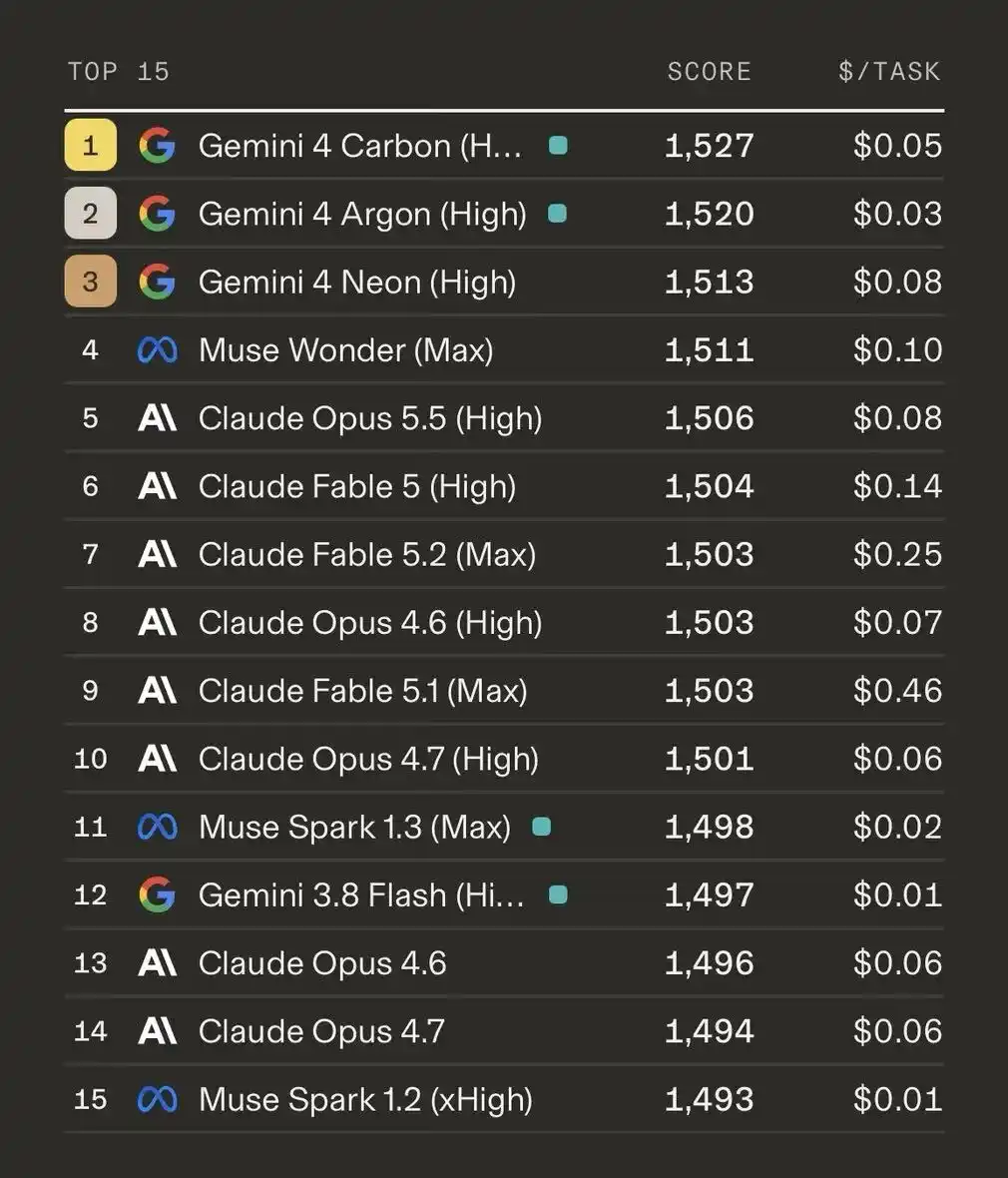
Google’s Gemini 4 models have taken all three top spots on Arena’s text leaderboard. In the latest ranking shared by X user Alex, Carbon leads with 1,527 points, followed by Argon and Neon. Meta’s Muse Wonder is fourth, while Anthropic’s Claude Opus 5.5 is fifth. Two months earlier, Claude models occupied the leaderboard’s top six places.
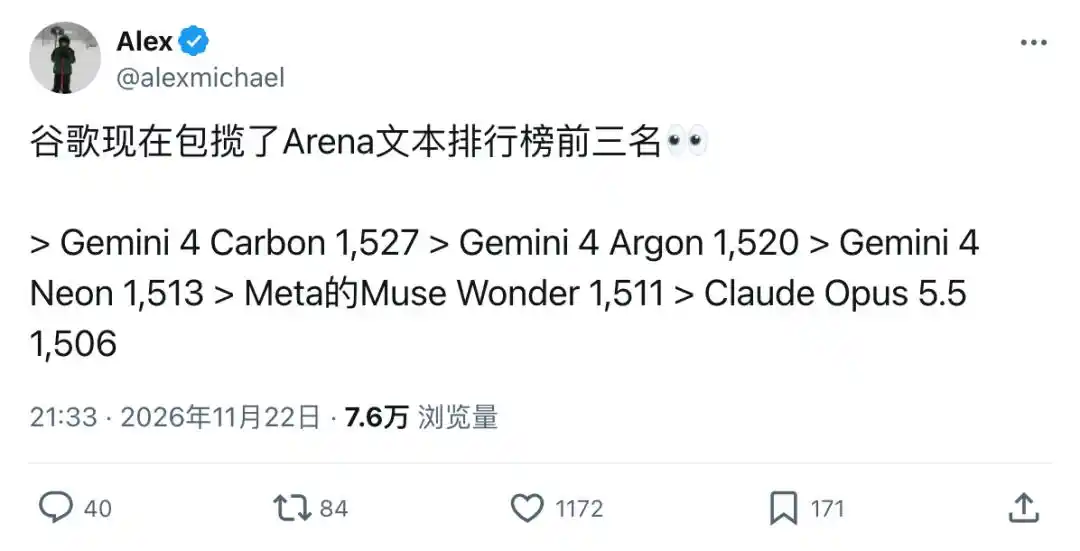
Anthropic held all six positions for only four days. Over the following 50-plus days, Google released three Gemini 4 models that successively moved ahead of their own predecessors and rival systems. In the Arena text ranking updated on November 22, Neon reached third place with 1,512 points, tied with Muse Wonder. All three leading positions belonged to Google.
Argon takes the lead before Carbon overtakes it
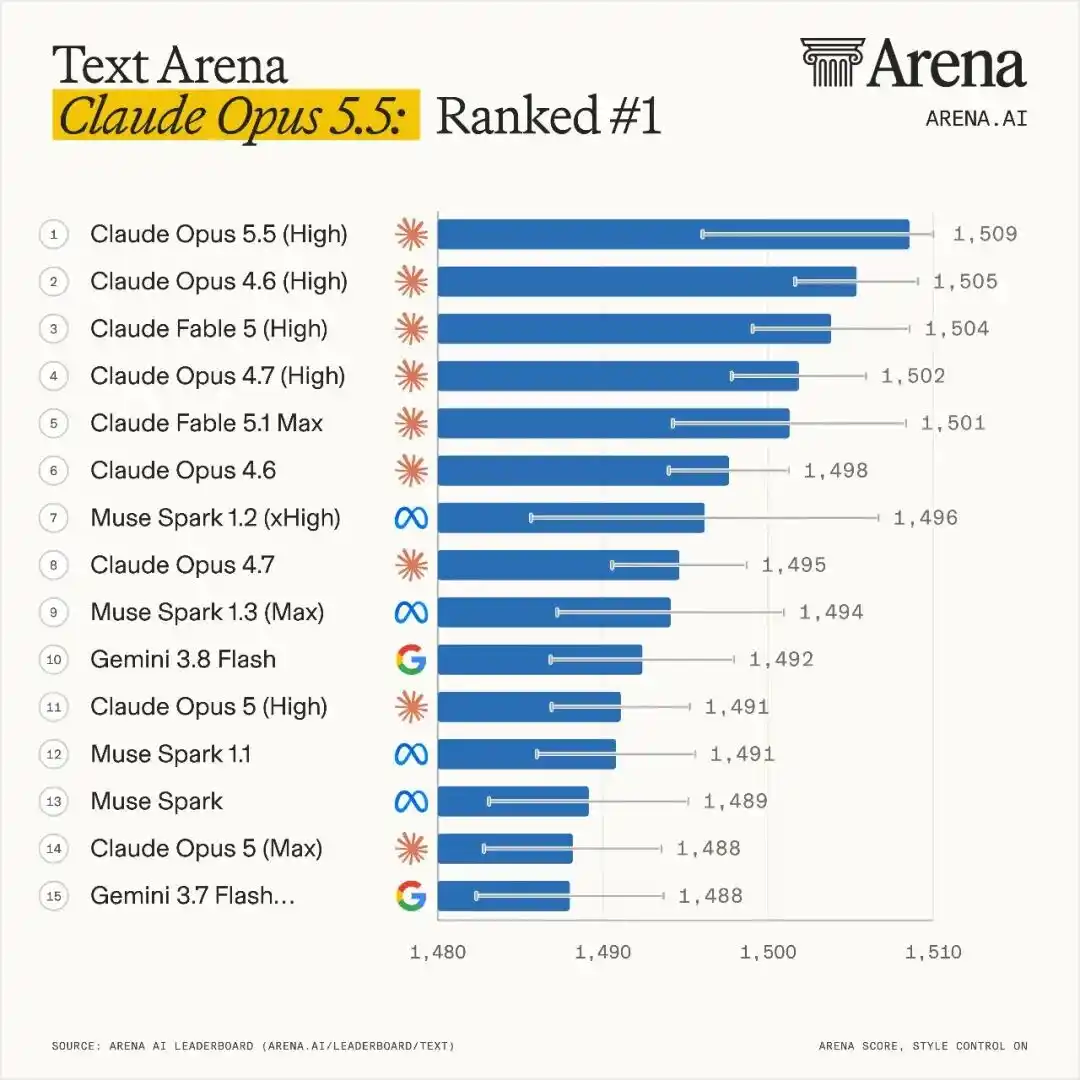
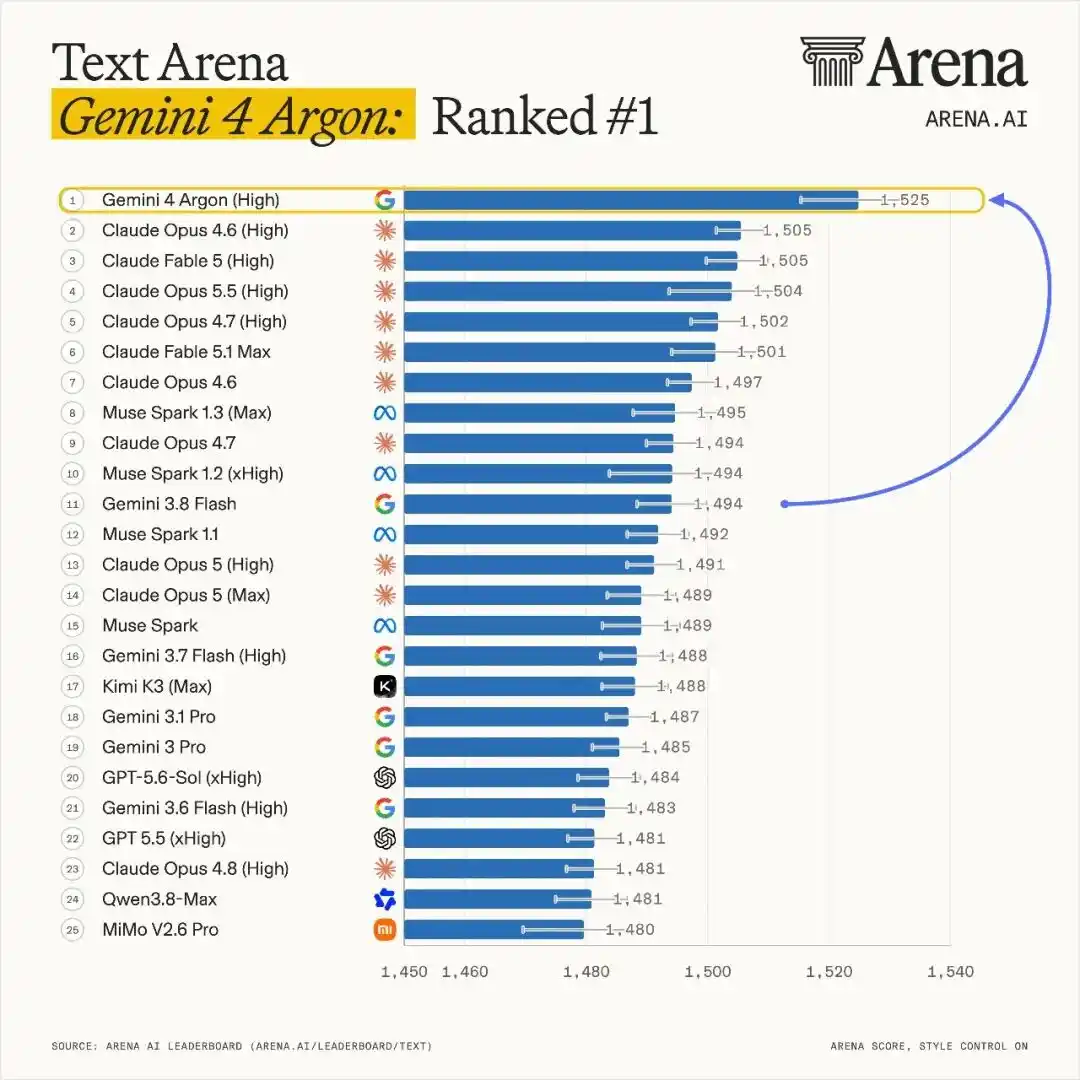
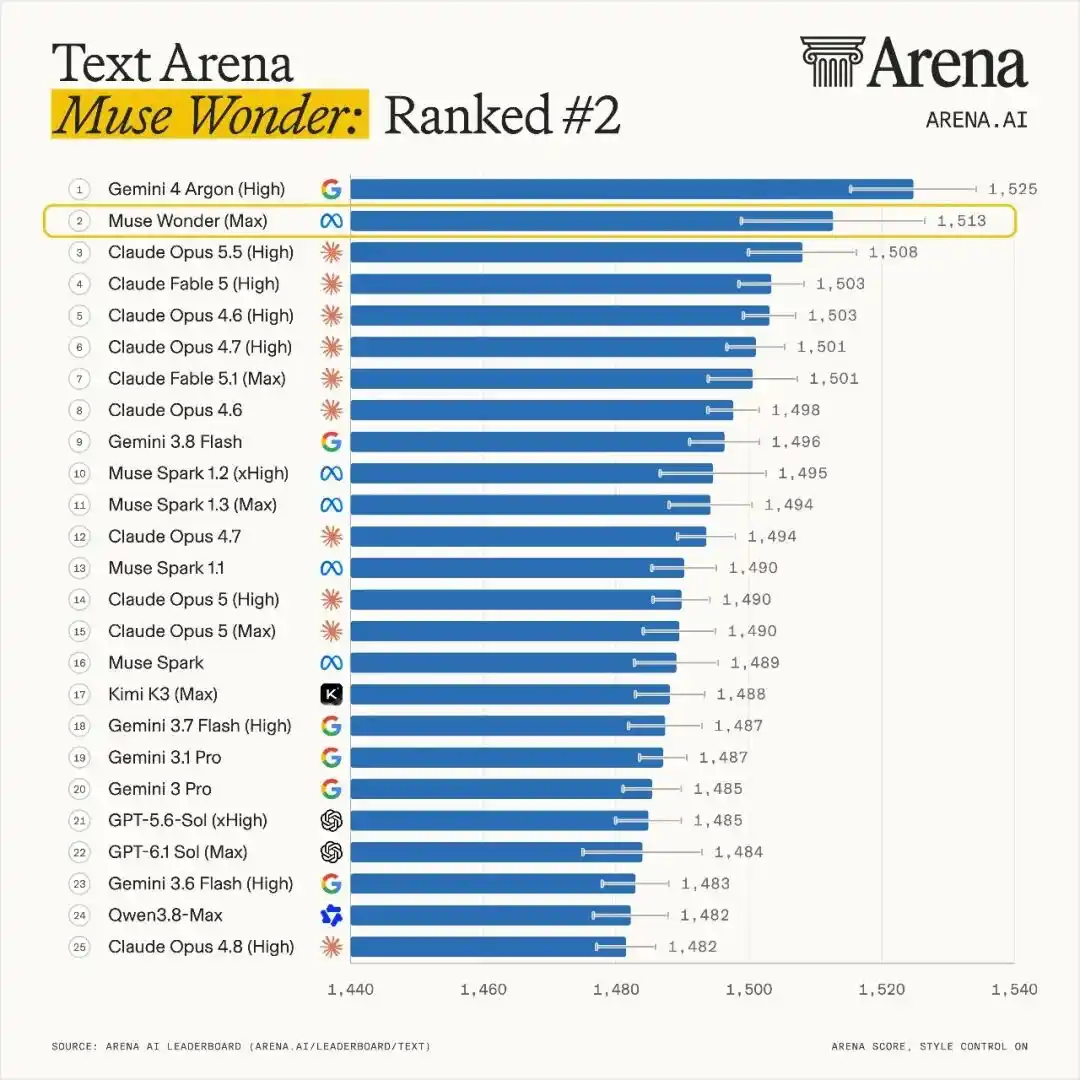
Claude Opus 5.5 (High) debuted at the top of the text leaderboard with 1,509 points, 18 points ahead of the previous-generation Opus 5. Four days later, Google introduced Gemini 4 Argon. Argon (High) entered Arena in first place with 1,525 points, a 20-point lead over the then-second-ranked Claude Opus 4.6. Opus 5.5 fell to fourth with 1,504 points.
Argon ranked first across programming, hard questions, instruction following, long queries and creative writing, as well as English, non-English, Chinese and Russian language categories. Its blended price was about $8 per million tokens, roughly half the price of Opus 5.5. Arena named it the “best value” model.
Meta brought a new model to the competition after Google took the lead. On October 13, Meta Superintelligence Labs, led by Alexandr Wang, unveiled Muse Wonder (Max), its first frontier model since the lab was formed. Meta described it as its strongest model to date. Muse Wonder debuted on Arena the next day at No. 2 with 1,513 points, 12 behind Argon.
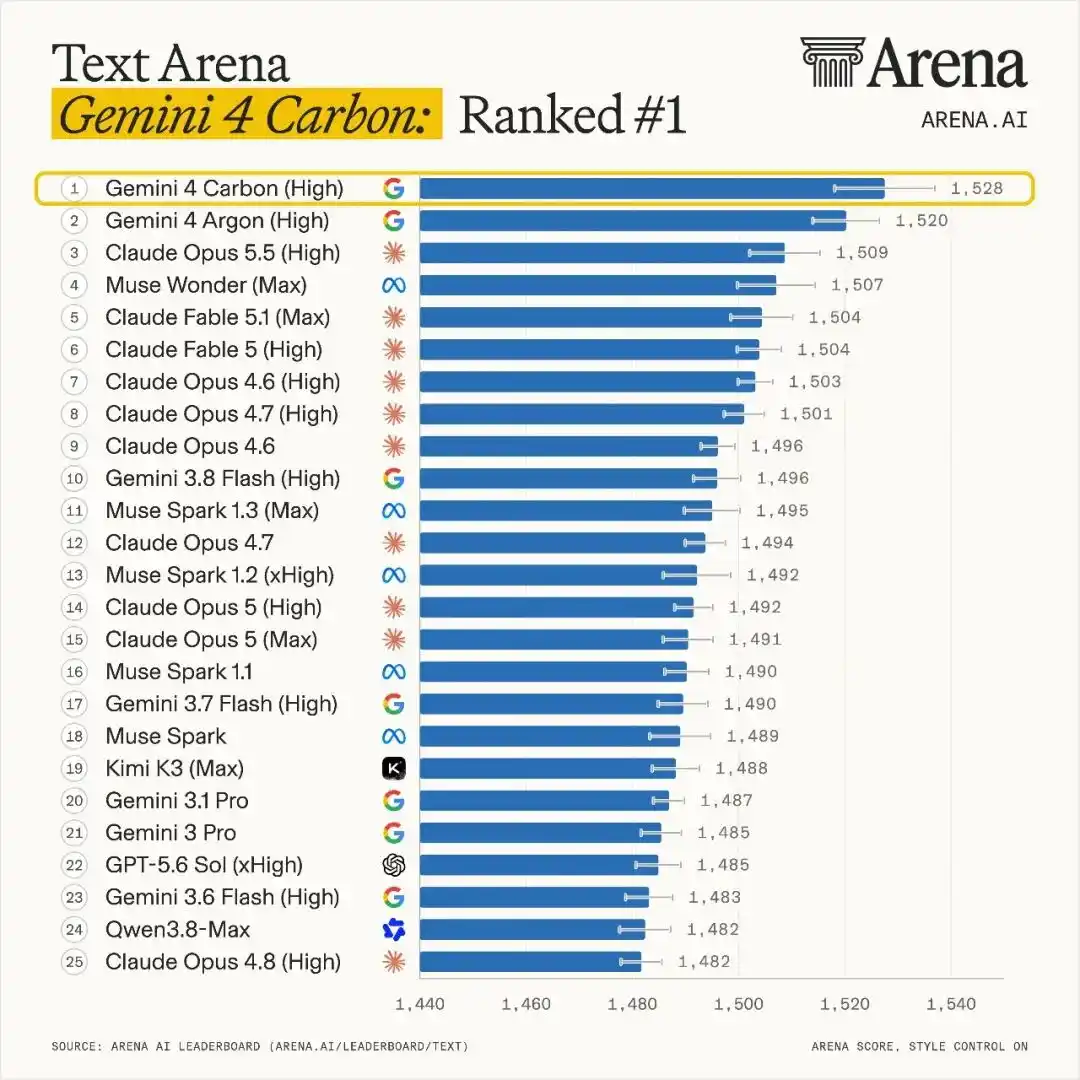
But Meta was not the model that displaced Argon. On October 29, Gemini 4 Carbon (High), built on Argon, scored 1,528 points to take first place, pushing Argon down to second with 1,520. At launch, Google DeepMind said Carbon was its next-generation frontier model and had industry-leading capabilities in cybersecurity and long-horizon tasks.
Google released its third Gemini 4 model, Neon, on November 19. Positioned between Carbon and Hydrogen, it is aimed at complex software engineering, knowledge work and scientific tasks. The November 22 Arena text ranking placed Neon third with 1,512 points, tied with Muse Wonder. Gemini 4 models filled the top three spots.
Neon reaches second on the Agent leaderboard
Claude still leads the Agent Arena Index, which measures performance on real Agent tasks. In the ranking published on November 19, Claude Fable 5.2 (Max) was first with 1,453 points. Newly released Gemini 4 Neon ranked second with 1,336 points, one point ahead of third-place Claude Opus 5.5 (Max) at 1,335. Neon remained 117 points behind Fable 5.2.
Neon’s result was based on 4,200 real Agent sessions. Google’s other Gemini 4 models ranked below it: Carbon was fourth with 1,303 points, Hydrogen was ninth and Argon was eleventh. Neon was the highest-ranked Google model on the Agent board.
Neon placed second for user satisfaction and its ability to respond to user corrections, and third for task completion. On CursorBench 4.1, a real-world coding benchmark reported by Google, Neon scored 65.4%, beating Claude Opus 5.5’s 58.1%.
Cost is another point of comparison. Neon’s API is priced at $3 per million input tokens and $15 per million output tokens. In real Agent Arena sessions, its median cost per task was $2.82. That was 53% lower than the cost for third-place Claude Opus 5.5 (Max) and 69% lower than for leaderboard leader Claude Fable 5.2 (Max). The report characterized Neon as scoring close to Opus 5.5 at less than half the cost.
Arena tests compare output and cost
On November 20, Arena’s Peter Gostev posted a hands-on video comparing the newly released Gemini 4 Neon with Opus, Fable, Astra and Sol on 3D scenes, games and user interfaces (UI).
The first prompt asked the models to write code for a 3D scene of Istanbul’s Hagia Sophia and the Golden Horn. Neon completed the task for about $6.
For a second prompt, the models generated a 3D scene of the White House. Gostev placed the outputs from Gemini 4 Neon and Claude Opus 5.5 (Max) side by side with their costs. Opus 5.5 (Max) used about $27.66, compared with roughly $7.17 for Neon—about one-quarter as much.
In the third test, Neon wrote a playable rooftop-running game set in New York for about $3. Gostev noted while trying it that the controls still did not feel very good.
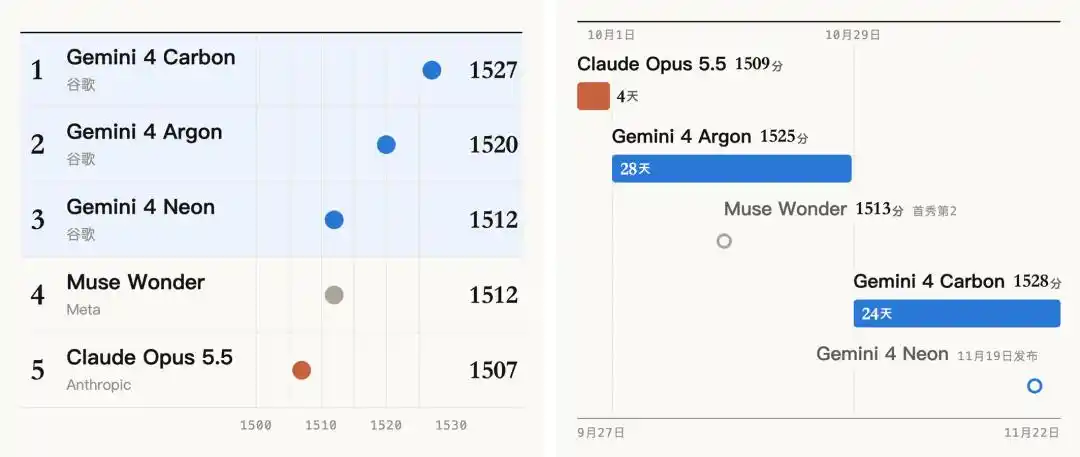
Google models now fill the top three spots on the text leaderboard. Claude remains first on the Agent ranking, but Neon is second, with lower reported real-session costs than either of the two Claude models above it. Counting from Opus 5.5’s September 27 move to the top, the text leaderboard changed hands twice in less than two months.
This article was published by the WeChat account Xinzhiyuan. Author: ASI Apocalypse.



