
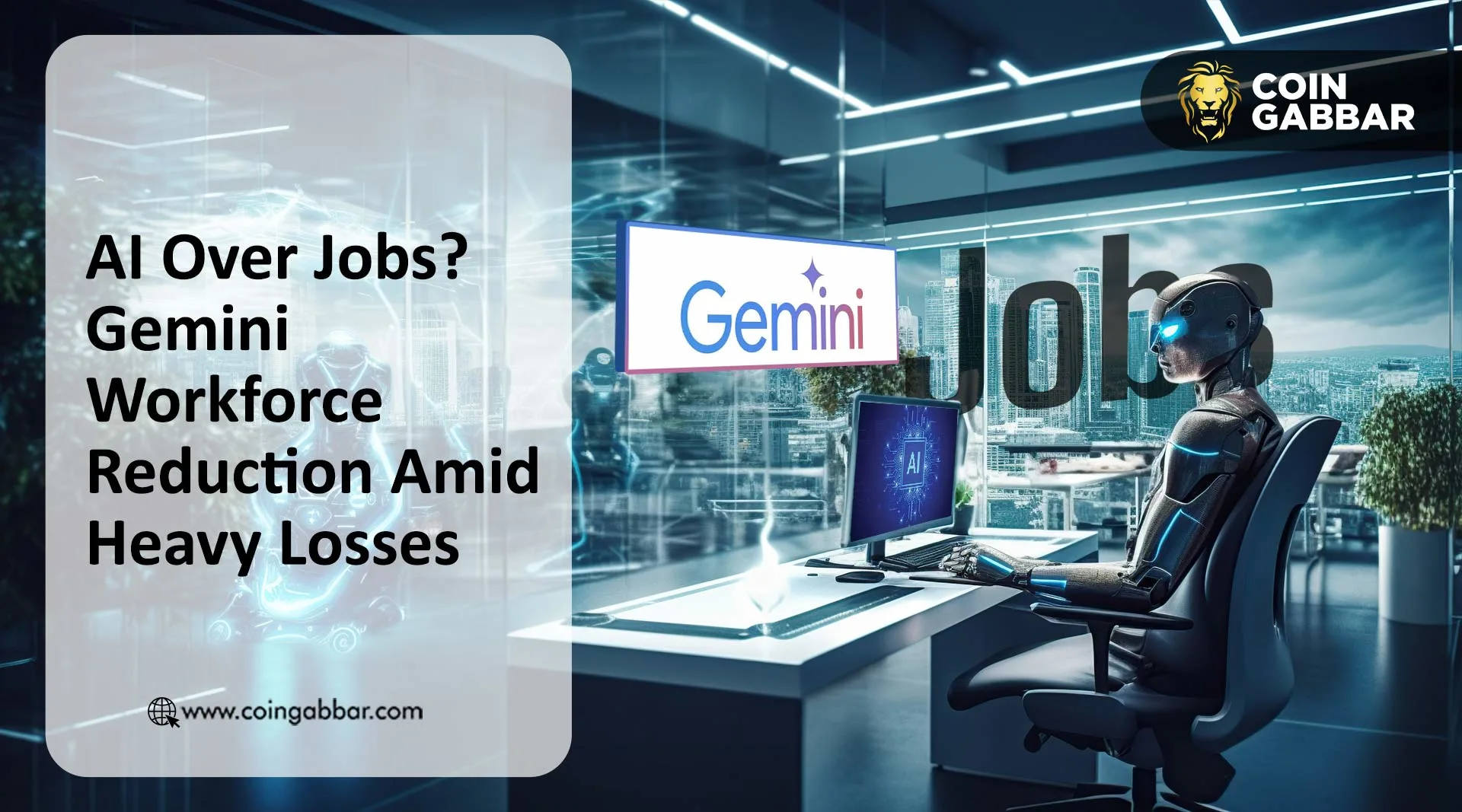
Gemini Space Station Inc., the crypto firm founded by the Winklevoss twins, has cut roughly 30% of its workforce since the start of 2026, bringing headcount down to about 445. This follows a 25% reduction in February. According to Bloomberg, Gemini posted a net loss of approximately $585 million in 2025, with Q4 revenue around $60 million but widening losses. Since its IPO in late 2025, $GEMI stock has dropped 80%–84%.
The company cites cost-cutting and AI-driven efficiency as key reasons. Roles in operations and engineering are being replaced or downsized by AI tools. This is part of a broader wave: Amazon cut 30,000 jobs (14K in 2025 + 16K in 2026); Microsoft reduced 15,000 roles to focus on Copilot and Azure AI; Atlassian laid off 10% (1,600) in March 2026; Block Inc. slashed 40%–50% of its workforce; Crypto.com cut 12%. Intel, UPS, and Salesforce also trimmed. In total, over 55,000 U.S. layoffs in 2025 were linked to AI-related factors.
Global Jobs at Risk as AI Disruption Spreads
The International Monetary Fund (IMF) estimates 40% of global jobs are exposed to AI-driven change, rising to 60% in advanced economies, 40% in emerging markets, and 26% in low-income countries. The impact spans all sectors, not just tech.
Robert Kiyosaki, author of Rich Dad Poor Dad, has long warned of a "biggest stock market crash in history" around 2026, driven by AI-led job losses. His chain: AI job cuts → reduced income & demand → real estate crash → wider financial instability. He stated, "It's not just the US. Europe and Asia are crashing. Artificial intelligence will wipe out employment and when jobs crash, office and residential real estate crashes."
Job Transformation, Not Just Elimination
Despite rising AI-driven cuts, the outlook includes significant creation. The World Economic Forum predicts AI could displace 92 million jobs by 2030 but create 170 million new ones, a net gain of 78 million. Goldman Sachs estimates up to 300 million jobs may be affected, mostly at the task level. Around 89% of HR leaders expect AI to reshape jobs in 2026, and workers with AI skills are seeing better opportunities. Crypto companies are restructuring rather than shutting down — adaptation, not collapse, is the emerging pattern.