


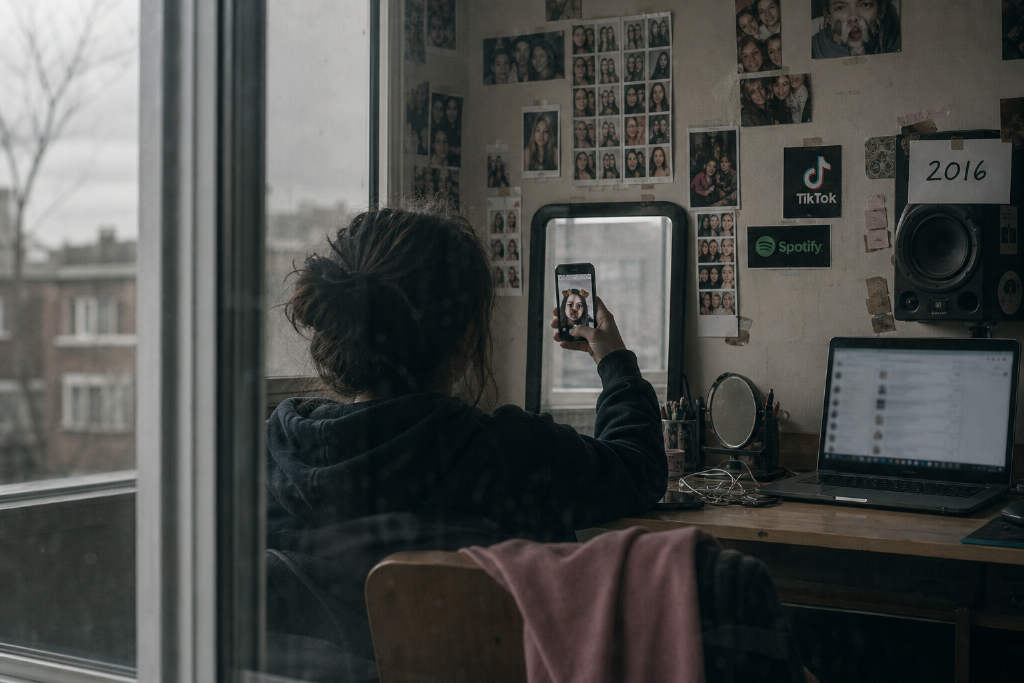
Gen Z’s latest obsession with 2016-era internet culture is being framed by BlockTempo as something larger than a fashion cycle or a harmless social media throwback.
In the outlet’s account, TikTok searches for "2016" surged 452% in a single week. Spotify playlists tied to 2016 grew 71% from the previous year, and Google Trends hit an all-time high for the keyword in mid-January. At the same time, the top five autocomplete-style searches for "why is everyone..." were all tied to 2016.
The trend has been labeled "2026 is the new 2016." BlockTempo traced its starting point to the last day of 2025, when TikToker @taybrafang posted a nostalgia compilation and another creator, @joebro909, suggested making Jan. 1, 2026 a "reset day." Users later gave it a name: the "Great Meme Reset."
Research firm GWI found that 42% of Gen Z said the 2010s was the decade they missed most, a higher share than any other generation. On its face, that is not unusual. People often look back on the years that shaped their childhood or adolescence. What stood out to BlockTempo was the material being revived.
The revival centers on images that once looked bad
The recurring symbols of the trend are not prestige films, acclaimed albums or technically strong photography from 2016. They are Snapchat’s dog filter, the flower-crown filter, low-resolution iPhone 6 photos, oversaturated selfies, rough Tumblr-style collages, the bottle cap challenge and the mannequin challenge. In fashion, the visual language includes oversized sweaters, ripped jeans and Dr. Martens boots.
That matters because the selection is oddly specific. If users were simply chasing beauty, the internet could have pulled from plenty of better-made cultural products from that year. Instead, the trend keeps returning to blurred group shots, off-focus selfies and warped face filters.
BlockTempo argues that this is not really about aesthetics. The low-grade output of CCD cameras, washed detail, color pushed too far and imperfect filters now function as evidence of human touch. A blurry image suggests a shaking hand. A crooked face filter suggests someone was actually in front of the camera, making a face. Overdone saturation suggests a person dragged the slider too far. Those flaws were not designed as a style system at the time; they were traces left by people.
Why the article says this is not nostalgia in the usual sense
BlockTempo turns to nostalgia research by Constantine Sedikides and Tim Wildschut of the University of Southampton, who have spent more than two decades studying the subject. Their "regulatory model" broadly describes nostalgia as a psychological corrective: negative emotional states trigger nostalgic reflection, and nostalgia then softens those states.
Their work has linked nostalgia to relief from loneliness, social exclusion, meaninglessness, disillusionment, self-uncertainty and discontinuity of self. Put plainly, people think about earlier times when the present feels unstable, and those memories can make the present easier to bear.
But the article argues that the current 2016 wave is not centered on "I." It is centered on "we." Nostalgia is about continuity; mourning is about rupture. When a group repeatedly remakes old photos, swaps remembered details and keeps saying that things used to be different, BlockTempo says the behavior looks less like private self-repair and more like a collective acknowledgment that something is gone.
Its conclusion is direct: what has disappeared is the assumption that humans are the primary authors of the internet.
The article ties that claim to AI-content data
To support the point, BlockTempo cites a joint estimate from MIT’s Computer Science and Artificial Intelligence Laboratory and the Oxford Internet Institute, which said that 64% of newly published online content in 2026 was generated by artificial intelligence. Reuters’ Digital Media Report 2026, as cited in the piece, said 79% of visual content on Instagram, TikTok and Pinterest came from AI. Imperva’s figures showed automated traffic accounted for more than half of all web traffic, the first time that threshold had been crossed in a decade.
The article also points back to a March report by BlockTempo on the "dead internet theory," the once-fringe idea that much of what appears online is produced or amplified by bots rather than people. What used to sound like forum paranoia, it says, has started to line up with measurable data.
Still, BlockTempo stops short of saying humans have disappeared from online creation. People are still there, and still producing a large volume of work. The shift is in proportion, and in the default assumption that follows. A decade ago, seeing a photo usually meant assuming a person took it unless there was a reason to doubt it. Now, the article says, seeing an image often starts from a different premise: it may well have been made by AI.
A 2016 Pokémon GO scene in Beitou becomes part of the argument
To illustrate the contrast, the piece revisits Beitou Park in August 2016, shortly after Pokémon GO launched in Taiwan. Because the area had a dense cluster of PokéStops and nearby businesses were heavily using in-game lure modules, the park became one of the island’s busiest hunting grounds. Someone shouted that a Snorlax had appeared, and thousands of players ran in the same direction, ignoring traffic lights and crosswalks. Cars were forced to stop and wait for the crowd to pass. Police handed out a large number of parking tickets.
Video from the scene was later covered by Time magazine, with a headline that broadly suggested Pokémon might have given the world a preview of the apocalypse.
Seen again ten years later, BlockTempo says, the meaning flips. The scene was absurd: adults sprinting down a road for a fictional creature. But it was also real people, on a real street, moving together because of a game. The footage was blurry, poorly framed and full of screaming audio. None of it looked polished. That is exactly why, in the article’s view, it now feels hard to fake.
Past comfort does not change the present
Near the end, BlockTempo returns to a line from nostalgia research: nostalgia is emotionally mixed, binding comfort and loss together, allowing people to preserve a sense of continuity while tolerating uncertainty. In the current internet environment, the uncertainty young users are dealing with is tied to authorship and authenticity. Their response has been to return to a period they can more readily identify as human-made.
The article does not present the trend as a turning point that will reverse anything. Nostalgia has never stopped events from unfolding, it says. It does not exist to change reality; it helps people endure reality. When the novelty fades, the dog filter will likely be forgotten again, and the share of AI-generated content will not shrink because of a meme cycle.
Even so, BlockTempo says the moment is worth recording. It describes this as the first time an entire generation has used collective online behavior to point at a loss it cannot fully define but clearly feels. There are no papers, no petitions, no formal manifesto. Instead, users are reposting the blurry, low-resolution, badly focused images of a decade ago.
That, in the article’s telling, is an awkward farewell to 2016 and to an era in which people are finding it harder to locate themselves clearly.
Two questions highlighted in the article
What is the "2026 is the new 2016" trend?
BlockTempo describes it as a nostalgia wave that began on TikTok near the end of 2025, with users recreating 2016 filters, low-quality photos and challenge videos. TikTok searches for "2016" rose 452% in a week, and related Spotify playlists increased 71% year over year. The movement has been referred to as the "Great Meme Reset."
Why 2016?
The article says some users see 2016 as the last stretch of internet life before the pandemic and before generative AI became widely used. GWI found that 42% of Gen Z most missed the 2010s, more than any other generation. In BlockTempo’s framing, the real object of longing is not youth alone, but a period when human authorship still felt like the default online condition.