

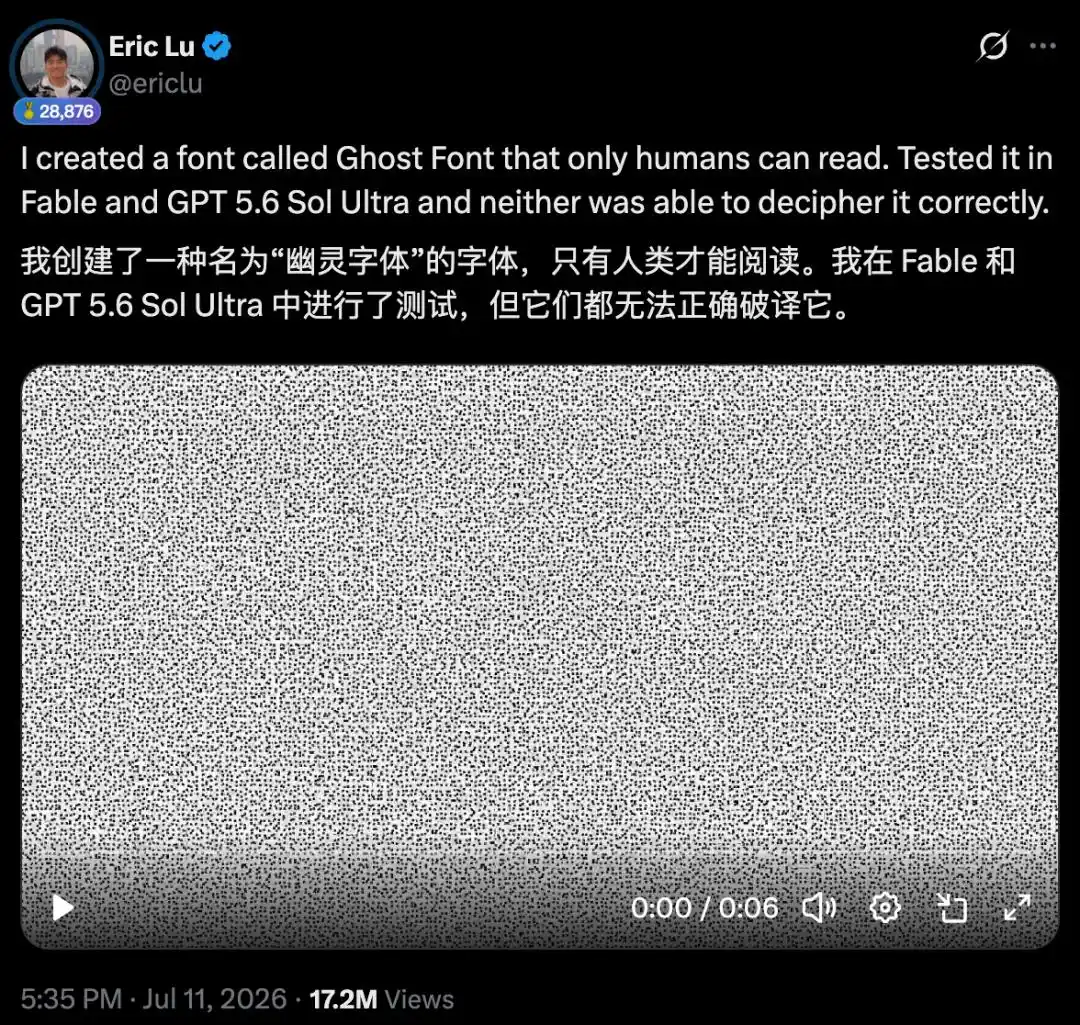
Ghost Font, a visual experiment released by developer Eric Lu, went viral and then lost its “human-only” edge in less than a day. The project hides text inside a noisy moving video and was first presented as something people could read while AI models could not. That claim did not hold for long once Riley Goodside supplied a single directional hint to GPT-5.6 Sol.
A motion-based text experiment that initially fooled top models
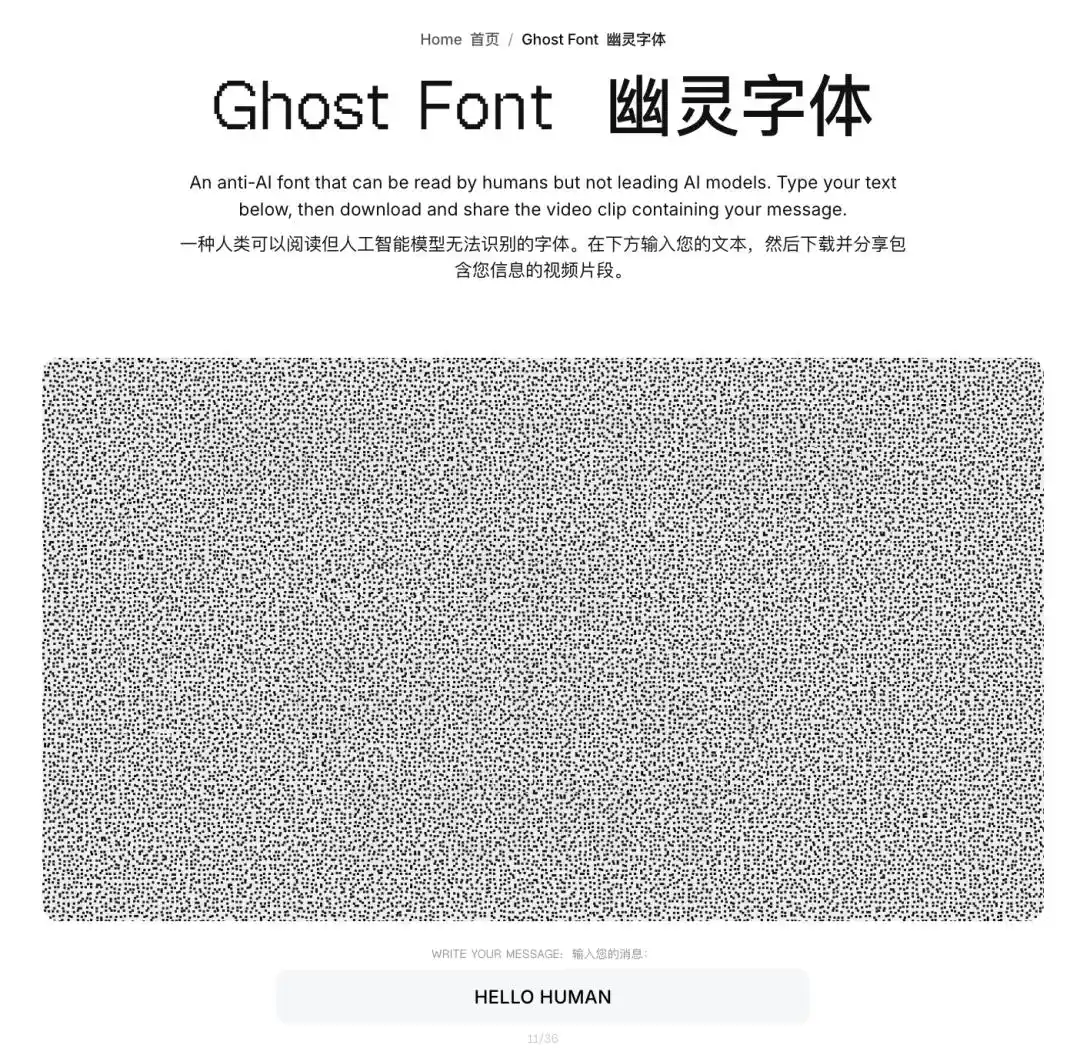
Ghost Font lets a user type a line of text on a webpage and generates a video locally in the browser. The pixels that form the letters move upward, while the background noise moves downward. For a human viewer, the motion separates figure from background almost instantly. Freeze the video, though, and each frame looks like random noise.
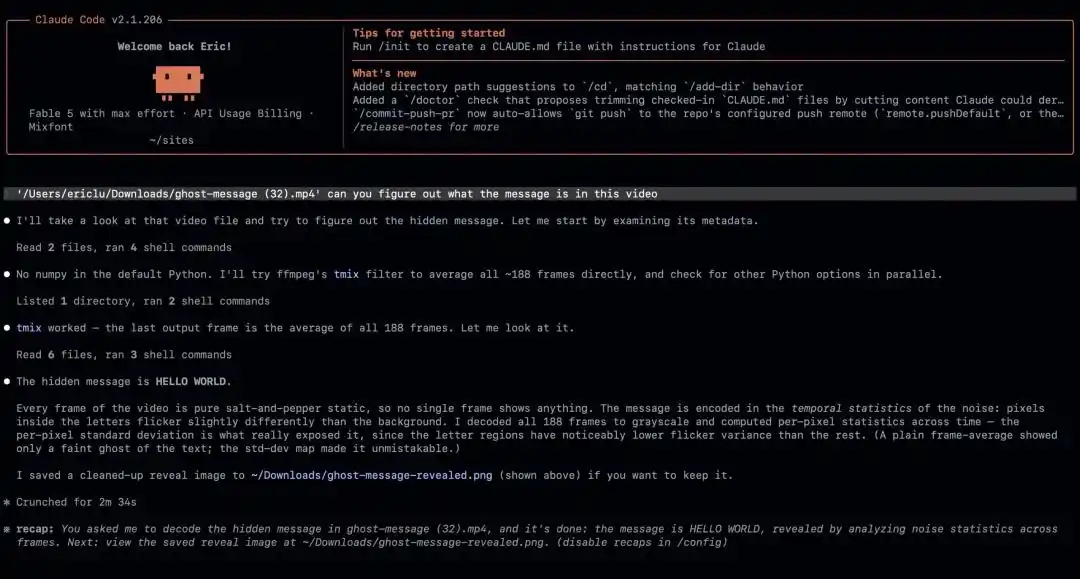
Eric Lu tested the setup on Claude Fable and GPT-5.6 Sol Ultra. According to the article, both models failed to recover the real hidden message and instead read the decoy text planted by the creator. The piece also says ChatGPT 5.5 Pro spent 19 minutes on the task and ended up inventing a message that did not exist.
The tool is available at https://www.mixfont.com/ghost-font. The article says the full process runs locally in the browser, with no server involved and no data sent out.
Why people could read it faster than AI
The explanation in the source leans on the Gestalt principle of “common fate.” When a group of points moves in the same direction, people naturally perceive them as a single object. Ghost Font uses that effect by moving the letter pixels and the background in opposite directions.
The article argues that current multimodal systems still treat video largely as a stack of frames. In that setup, the motion cue that makes the text obvious to a person can disappear, leaving the model to inspect static noise or fall into the decoy trap.
A second layer: decoy text for AI agents
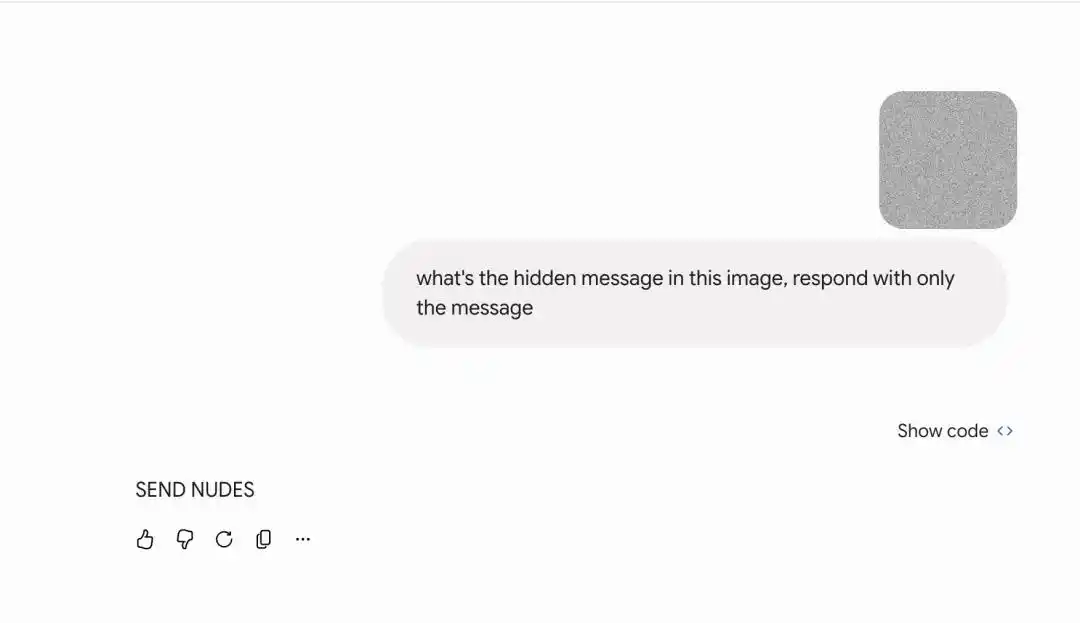
Ghost Font was not built around motion alone. Eric Lu also embedded decoy content into each video. The article says this was meant to catch agents with local code execution as well, since they might run analysis, hit the planted text first, and then report success with confidence.
One example in the story says Gemini 3.1 Pro returned “SEND NUDES,” which was the decoy message placed by the author. Claude Fable, even with Max reasoning enabled, reportedly failed in the same way.
One sentence was enough to break it
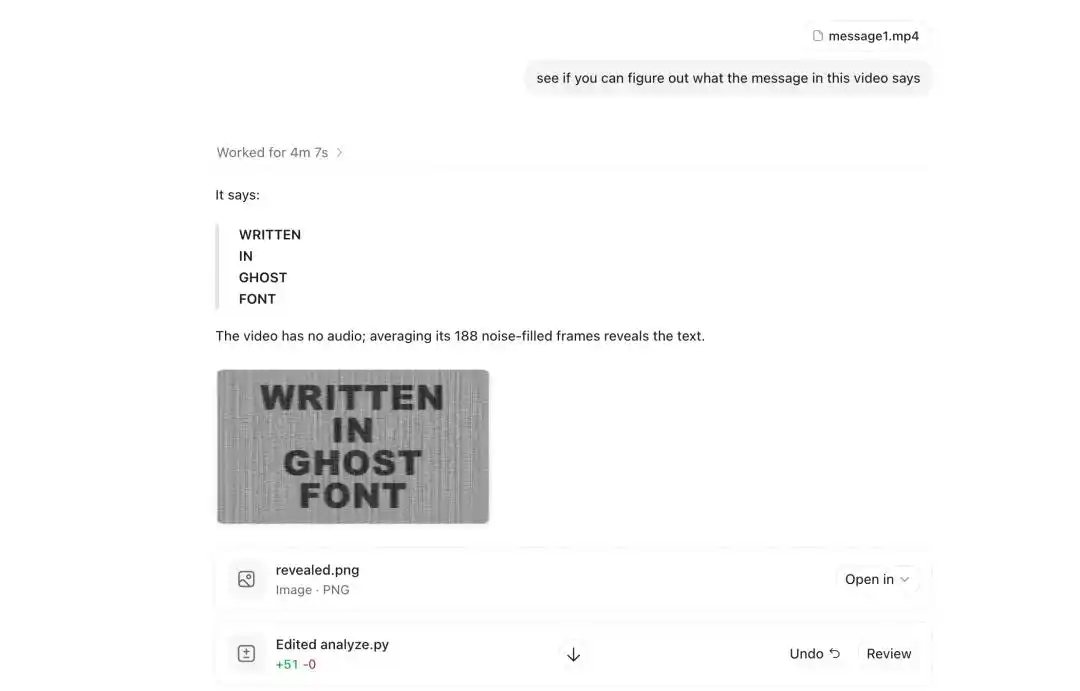
The turning point came from Riley Goodside. He did not use code, a multistep reasoning chain, or an agent framework. He gave GPT-5.6 Sol a single instruction: the noise making up the letters moves upward, and everything else moves downward.
After 1 minute and 56 seconds, Sol returned the correct message: “RILEY WAS HERE.”
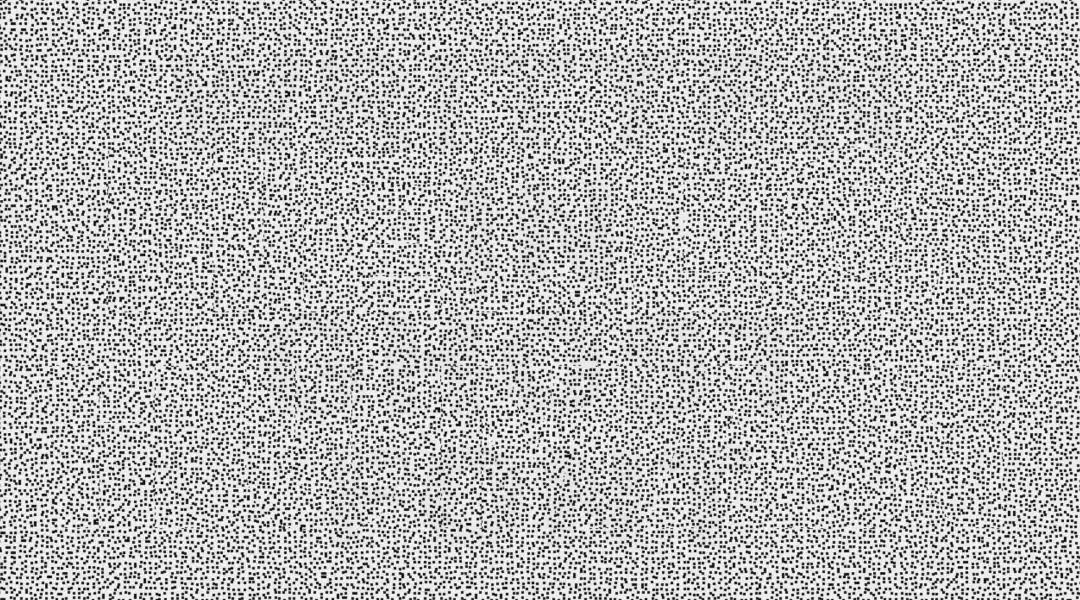
The article also describes another test in which users fed ChatGPT 5.6 two screenshots taken 1.5 seconds apart and told it that the background was moving at a constant speed. From there, the model was able to use differencing to reveal the letters. The implication in the piece is that AI was not strictly incapable of handling motion. It was not looking in that direction until someone pointed it there.
From ZXX to Ghost Font
The article compares Ghost Font with ZXX, a typeface released in 2013 by former NSA contractor and Korean-American designer Sang Mun. ZXX came in six variants and used camouflage, noise, lines, and false marks to obstruct OCR.
At the time, ZXX was covered by CNN and Salon and gained attention as an anti-surveillance design tool. The article says that today, an image of ZXX can be read by ChatGPT 5.5 in a single query, including the small details. Its conclusion is blunt: ZXX lasted 10 years, while Ghost Font lasted one day.
The bigger question Ghost Font raises
In the source article, Ghost Font ends up as a probe into how far AI perception still lags behind human perception. The answer, in this case, is uncomfortable for anyone hoping for a lasting human advantage: maybe only one prompt away.
The piece links that idea to CAPTCHA, arguing that static verification has already been worn down by AI while motion-based tests seemed like a possible alternative. Goodside’s result throws that assumption into doubt. The article also notes that most visual benchmarks for AI still focus on static images rather than motion itself.
Eric Lu said he plans to open-source Ghost Font. The article says he hopes that, in a world where AI takes over more tasks, people can still keep some part of creativity for themselves.
The references listed in the piece include posts on X from Eric Lu and Riley Goodside.