
Global Macro Risks Accelerate Accumulation
Since 2022, persistent global supply chain disruptions have steadily eroded the economic resilience and monetary-fiscal policy autonomy of Japan, South Korea, Europe, and other regions, quietly building momentum for future capital market shocks. Current market movements indicate that liquidity drainage is already occurring in sectors beyond AI and selected non-ferrous metals. Vulnerable countries are increasingly throwing their weight behind concentrated trades in a desperate gamble that, given the current geopolitical and economic environment, is unlikely to end well.
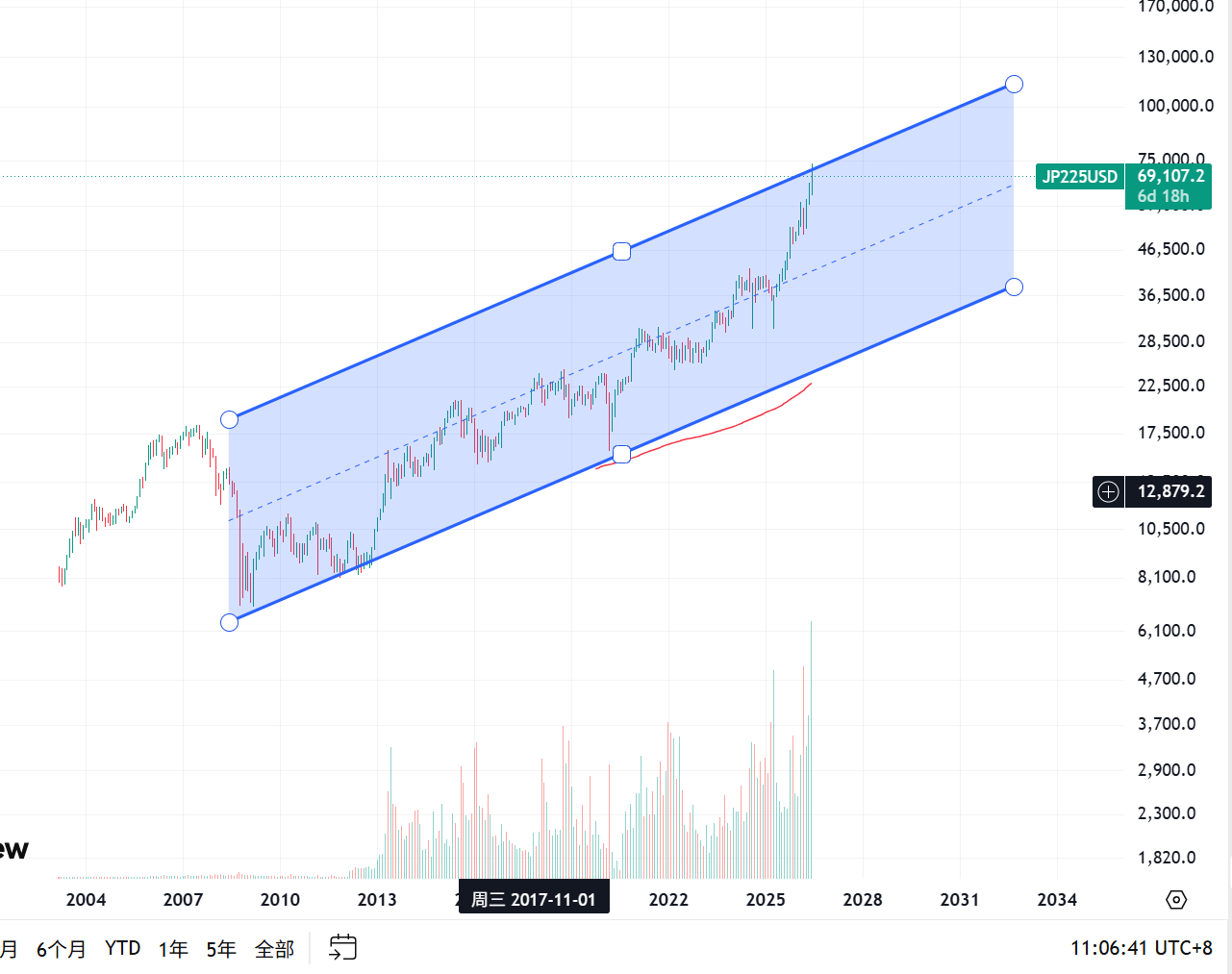
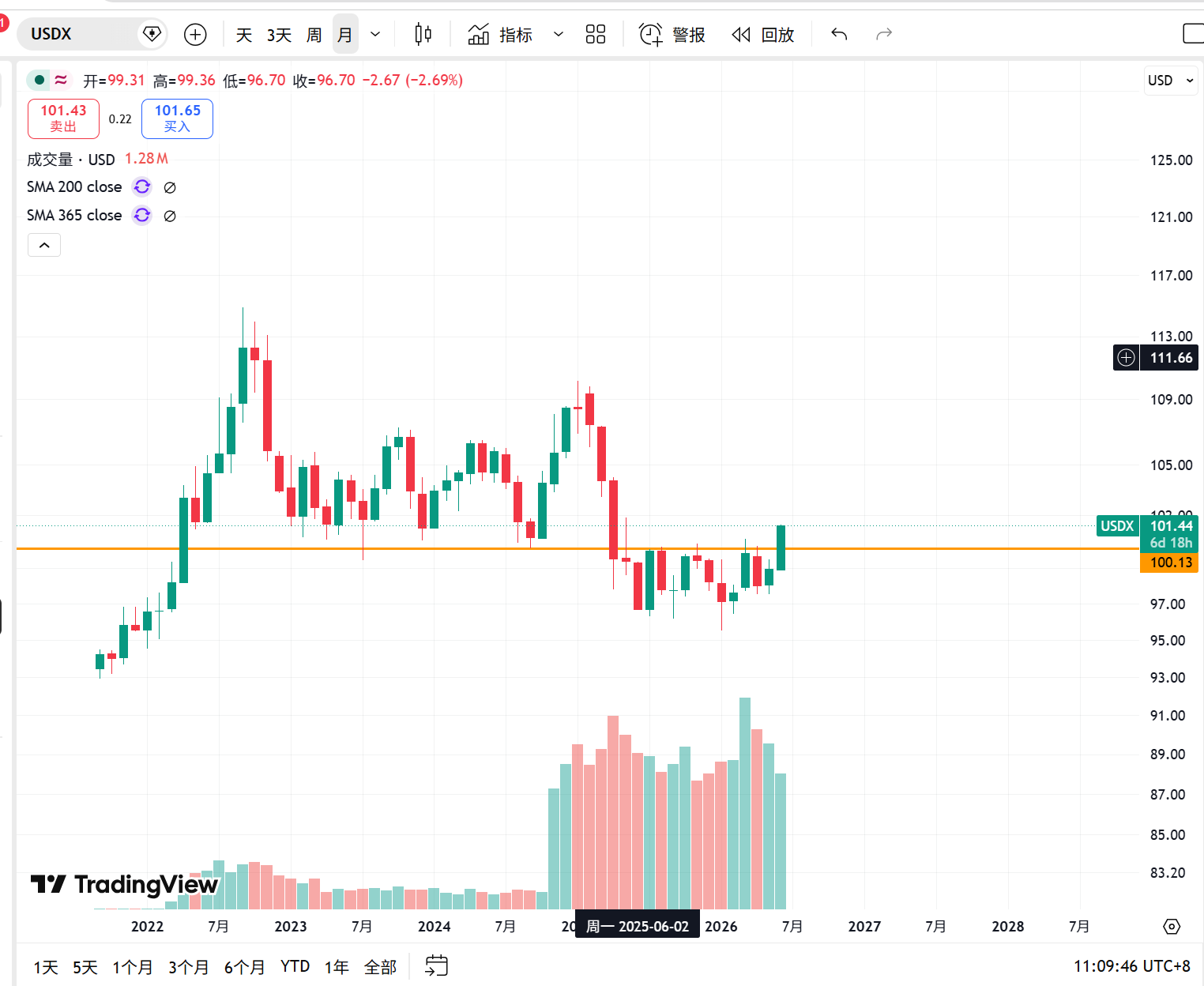
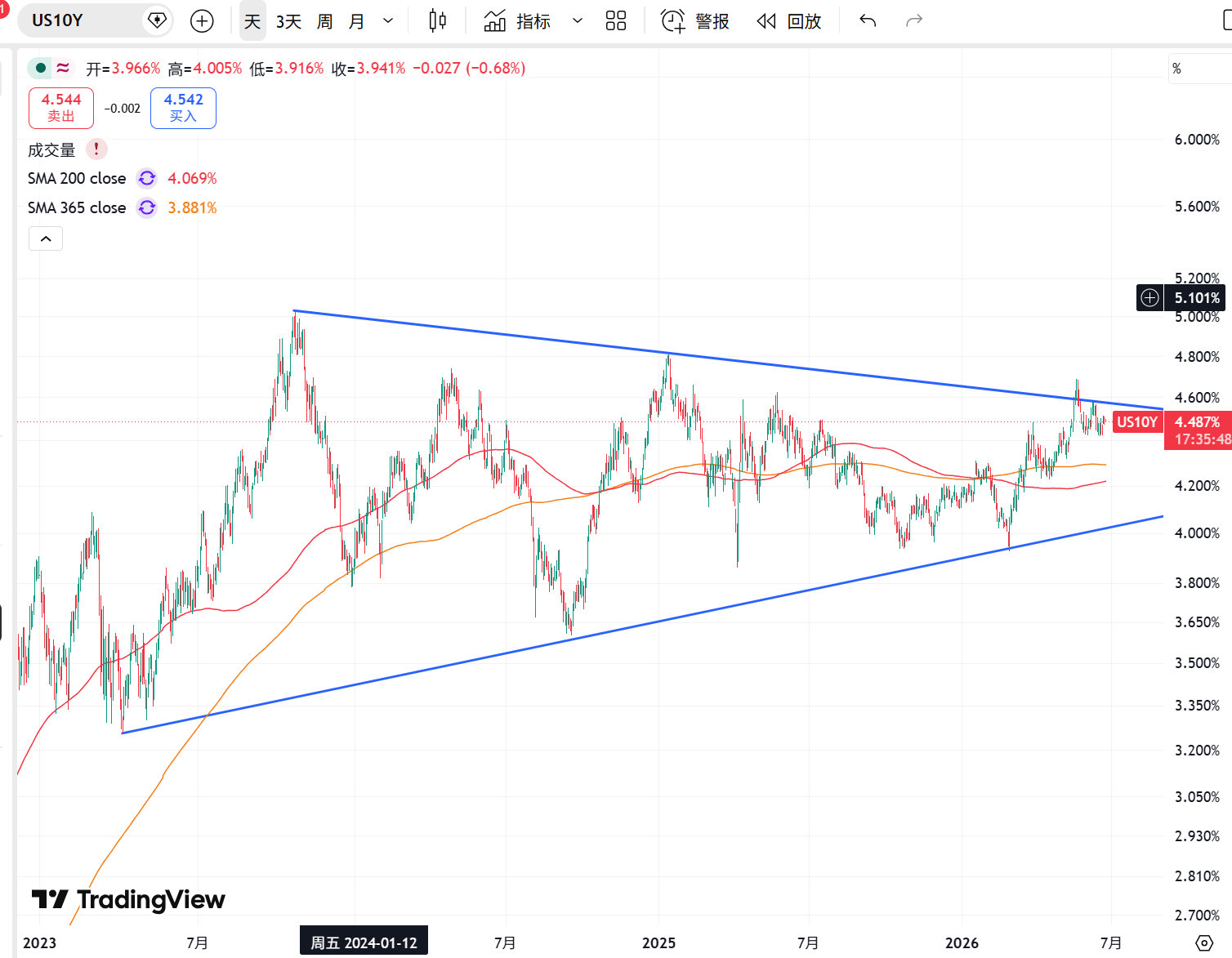
From a technical perspective, the equity markets of Japan and South Korea are approaching significant resistance levels on long-term trend channels. The US Dollar Index has broken through its one-year resistance, while the US 2-year Treasury yield is forming an upward trend. The leveraged fund positions on SK Hynix have surpassed those on Tesla, and a massive number of white-collar workers are losing the valuation premium of human capital, forced into the endless game of capital markets. Countries deeply embedded in global trade and the capitalist globalization trust are now paying for past reliance: the disintegration of supply chains and international economic alliances severely impairs their fiscal and monetary systems' ability to regulate the real economy. After all, printing money can't produce oil, copper, or optical modules.
Crypto Market Under Siege
For the crypto market, the fragile world line has been rapidly condensing into dark clouds above prices since late last year. For the first time, the market must seriously assess the possibility of MSTR (MicroStrategy) continuously selling its approximately 800,000 BTC holdings. With demand remaining distant, Bitcoin's utility as a hedging and shorting tool against other assets is becoming increasingly cost-effective, making its mid-term outlook precarious. Should liquidity expectations or actual conditions tighten suddenly, massive leveraged funds will algorithmically liquidate starting from the Japan-Korea trading session, transmitting shockwaves to the VIX and triggering broader turmoil. Underlying national unrest and the long-term addiction to quick fixes will further expose fragile economies, amplifying emotional fluctuations and ensuring an ugly ending.

Bitcoin will not escape unscathed. Investors need to carefully evaluate MSTR's future cash flow pressures and the possibility of other parties front-running its potential BTC sales. Within this risk-off phase, the positioning and tradable directions of BTC warrant deep consideration. The eventual bottom may be more shocking than currently imagined, but a deeper correction is not a panic-induced fantasy.

Outlook for Precious Metals and Commodities
For the non-ferrous metals sector, gold and silver face short-term headwinds from the strong desire of countries to exchange dollars for commodity inventories—a trend particularly evident in central banks like Turkey's. Yet this upheaval is exactly the 'squat before the leap' for the true bull run in gold and silver. The complete failure at the Strait of Hormuz marks the beginning of dollar unravelling, and the market turmoil after rate hikes will ultimately pave the way for a looser future. Copper and various small metals involve more complex dynamics, but we anticipate a sweet spot when the tug-of-war over rate hike expectations reaches its extreme.